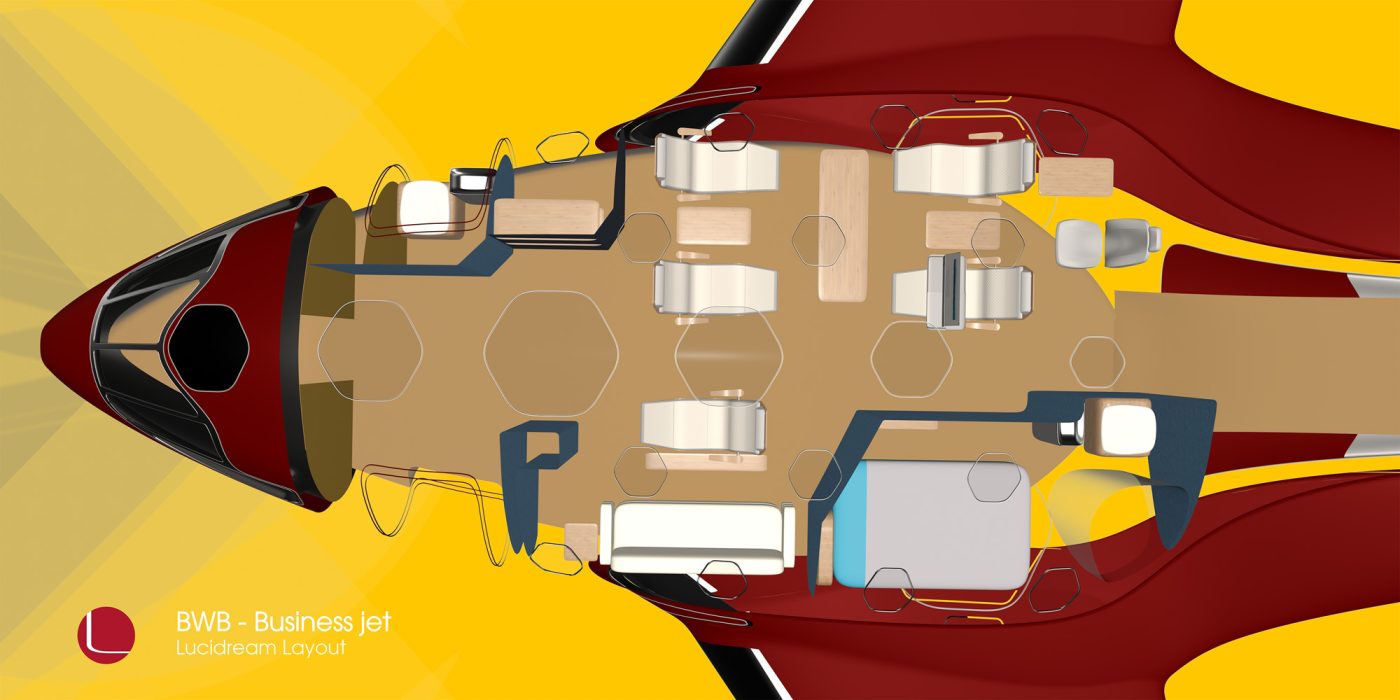
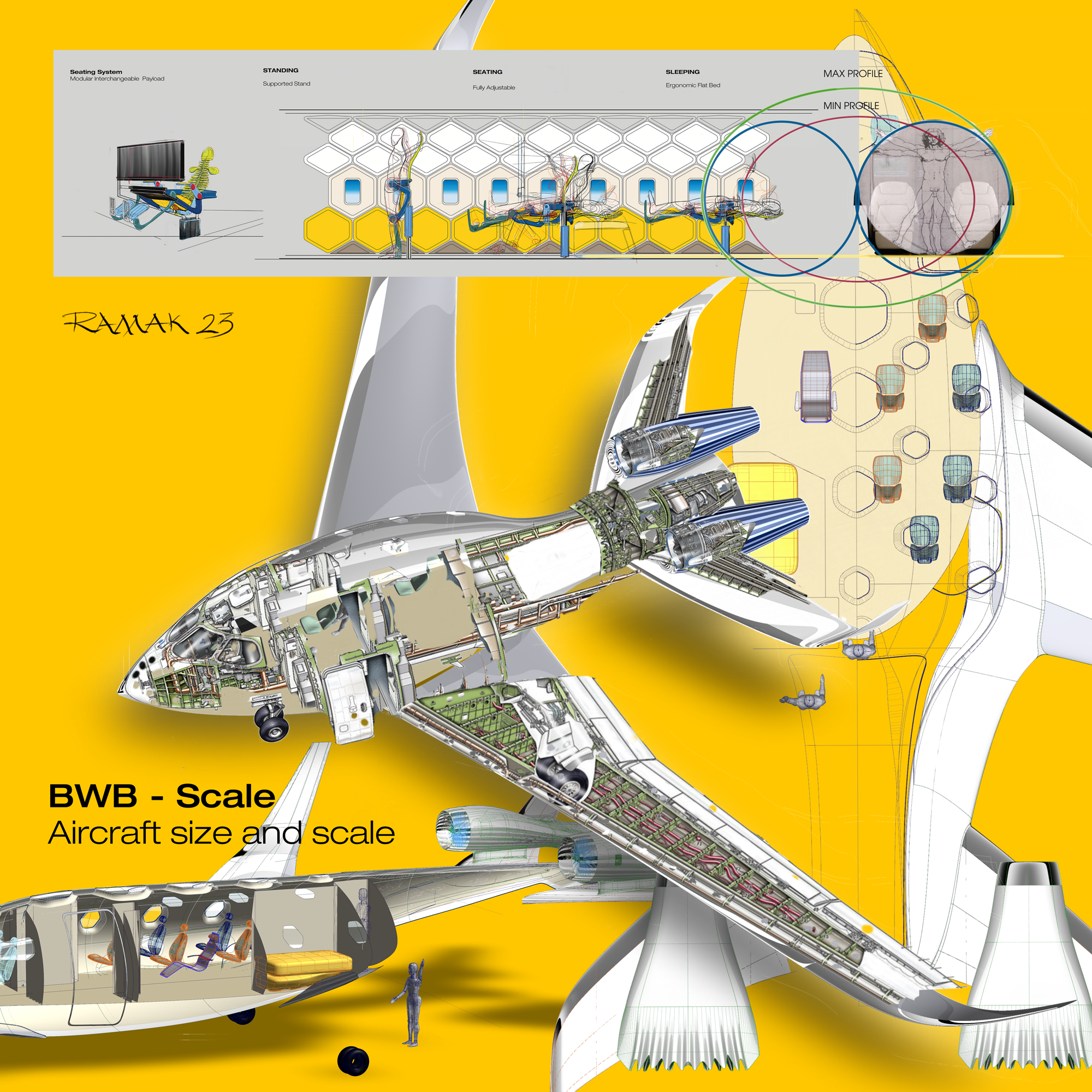
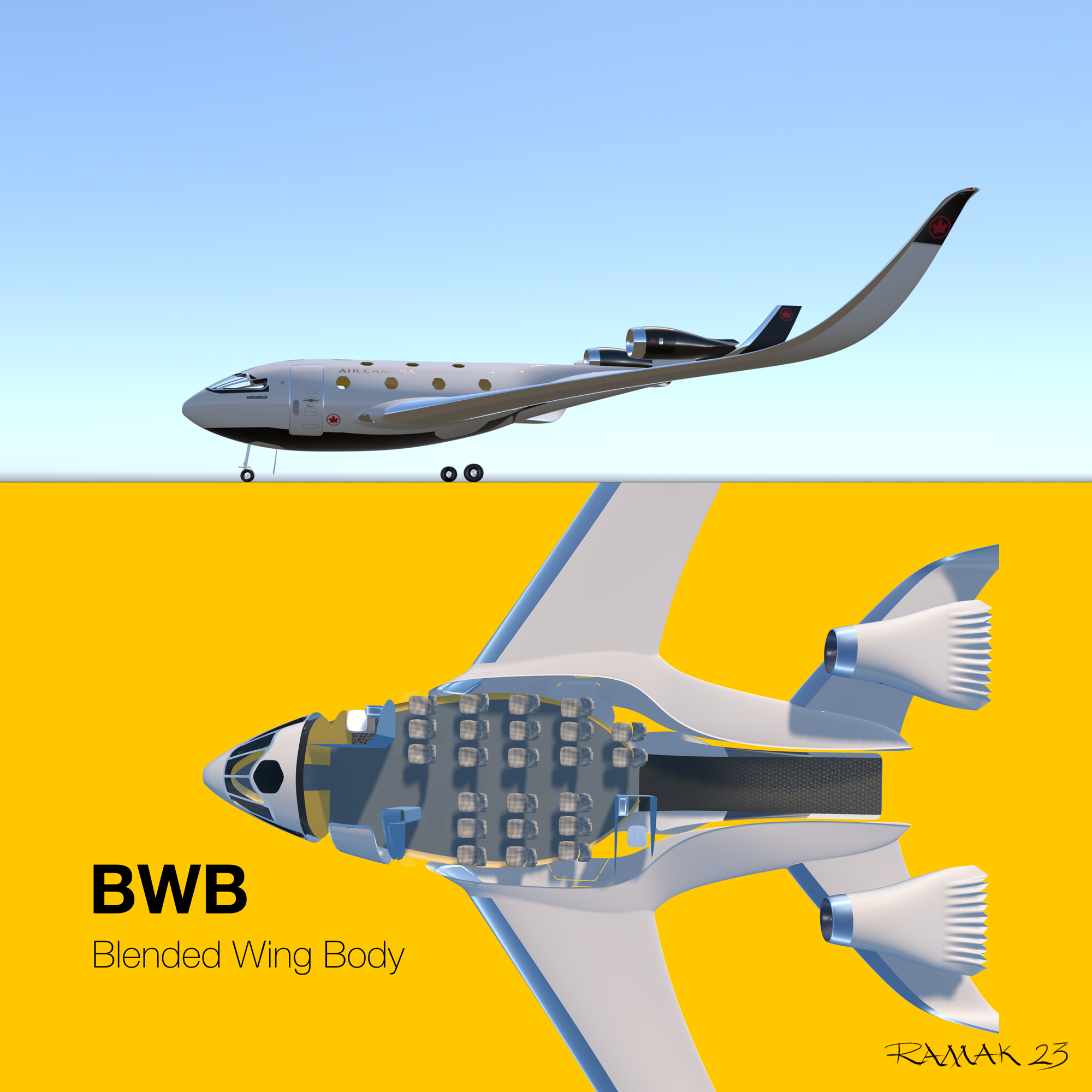
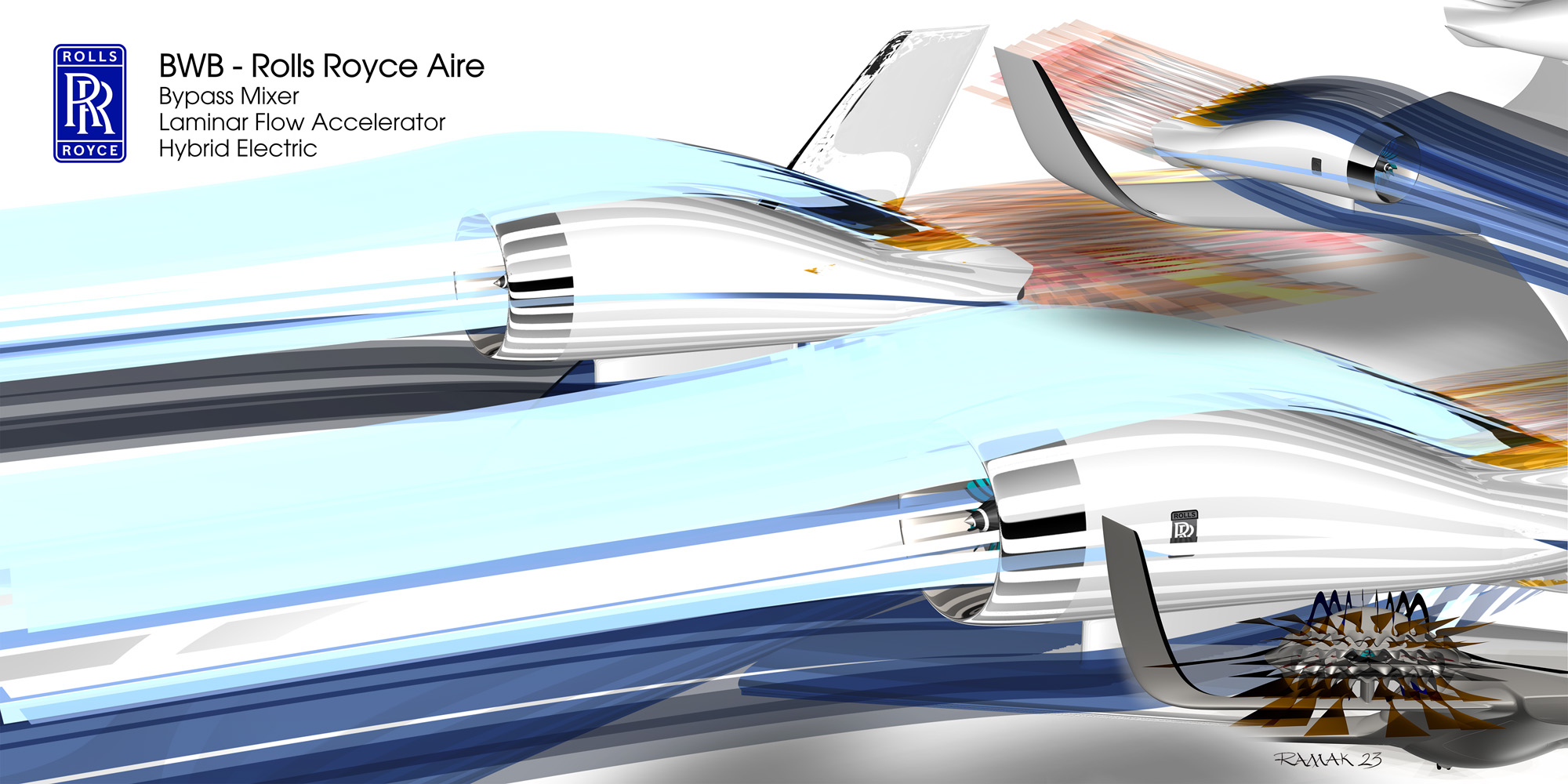
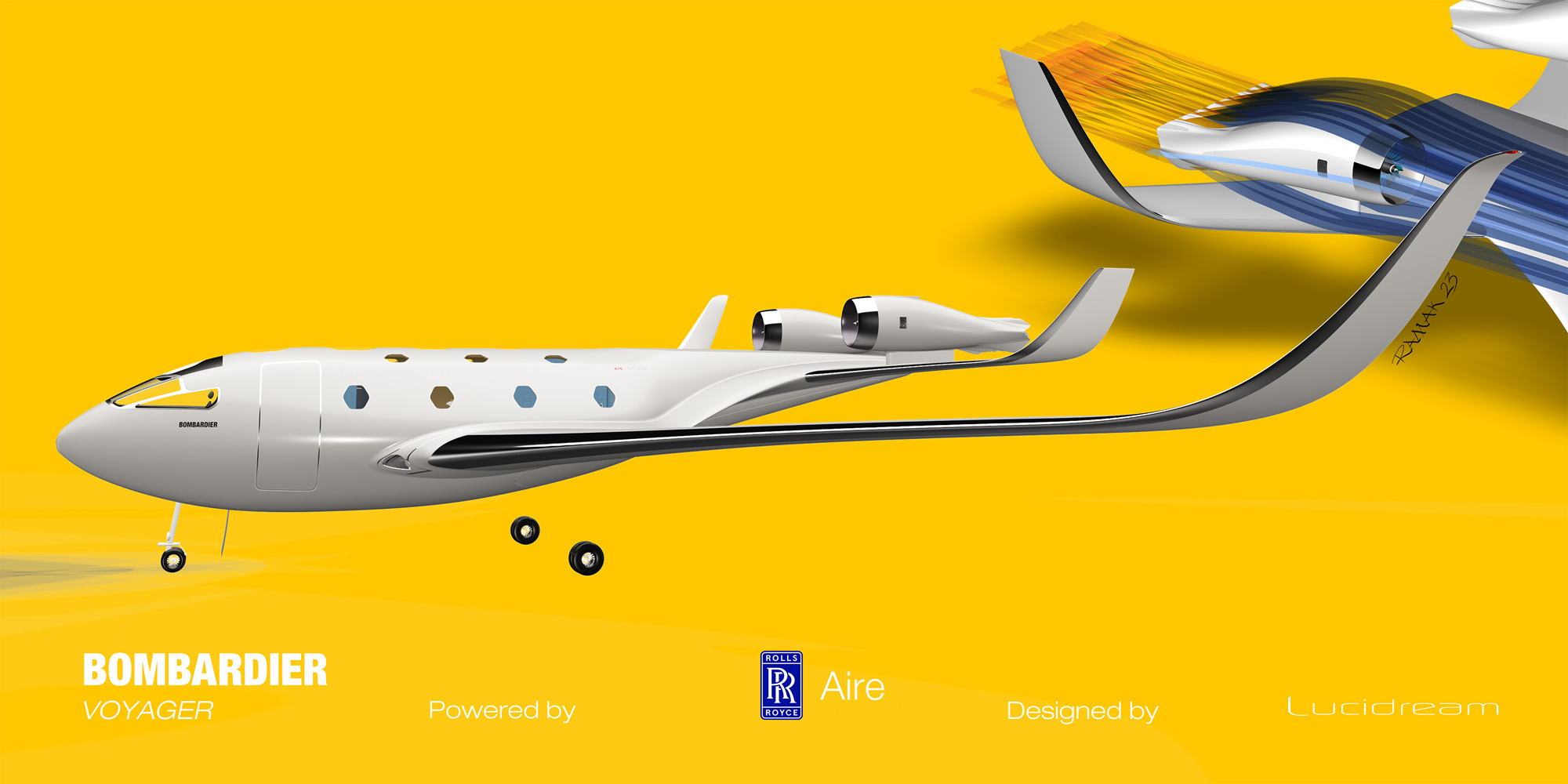
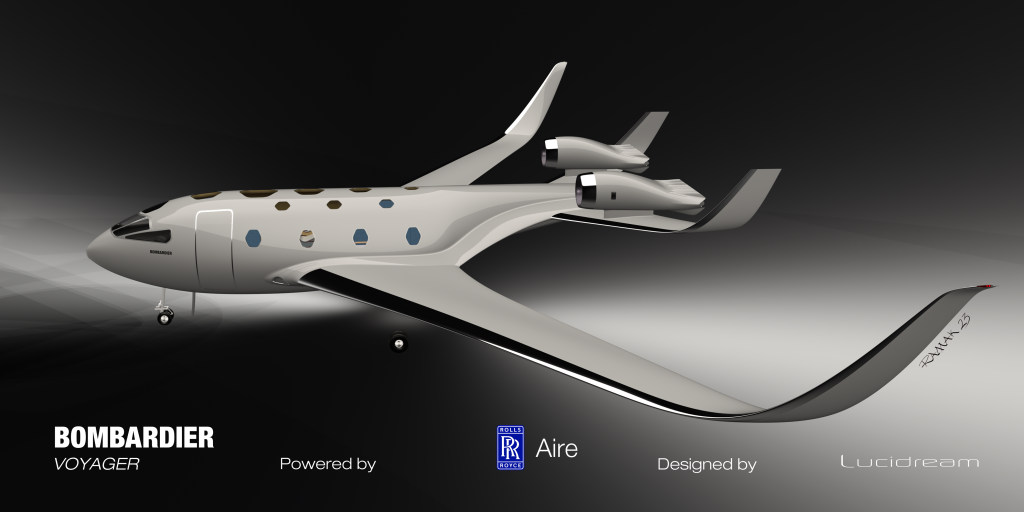
- Blended-Wing-Body Jet Aircraft Concepts
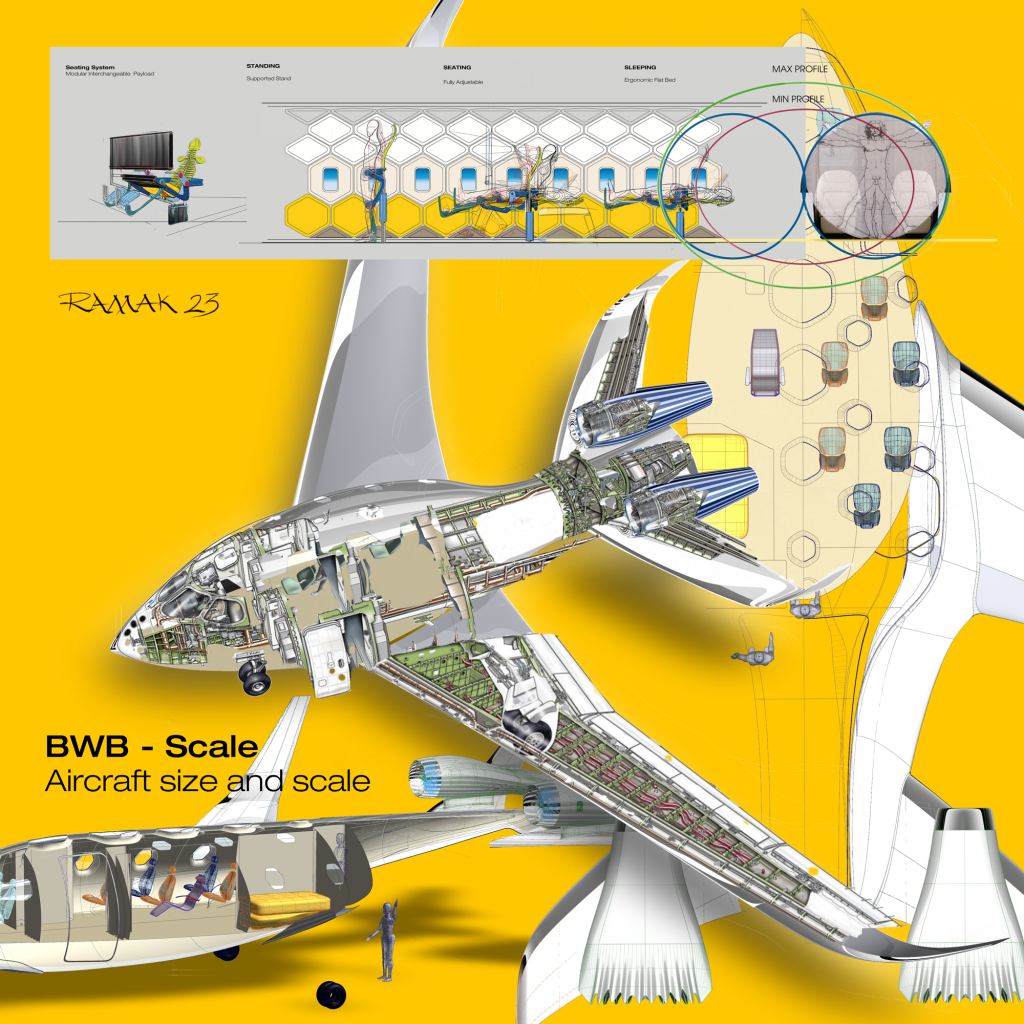
Concepts on scaling up vehicles, processes, enterprises, and experiences
CD – ID – CX
Strategic Creative Directions, Industrial Design and Customer Experience
Product Design, Product Development, Product Strategy, Product Management, Development, and Design
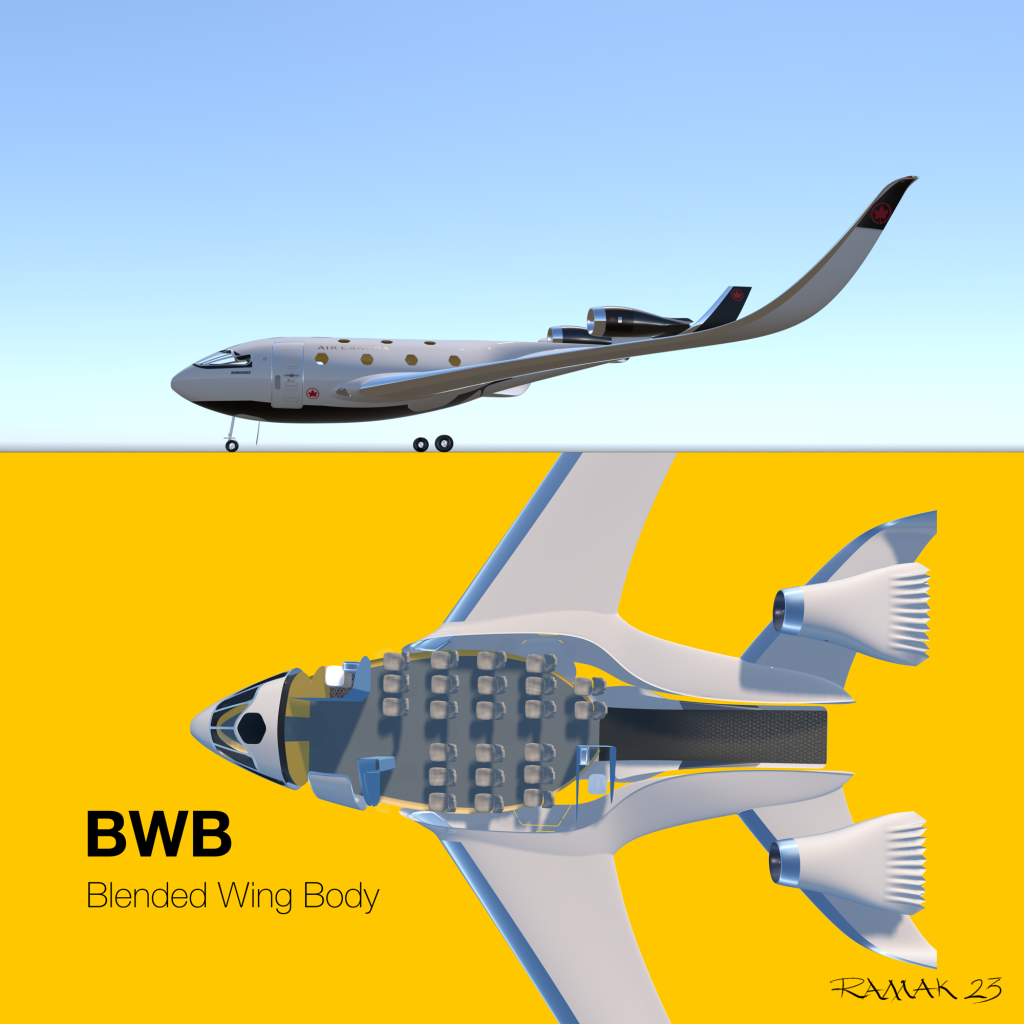
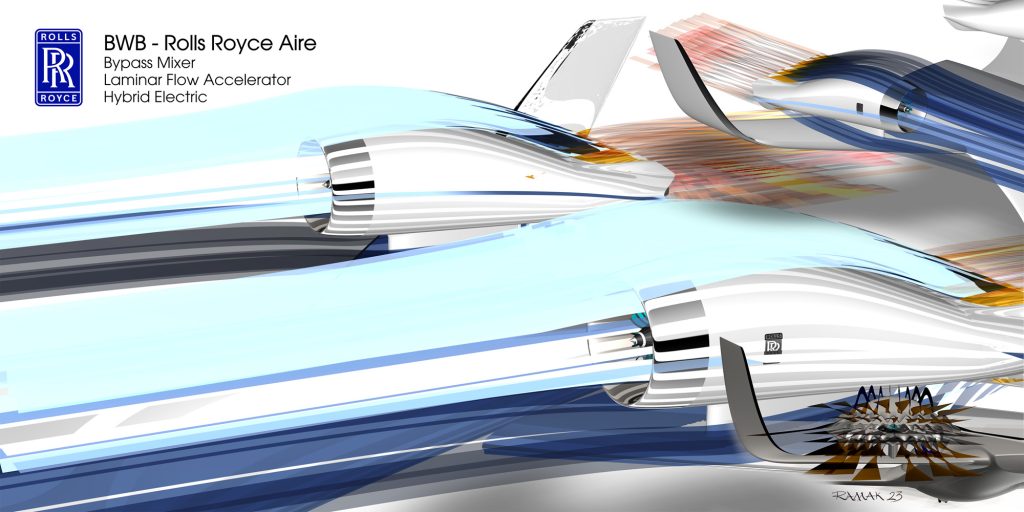
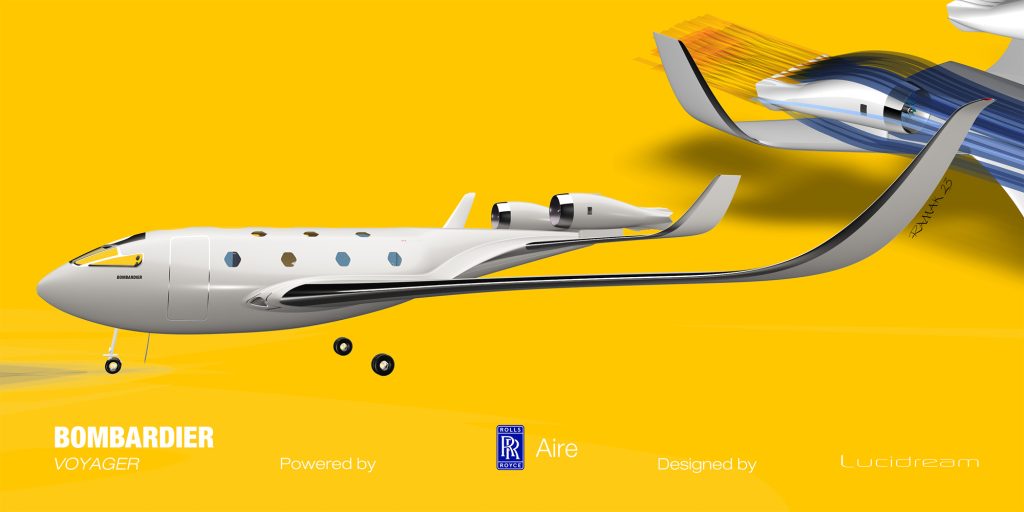
Registered work covered with © Feel free to share and tag me. Enjoy!
Product Design, Product Development, Product Strategy, Product Design Management and Development
Montreal, Canada
#scaleup #jet #industrialdesign #bwb #blendedwingbody #aircraftdesign #aircraftinteriors #design #transportationdesign #creativedirection #industrialdesign #productdesign #strategy #jet #productdevelopment #aerospaceindustry #aerospace #businessjet #rendering #sketching #sketches #sketch #transportation #cardesign #carrendering #designinspiration #transportation #conceptart #transportationdesign #conceptart #automotive #auto #innovation #techdesigns #Bombardier #ecojet #BombardierVoyager #RollsRoyce #RollsRoyceAire #Aire #voyager
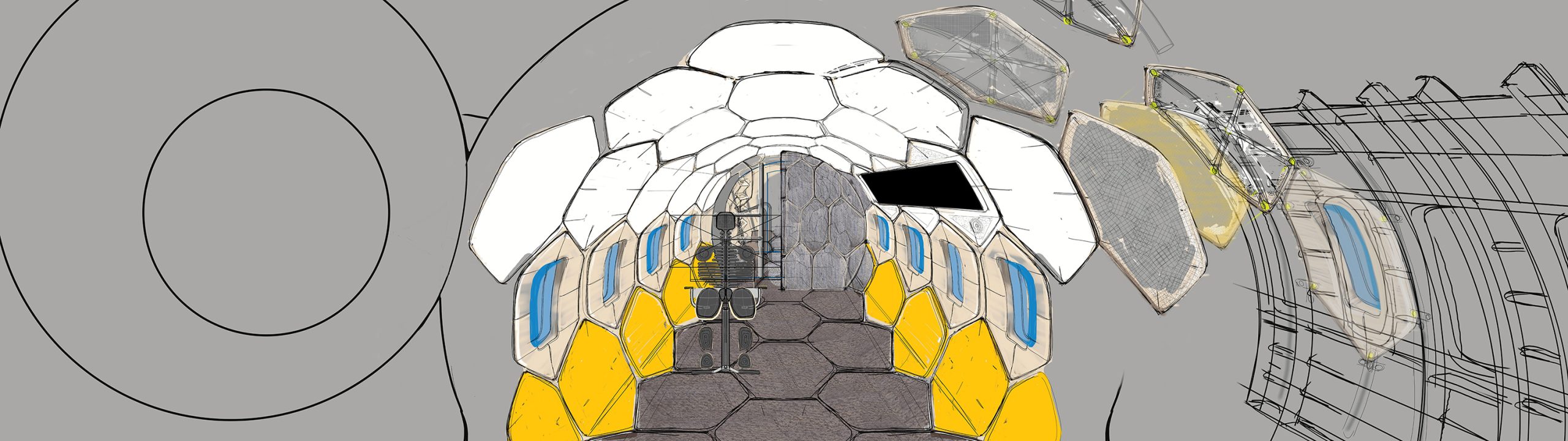
- Interior Strategy Concept
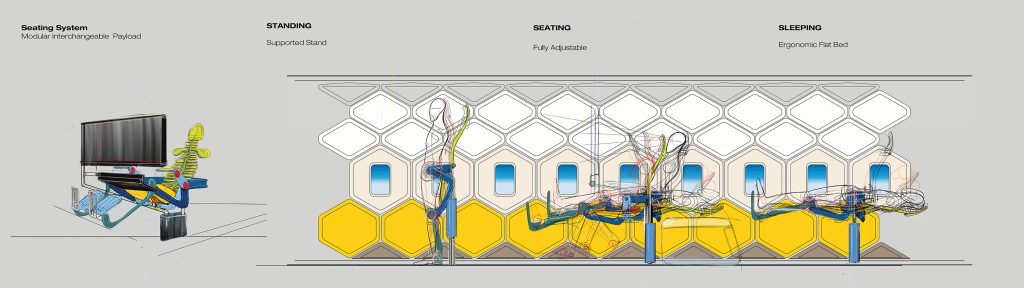
Strategic Creative Direction :: Interior Strategy Concept
Concepts on scaling up vehicles, processes, enterprises, and experiences.
CD – ID – CXCreative Directions – Industrial Design – Costumer Experience
Product Design, Product Development, Product Strategy, Product Management, Development, Design
#creativedirection #jet #industrialdesign #productdesign #productdevelopment #aerospaceindustry #aerospace #businessjet #scalingbusiness, #industrialdesign, #creativedirection, #customerexperience, #productdevelopmentJet – Business Jet
CD – ID – CX
Ramak Radmard
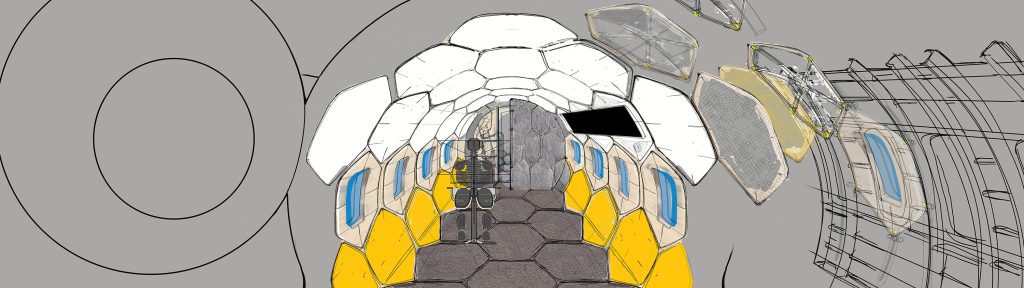
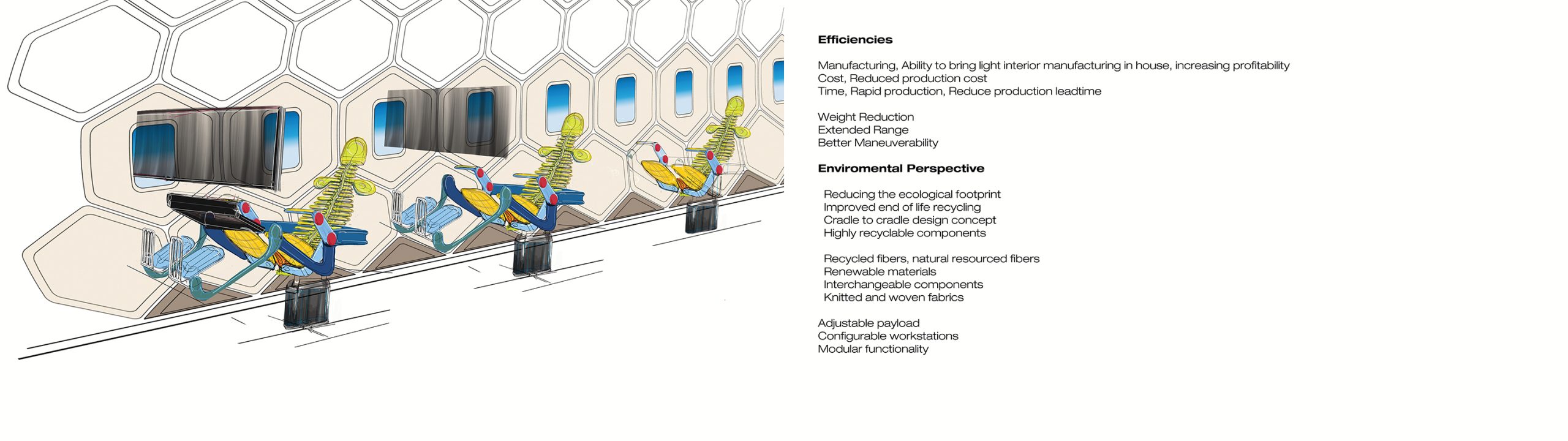
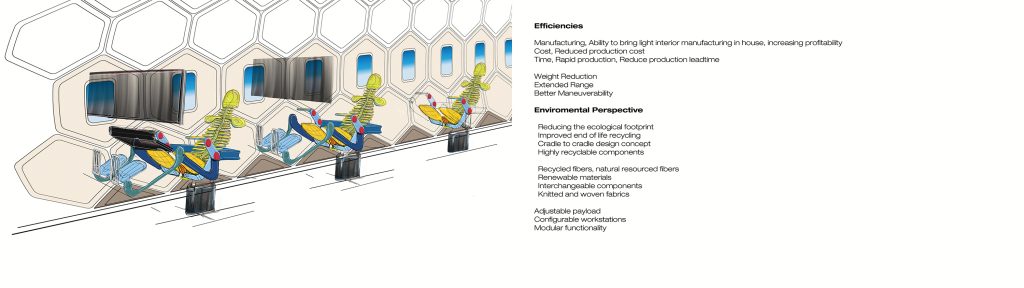
Efficiencies
Manufacturing, Ability to bring light interior manufacturing in-house, increasing profitability
Cost, Reduced production cost
Time, Rapid production, Reduce production lead-time
Weight Reduction
Extended Range
Better Maneuverability
Environmental Perspective
Reducing the ecological footprint
Improved end of life recycling
Cradle to cradle design concept
Highly recyclable components
Recycled fibers, natural resourced fibers
Renewable materials,
Interchangeable components
Knitted and woven fabrics
Adjustable payload
Configurable workstations
Modular functionalityIndustrial Design
Product Design / Product Development / Product Strategy / Design Strategy / Creative Strategy
#scalingbusiness, #industrialdesign, #creativedirection, #customerexperience, #productdevelopment
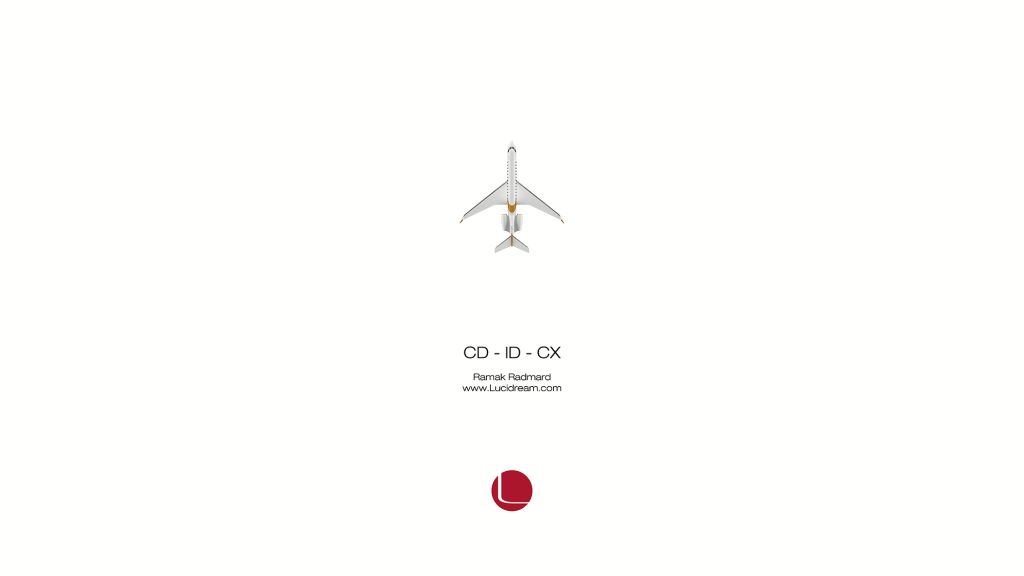
- Strategic Creative Direction
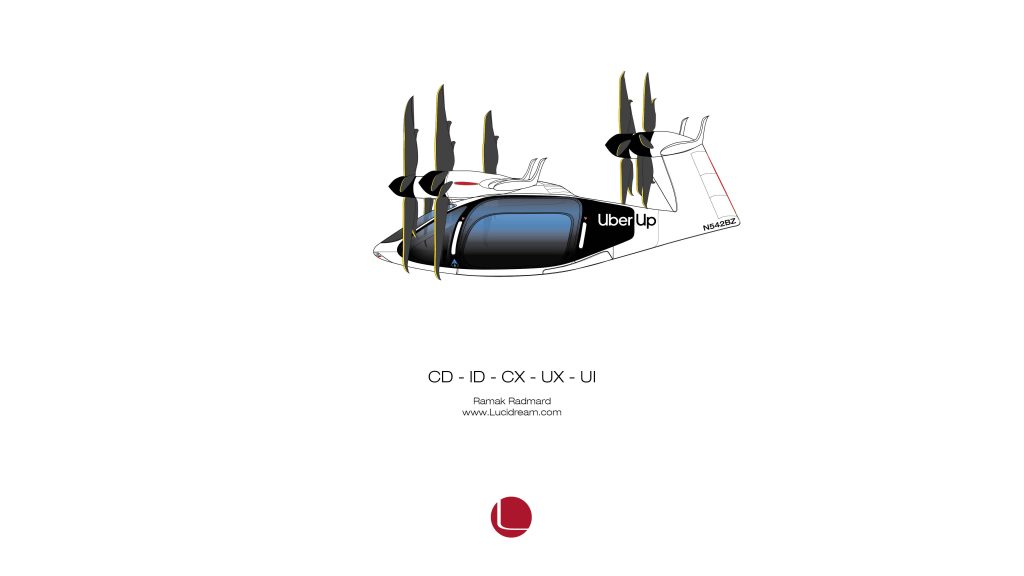
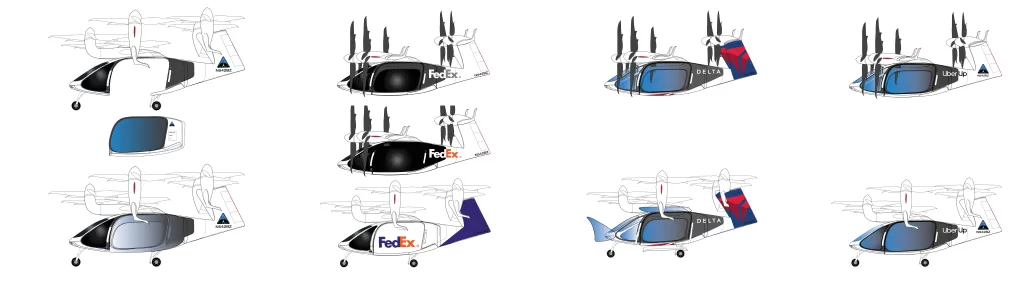
Strategic Creative Direction – eVTOL
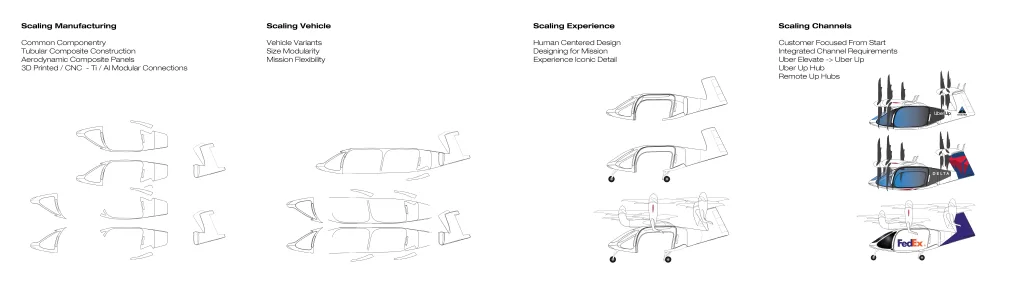
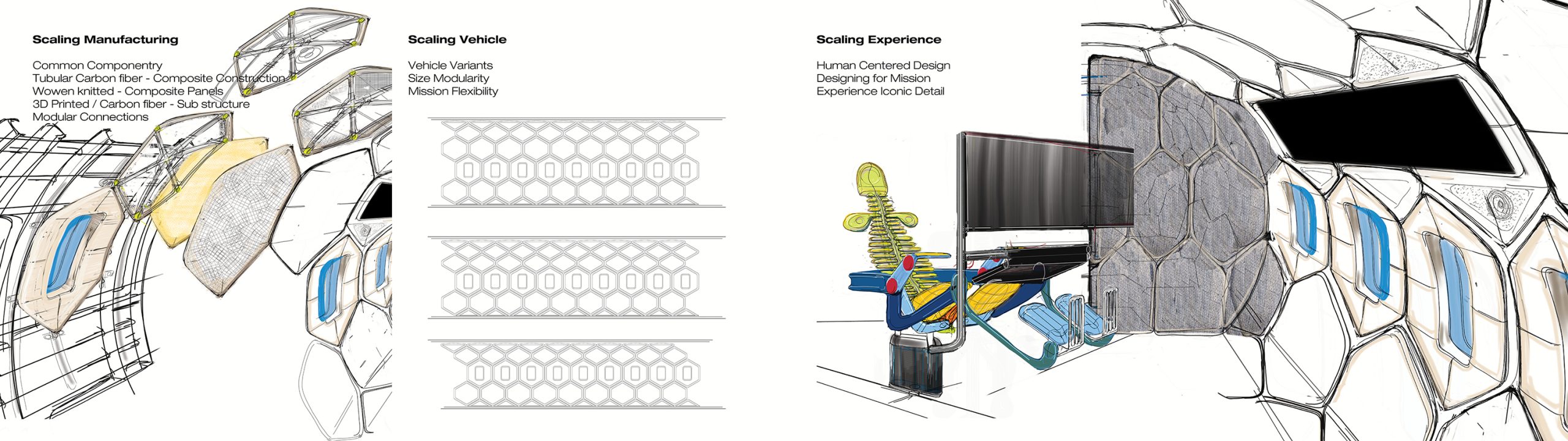
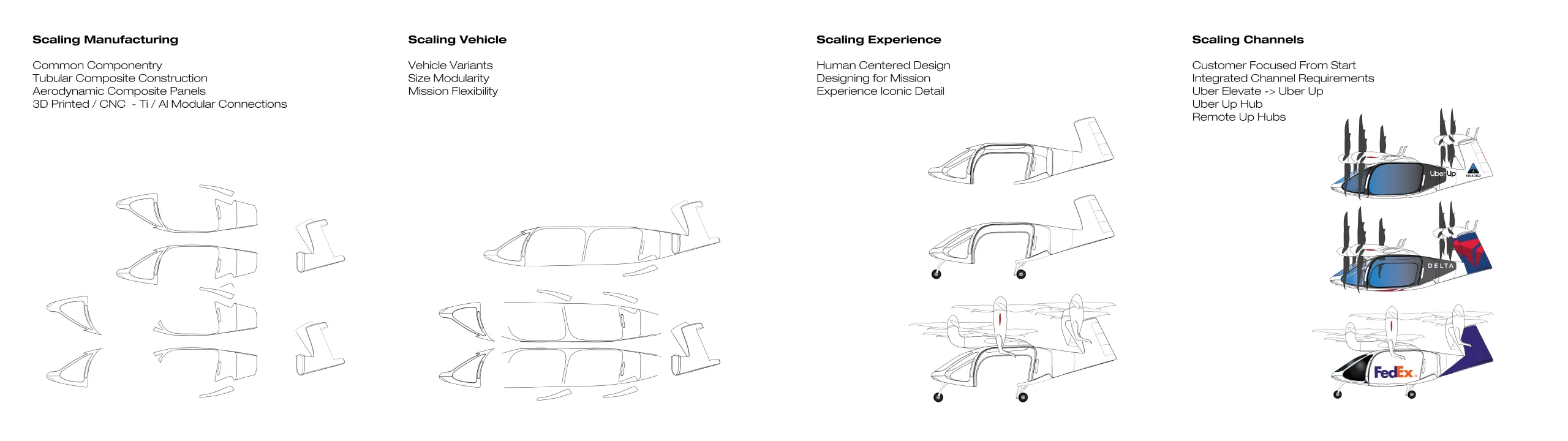
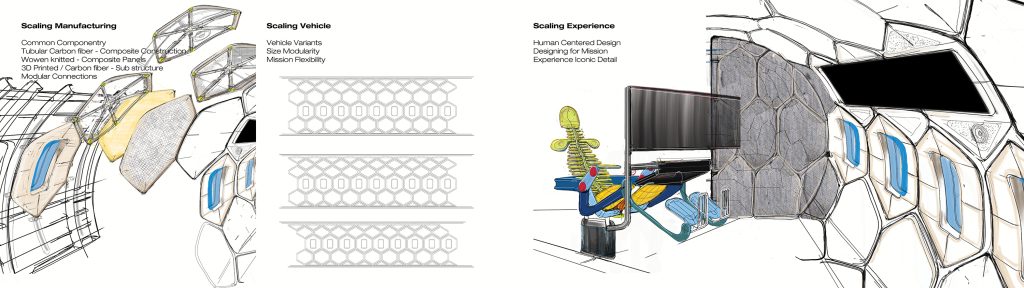
Scaling Manufacturing
Common Componentry
Tubular Composite Construction
Aerodynamic Composite Panels
3D Printed / CNC – Ti / Al Modular ConnectionsScaling Vehicle
Vehicle Variants
Size Modularity
Mission FlexibilityScaling Experience
Human Centered Design
Designing for Mission
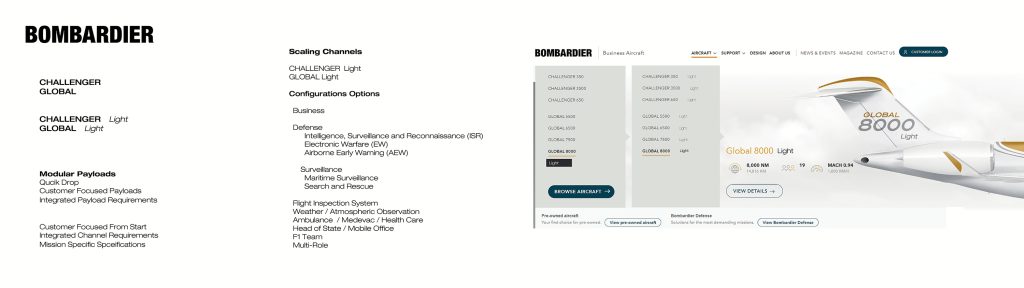
Experience Iconic DetailScaling Channels
Customer Focused From Start
Integrated Channel Requirements
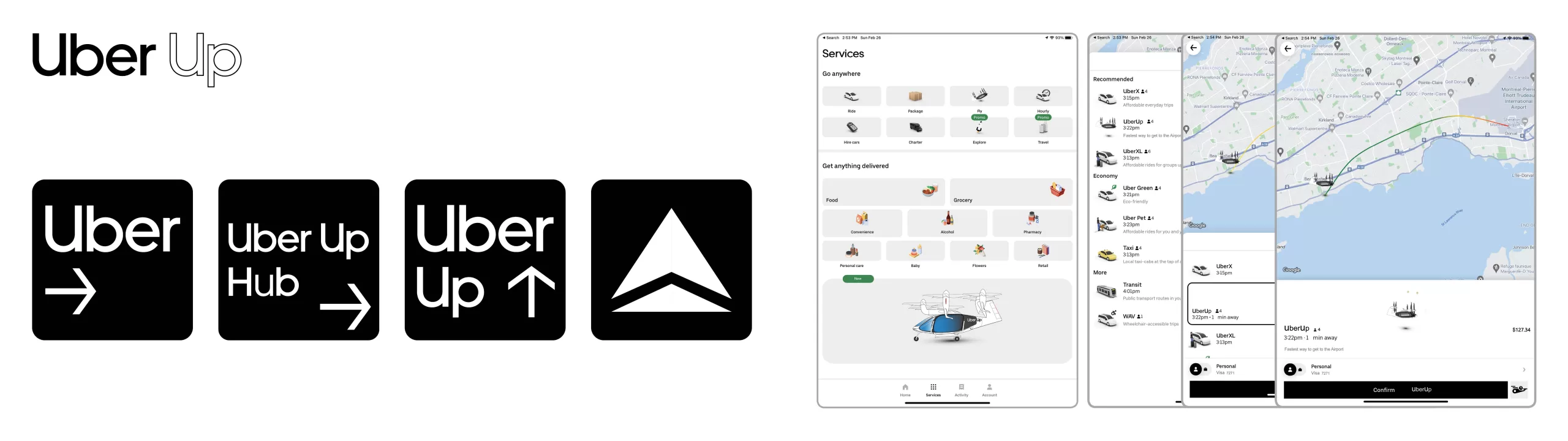
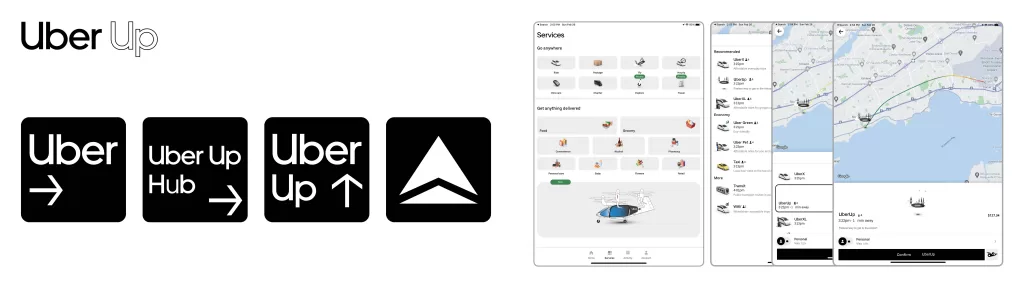
Uber Elevate -> Uber Up
Uber Up Hub
Remote Up Hubs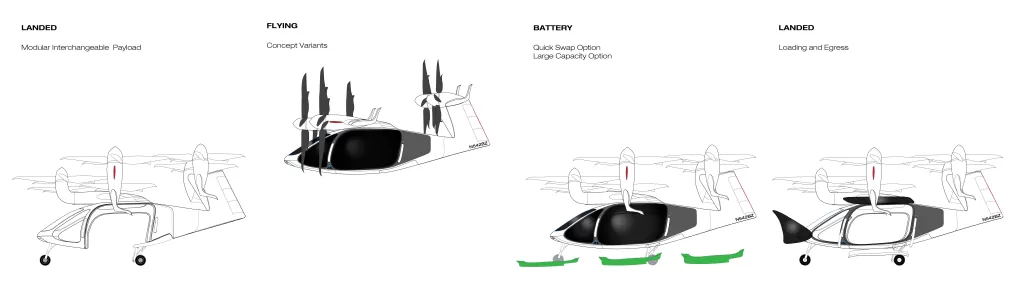
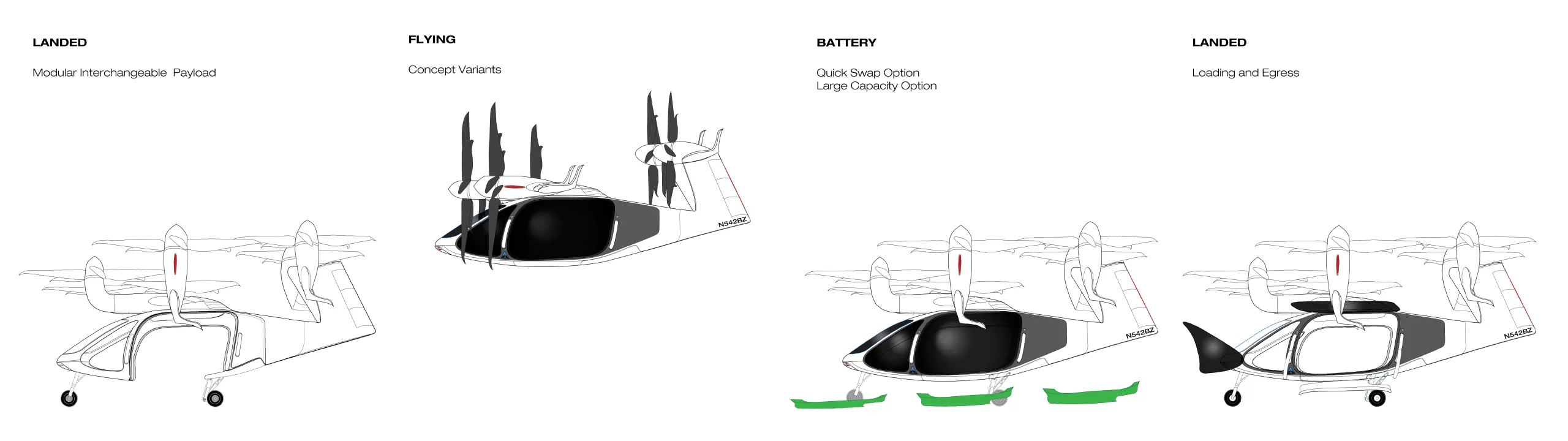
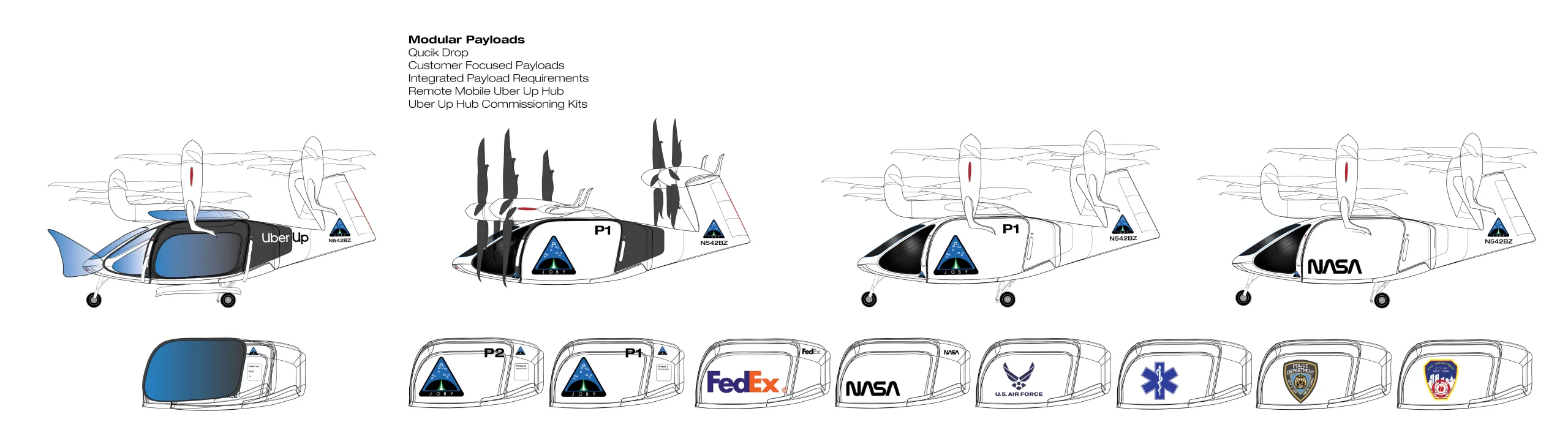
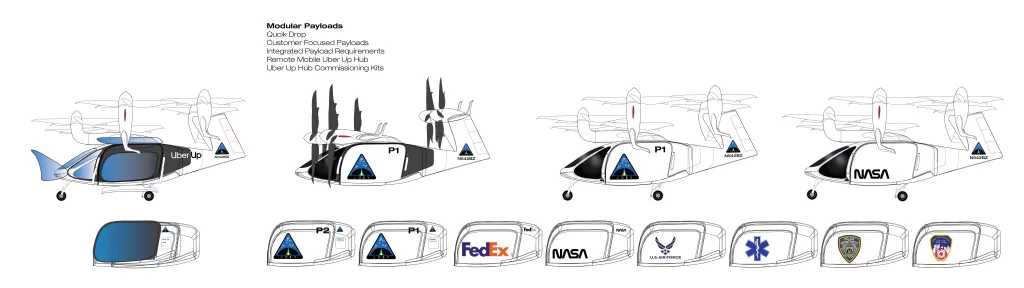
Modular Interchangeable Payload
Concept Variants
BATTERY
Quick Swap Option
Large Capacity OptionLoading and Egress

- Design Leadership must be at the Executive Table
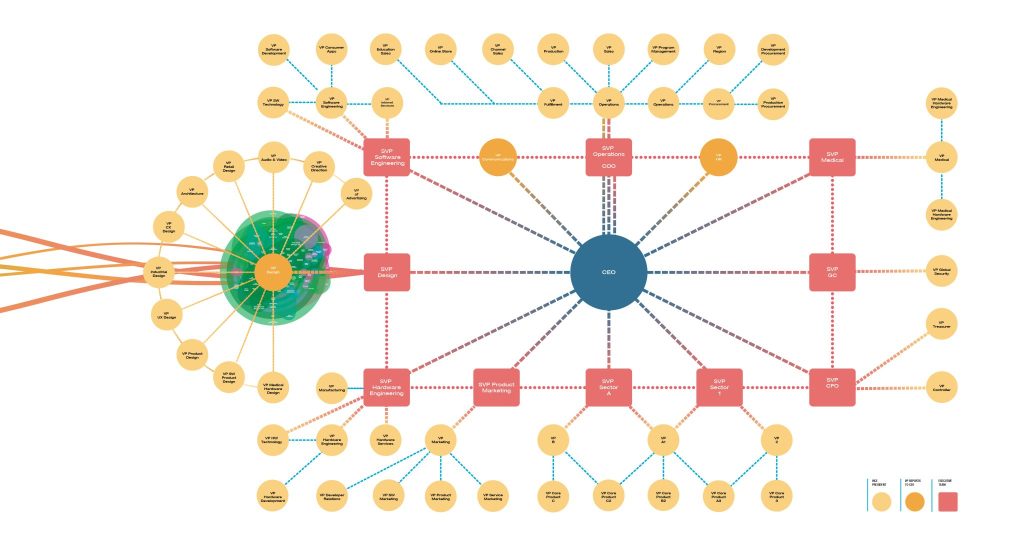
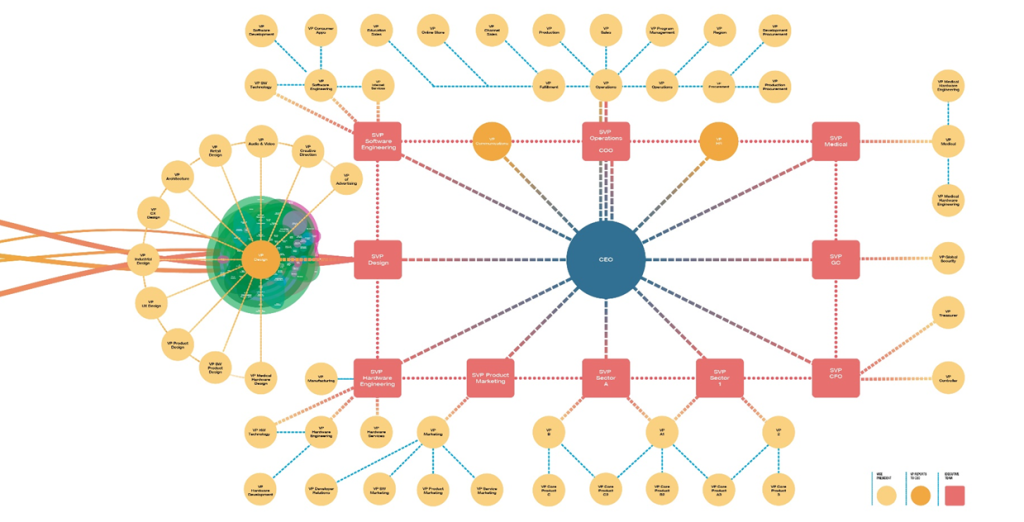
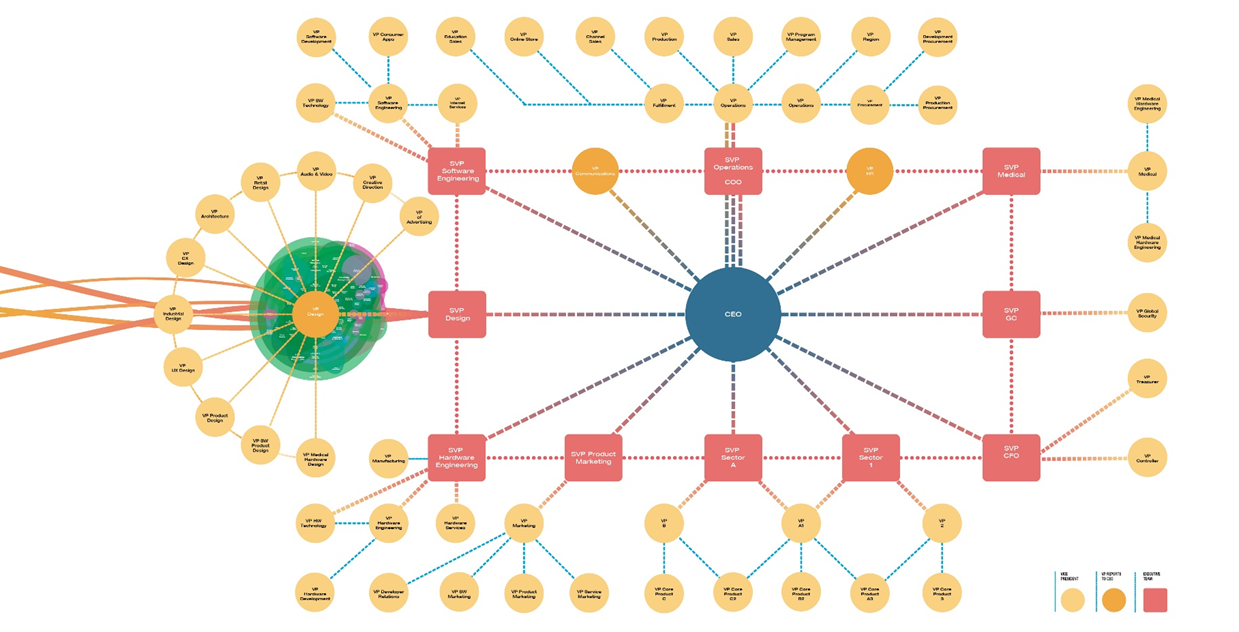
Figure 1, Organization incorporating Design Leadership / Matrix, Cross Functional Teams, functionally structured Do you want to transform your business into a design-centric organization?
Original Publication 4/29/2019
By Ramak Radmard, founder of Lucidream
Established in 1999, at Lucidream we identify inspirational opportunities for our clients by balancing their unique advantages and capabilities. Exploring their presented opportunity, we discover and strategize innovative methods and solutions that add value to their business model.
We develop, design and deliver integrated organizations, systems, products, technology, intellectual property, and experiences. Our investigation, examination, and exploration reveals insight and opportunities, culminating in seamless user experiences and interaction.
Lucidream’s sustainable, design and human-centered process generates an extensive understanding of a business category. Our design research shapes decisions around product form, functionality, usage, and intellectual property.
We use these insights to create innovative ideas and provide superior organizations, products, and experiences for our clients – and their customers.
Untapped Organizational Opportunities
Activating opportunities by creating the future of human experience, awakening the senses
Organizational Failure
It is unfortunate to see large organizations leaving so many opportunities untapped. How do you go about activating these opportunities?
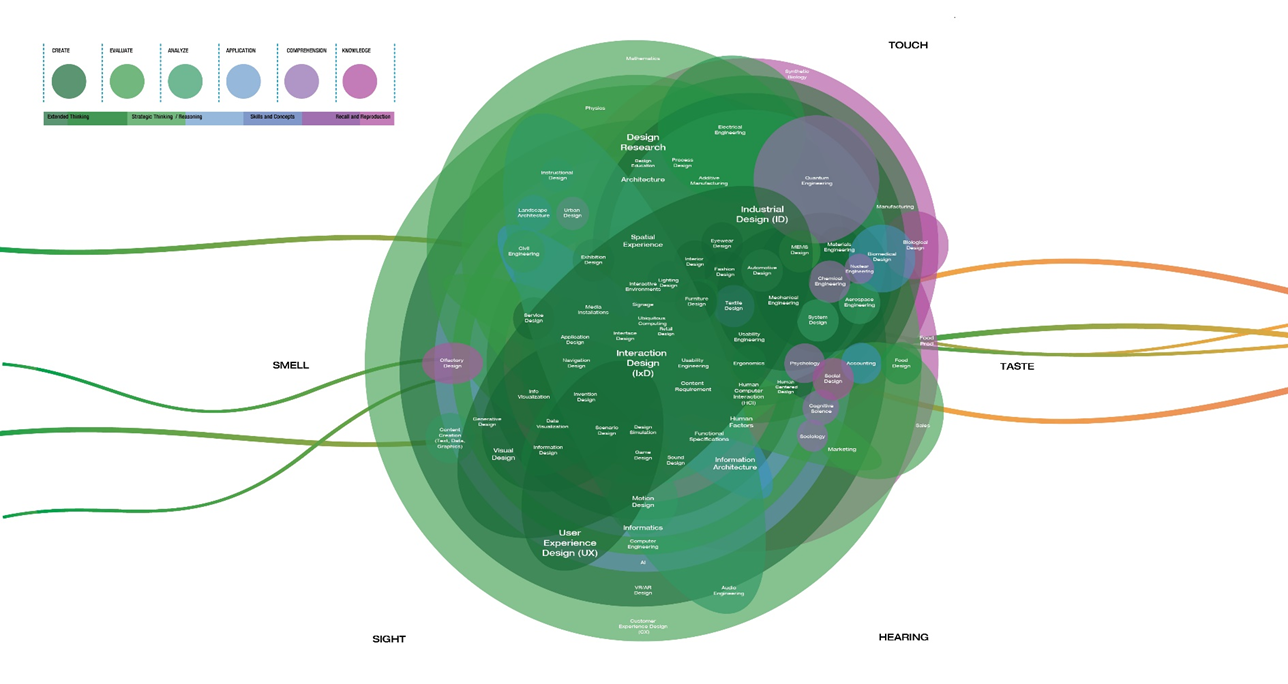
Most of these opportunities are design-driven elements that are associated with different senses. Senses are the key to understanding experience, the more senses a brand can awaken, the deeper the connection can be. Visual Design / Sight, Physical Design / Touch, Audio Design / Hearing, Food Design / Taste and Olfactory Design /Smell. Certainly, there are more than the five basic human senses that add dimensions to these experiences, there are also emotions, memories, cultures, customs, religions, habits, rituals, and beliefs that affect these perceived experiences.
You might have heard Adobe’s CEO, Shantanu Narayen’s quote “People Buy Experiences, Not Products” but have you really thought about this idea in terms of your business? What kind of experiences does your business create? Which senses does it affect? Is your business creating the future of human experience?
How many senses does it awaken?
Activation of Opportunities
The first step in activating untapped opportunities is to start with a human-centric and environmentally sustainable focus to identify what are the real problems, using design research to ask the right questions from the business, the full product life cycle, and users. You need to apply design thinking methodology to break down the value proposition, visualize it in a value matrix, and activate opportunities leading to innovation, new or improved products or services, organizations and businesses.
Empathy Hierarchy Model
Identification of untapped opportunities requires iteration, method, process, and empathy, but how much empathy and for whom? The answer to this question varies with different corporate cultures or business focuses. A map of your business priorities can help to build an Empathy Hierarchy Model.
I am sure you can think about what you would want your northern star to be. Breaking down these values to the most basic elements and listing them in the order of importance, while cross-referencing these priorities with your objectives can determine the level of investigation required for any stakeholder:
Our Observations:
We see a disconnect in our user investigations, we usually observe dramatic misalignments in translation between what the stakeholder believes they want, what they say, what they do, what they think and what they feel. It is the design leadership’s responsibly to translate these conflicting requirements to create consensus through teamwork.Investigation Level
Insight Level (Action)
0 To ignore (General Apathy)
1 To listen (What they “Say”)
2 To observe (What they “Do”)
3 To read (What they “Think”)
4 To emote (What they “Feel”)
Table 2, Investigation and Insight levels
This developed list can be a basis for creating an Empathy Hierarchy Model, here is an example; {(Basic Element, A perspective) / (Investigation Level, # 0-4)}:
{Environment/4, Sustainability/4, Family/4, People/4, Country/4, Customers/4, Needs/4, Workers/4, Shareholders/4, Business/4, Value/4, Design/4, Wants/3, Stakeholders/3, Competition/3, Politics/2, Religion/0, Beliefs/1…}
Your model could look very different, with other orders, variations, and complexity. An Empathy Hierarchy Model can help to ensure a consistent application of design throughout the organization.
Design Research
When Design research questions are applied to the Empathy Hierarchy Model, it allows us to ask the right questions to the correct persona. At this point, completely new services or products start to emerge and self-identify, activating new opportunities.
Design Strategy
When design strategy is implemented correctly and consistently throughout the business touchpoints, the results awaken the senses, speaking loud and clear, in natural resonance, in a consistent language that reinforces the brand message. You can compound the overall value to all the stakeholders of the Empathy Hierarchy Model.
Design Leadership
Incorporating this kind of thinking into a corporate culture should be the mandate of the design leadership, working in partnership with the executive team to map, plan and strategize corporate directions. The design leadership translates these directions to design policies and actionable plans for developing a design language aligned with the developed strategy, implementing design guidelines across the business, and nurturing a design culture, mentoring design leaders throughout the organization.
An organization may be structured functionally, as in Figure 1. However, its design leaders, who can be design subject matter experts and/or people managers, should manage or enable cross-functional teams. Enabling cross-functional teams provides opportunities to mentor business, team and thought leaders and allows for more effective engagement, talent development and employee retention.
Full-Stack Designer / Interface to Senses
The importance of design and its strategy must be a top-down process, and a company’s unique corporate design language and culture need to have executive buy-in. The design strategy must be developed, documented, standardized, translated, validated, updated, managed, nurtured and protected. This role requires a person with a broad breadth of experience in a variety of design disciplines To draw a parallel from the software world, a “Full-Stack Developer” develops software solutions for different platforms and a “Full-Stack Designer” develops solutions for all your business needs, corporate design culture, design language, products, services, and all its physical and digital touchpoints. These design leaders are your business’s interface to senses.
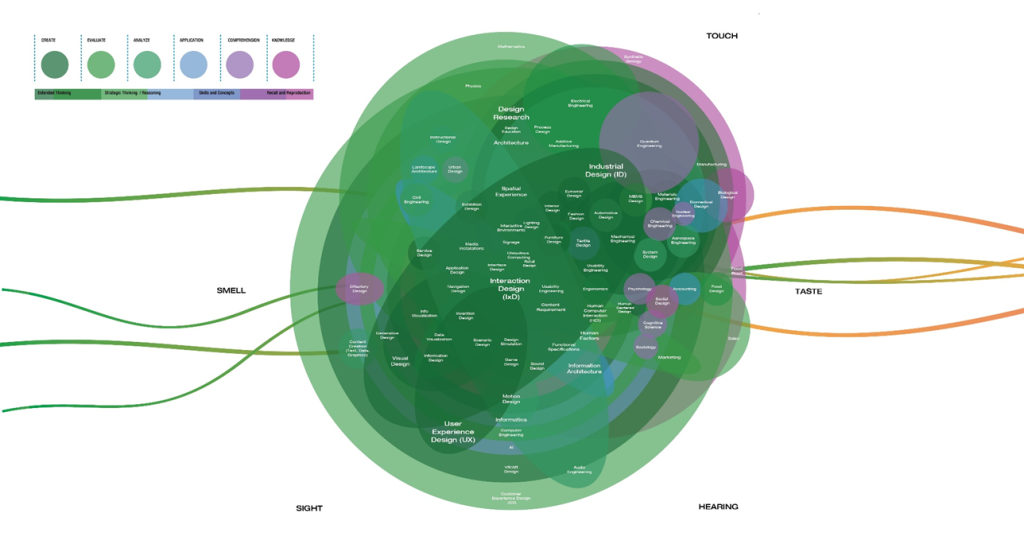
Figure 3, the Anatomy of a “Full-Stack Designer” Design Leader / Design Executive. Corporate Culture / Lack of Design Leadership
The culture of a company evolves from its founders and officers, the strength, vision and the ability to express the importance of these elements from their personal hierarchy models, resulting in unique corporate culture.
We are all familiar with titles like; Chief Technology Officer (CTO), Chief Financial Officer (CFO), Chief Operating Officer (COO), Chief Marketing Officer (CMO), Chief Creative Officer (CCO)…
So why are there are so few design executives? Chief Design Officers (CDO), Senior Vice President of Design, Vice President of Design, Director of Design and Design Managers? Where is the design leadership in your organization? Do you have any design management?
Who is really the voice of the customer and corporate culture in your organization?
In my experience, small to large companies that respond to “what is your design leadership / management / culture like?” with a strange or elusive answer like “it is good enough” and “we have more important issues now” or “this is the way we have always done it” lack a vision for design culture and are the companies that need this type of leadership the most.
So I ask you, do you have a CTO, CCO, and CMO…? Do you have a CDO? Do you have an SVP SW, SVP Eng…? Do you have SVP of Design? Do you have a VP Design? Do you have a Creative Director or Design Director? Design Manager?
We have all heard this statement “We have a very traditional organization.” I ask what do you mean by that? “Design is a sub-function that reports to a manager” Almost like an afterthought… Oh, yes and we should make it look good too! In the absence of design leadership, each project or subproject will develop its own language, disconnected from the bigger picture, lacking a detailed problem statement, guidelines, and tools. This leads to massive inefficiencies, individual team members establishing their own processes, methods, and styles that are not in line with the larger business strategy.
Self-Reinforced Experiences of Senses Associated with your Brand
We patent our business’s intellectual properties and trademark the creative properties, but how do we protect the cultural properties? How do we ensure a sense of legacy? How do we ensure that these experiences of senses that our business is creating are fully associated with our brand?
A complete and seamless corporate design language translates to a self-reinforcing brand awareness experience, any design component can create a connection with the brand. A focus on a narrow band of customer experience polarizes and disconnects these potential brand association opportunities, taking into consideration a consistent language throughout different design disciplines, media or business touch points.
Cost / Risk / Reward / ROI
Let’s step back and look at these design opportunities in relation to cost, risk, and reward.
Can you put a cost on not being competitive?
How do you measure business losses if you are not using design leadership and what are the compound effects to your business if these opportunities are not activated? The consequence usually manifests itself as a relative drop in value, competitiveness, quality, service or scope.
I believe Benjamin Franklin’s quote addresses this experience well.
“The bitterness of poor quality remains long after the sweetness of low price is forgotten.”
Customer experience is a collection of feelings and emotions that are associated with your brand and their interactions, some products and services create deeper emotional connections because they connect at a deeper level with more senses.
What are the strengths of your business? Access to distribution channels, supply channels, to funding, to awakening some senses, user needs, vision, leadership, idea, data, innovative service, product or capability. Are you fully leveraging these advantages? Do you use design as a vehicle of change? Given your business position, are you focusing on the right investment, acquisition, product or service introductions or expansions? Do you need a new perspective on your business design or organization design? Look at your portfolio as a whole.
What is your business culture? Do innovation, design, and experience play a large role in your business?
How can we help?
Do you want your business to connect to your costumer’s senses? If yes, create and empower your design leadership. Create design executive positions, Chief Design Officer, Senior Vice President of Design, Vice President of Design, Director of Design and Design Managers and let them do what they do.
We can help your business to restructure and transform to a purpose-driven human and design-centric organization. I have discussed some organizational ideas here, and I look forward to working with your executive team to develop and build cooperative design strategies.
We can help to design or to put in place methods and procedures to standardize and validate the design processes across different design disciplines and media. We can provide organizational, functional, operational, design, team and thought leadership. We provide talent development, mentoring and partnerships to help leaders transition into design executives, we help your business grow and take advantage of the compound values of design.
We hope to be your design evangelist, to work with your business to establish design as one of its cornerstones, a guardian of culture, a voice for sustainability, usability, functionality and customer, a vehicle for continuous improvement.
If you like to inquire more or like to discuss your design reorganization experiences, please feel free to contact me.
Ramak Radmard
https://www.linkedin.com/in/radmard/
Case Studies
Systematic problems and the opportunity in Design space.
2D – 3D Translation
We see a huge disconnect from the digital world to the physical world and vice versa, the transition between hardware and software and from software to hardware, while keeping a consistent design language is a common challenge.
There are sets of opportunities in creating intuitive experiences, impeccable interaction design and seamless transition from physical to AR to VR to digital and vice versa, with AR / VR becoming more common, we predict more interfaces will mimic 3D spaces and elements that can work across real, virtual and digital domains.
This trend represents a huge set of opportunities in the field of real-time rendering of UI/UX elements, these 3D vector elements could be rendered locally to suit the platform they are being consumed in. A mobile unit would render the interaction in a small 2D output whereas the AR user would only render small 3D elements and the VR user would render the full-size 3D environment… UI/UX elements are becoming more 3D. Now how can we design and express these 3D elements as vector forms and eventually codes that would use very small bandwidth and could be locally rendered as needed?
Physical Product Design & Digital Product Design
Areas of deficiencies in expertise.
Let’s look at two different business models, web-based and physical product base. The gaps and overlaps are a telling story of deficiencies in expertise, which illustrates the potential opportunity for engaging more senses.
Plain Text – Required, Bold Text – Not Required, Bold & Italic Text – Sometimes Required
Physical Product – B2C:
Gap in Mobile Digital Platforms, AR, VR, IOT – Spatial Design
Design Thinking / Design Research / Experience Design XD / Interaction Design IxD / Industrial Design ID / Hardware Design HWD / Software Design SWD / Product UX / UI / Packaging Design / Instructional Design / Shopping and Shipping Experience / WEB and Mobile UX / Web Design / Retail Design / Signage Design / Architectural Design / Landscape design / Urban Design.
Digital Product – B2C:
Gap in Physical Brand Identity, 3D adaptation, AR, VR, IOT – Spatial Design
Design Thinking / Design Research / Experience Design XD / Interaction Design IxD / Industrial Design ID / Hardware Design HWD / Software Design SWD / Product UX / UI / Packaging Design / Instructional Design / Shopping and Shipping Experience / WEB and Mobile UX / Web Design / Retail Design / Signage Design / Architectural Design / Landscape design / Urban Design.
Interaction of Activities
Design leadership continuously nurtures and mentors the interaction and growth of various design disciplines, empowering the collective to generate progressively more innovative ideas.
- Season’s Greetings from Lucidream

Season’s Greetings from Lucidream
Lucidream would like to send our best wishes to you and your loved ones this holiday season. We hope you enjoy a happy, healthy and prosperous New Year! We are deeply grateful to our family, friends, customers, partners and suppliers for their contributions to Lucidream’s success in 2016. It is a pleasure to have you along for the ride as we continue to move onward and upward through 2017. For now, we are keeping things moving in our online Shop. Be sure to check out our extended Holiday Return Policy, which gives you some peace of mind when giving eXo and its accessories as gifts this season (although if you ask us – what’s not to love?) For the future, we are hoping to make 2017 our biggest year yet. Development is already under way for the next generation of eXo and accessories, and we are aiming for delivery of our next production batch in May. Stay tuned!Happy Holidays! Joyeuses Fêtes! Buone Feste! Frohe Feiertage! Buenas Fiestas!
- eXo Premium iPhone Case – Compatible with iPhone 7
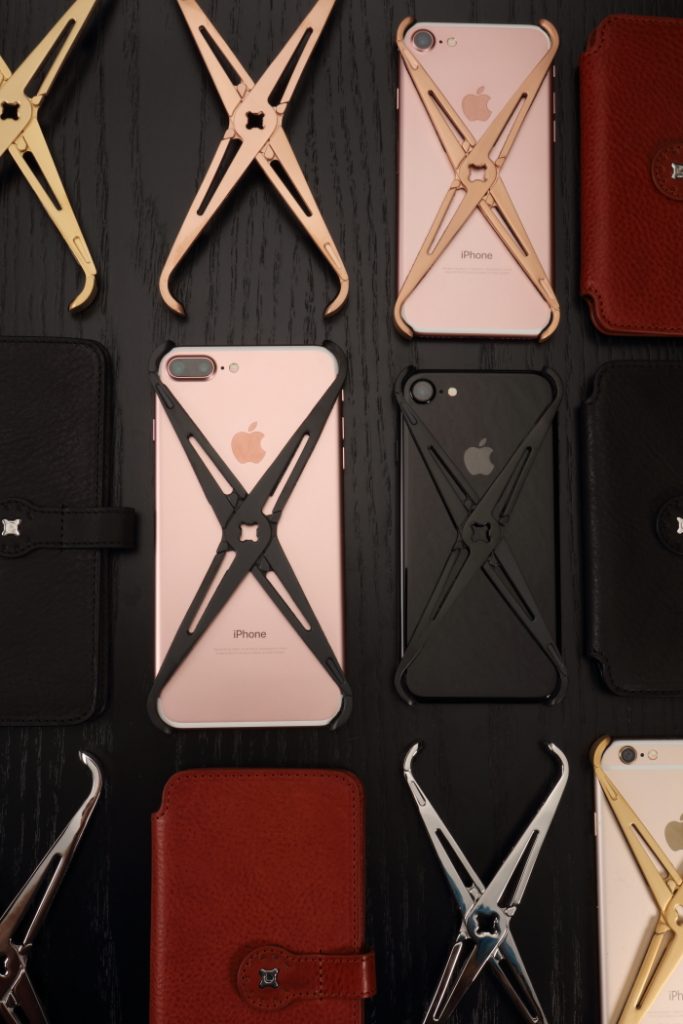
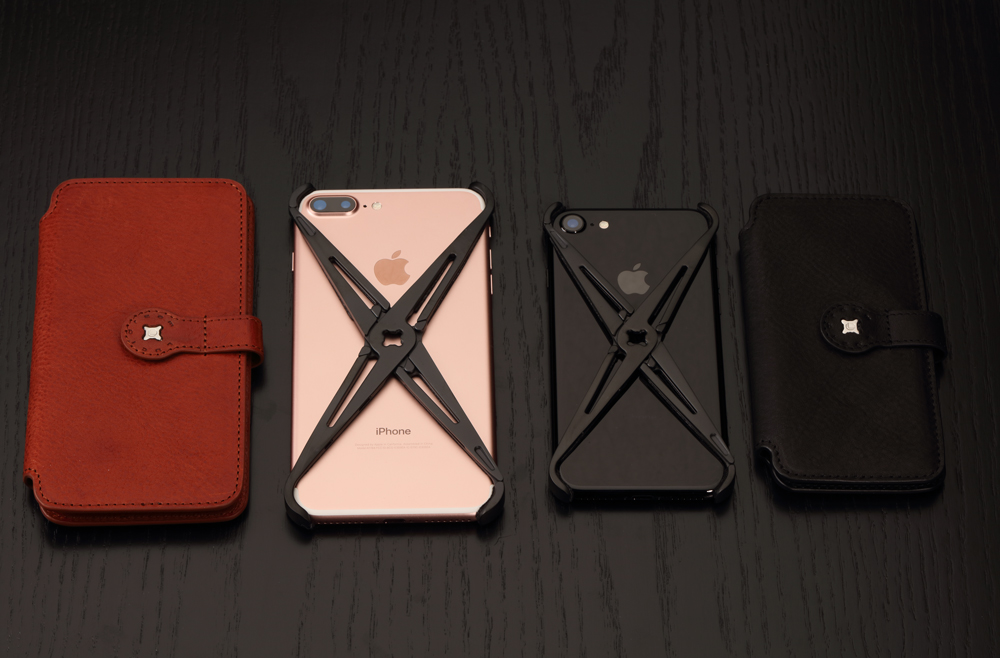
Lucidream eXo-Skeleton Premium iPhone Case
Designed by Ramak Radmard
Now available for Apple iPhone
The eXo is now available for the following Apple iPhone products:
- iPhone 6
- iPhone 6s
- iPhone 7
- iPhone 6 Plus
- iPhone 6s Plus
- iPhone 7 Plus
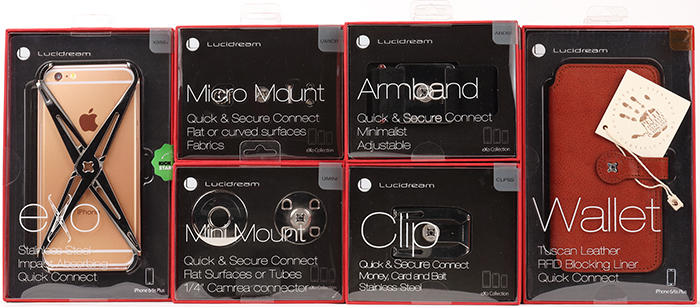
eXo in stock and shipping
Now available at Lucidream Shop
Thank you
As 2016 nears its end, we want to send a big thanks to all the backers who supported our Kickstarter campaigns, as well as our pre-order clients who waited patiently for their Lucidream eXo Premium iPhone case! It has been quite the journey now that eXo is in the hands of users around the world (50 countries, to be exact). We are happy to report that we shipped all pre-orders by mid-October.What customers are saying
With eXo now gracing phones around the world, we’ve received some great feedback from users who wanted to share their excitement with us! Here are just a few examples:“I have owned the majority of iPhone models over the last 9 years and have also owned lots of cases. I always search for something special to complement the Apple design. I must say that the eXo is by far the most beautiful and unique design I have ever owned.” Stewart – Marche, Italy
“I have never used a case on any of my phones EVER, but I saw this and loved it. […] The weight is amazing; it allows me to grip the phone better, and rather than cover up the iPhone design it really adds to the look. Perfect 10/10 for the eXo!” Adam – Overton Basingstoke, United Kingdom
“Craftsmanship that is missing in our modern world. I feel like a 10 year old on Christmas morning. Really – these two items have put smile on my face.” Michael Stahl – United States
“I just wanted to thank-you so much for all of your assistance and individual customer care in dealing with my order […] I look forward to seeing and hopefully owning more Lucidream works of art in the future.” Kevin Schnavel – Dollard-des-Ormeaux, Canada
New eXos: Breaking in and installing
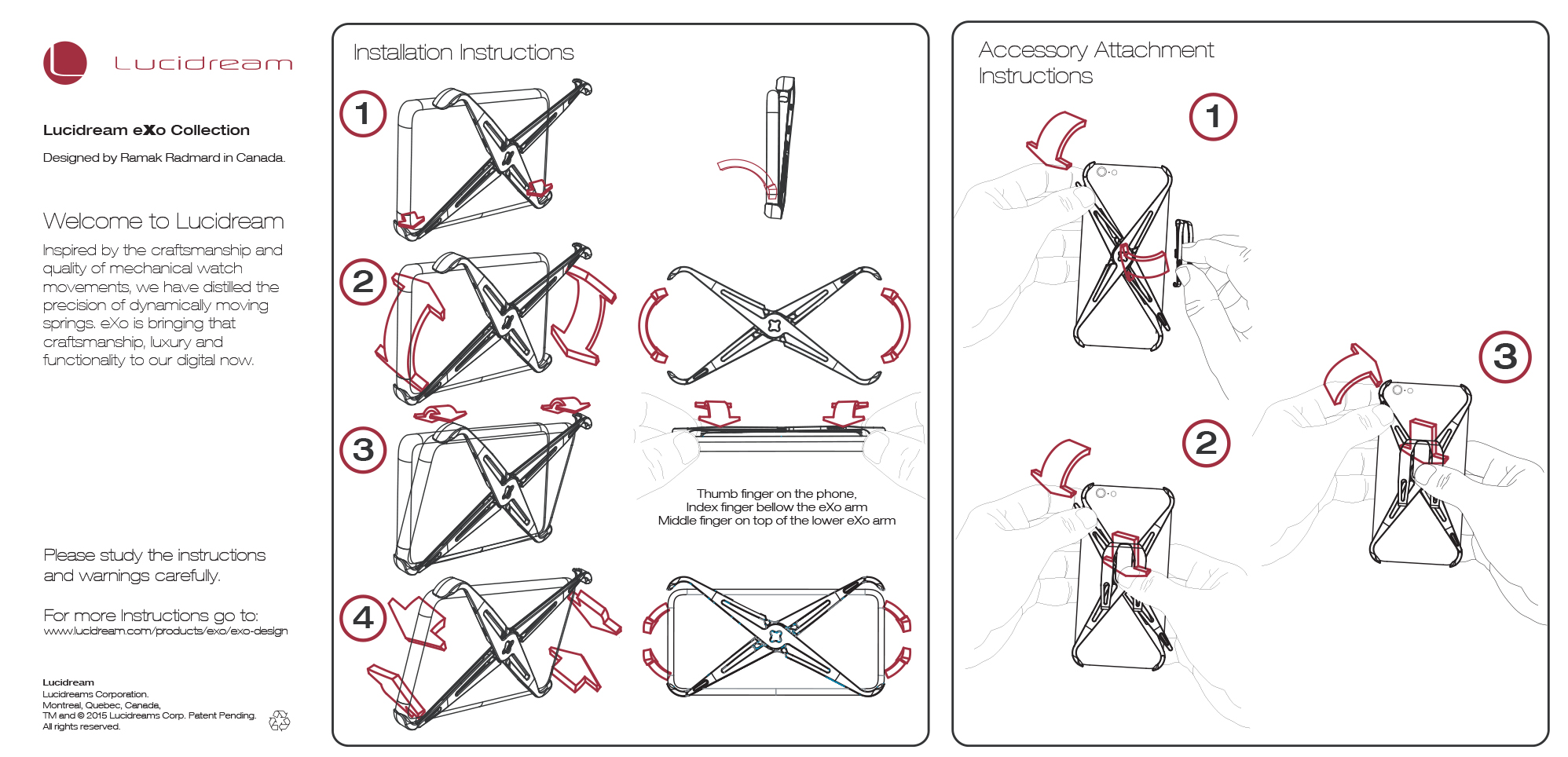
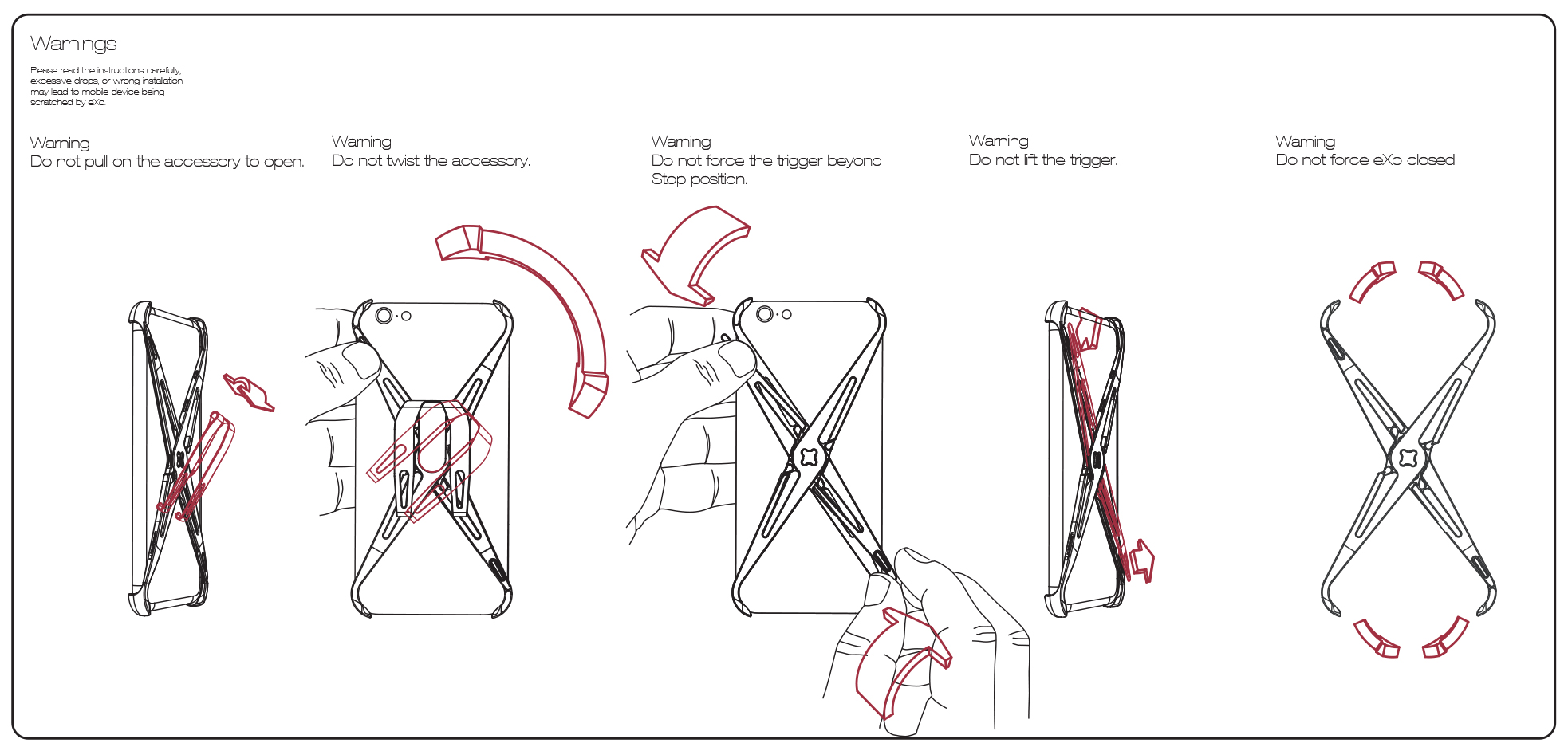
This mechanical device is a highly engineered, forged and machined stainless steel product that protects and connects your smartphone to the world you live in. Like any mechanical device, you may need to break-in your eXo. Since your eXo is new, it will be stiff; the springs and connections need some working in to get the system operating smoothly. This preliminary breaking-in will make it easier to open the device as per step #2 in the instruction manual: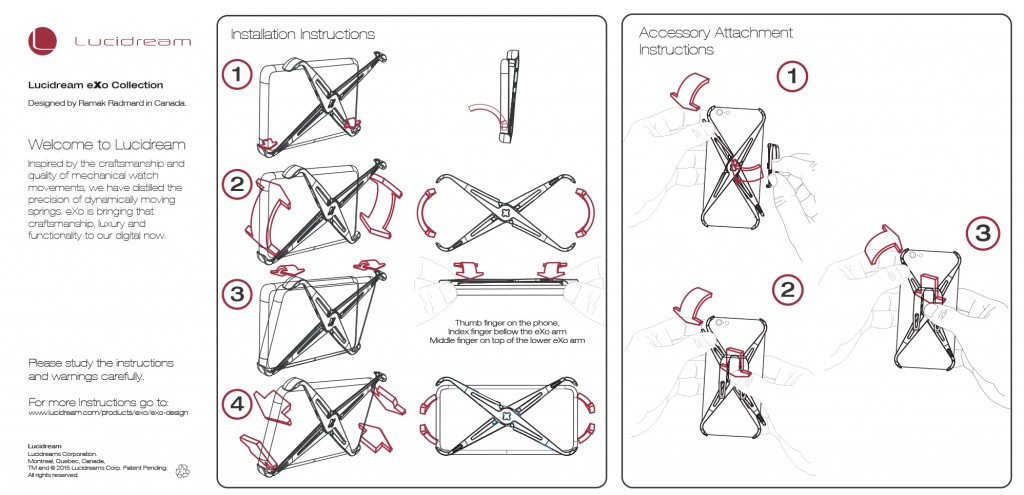
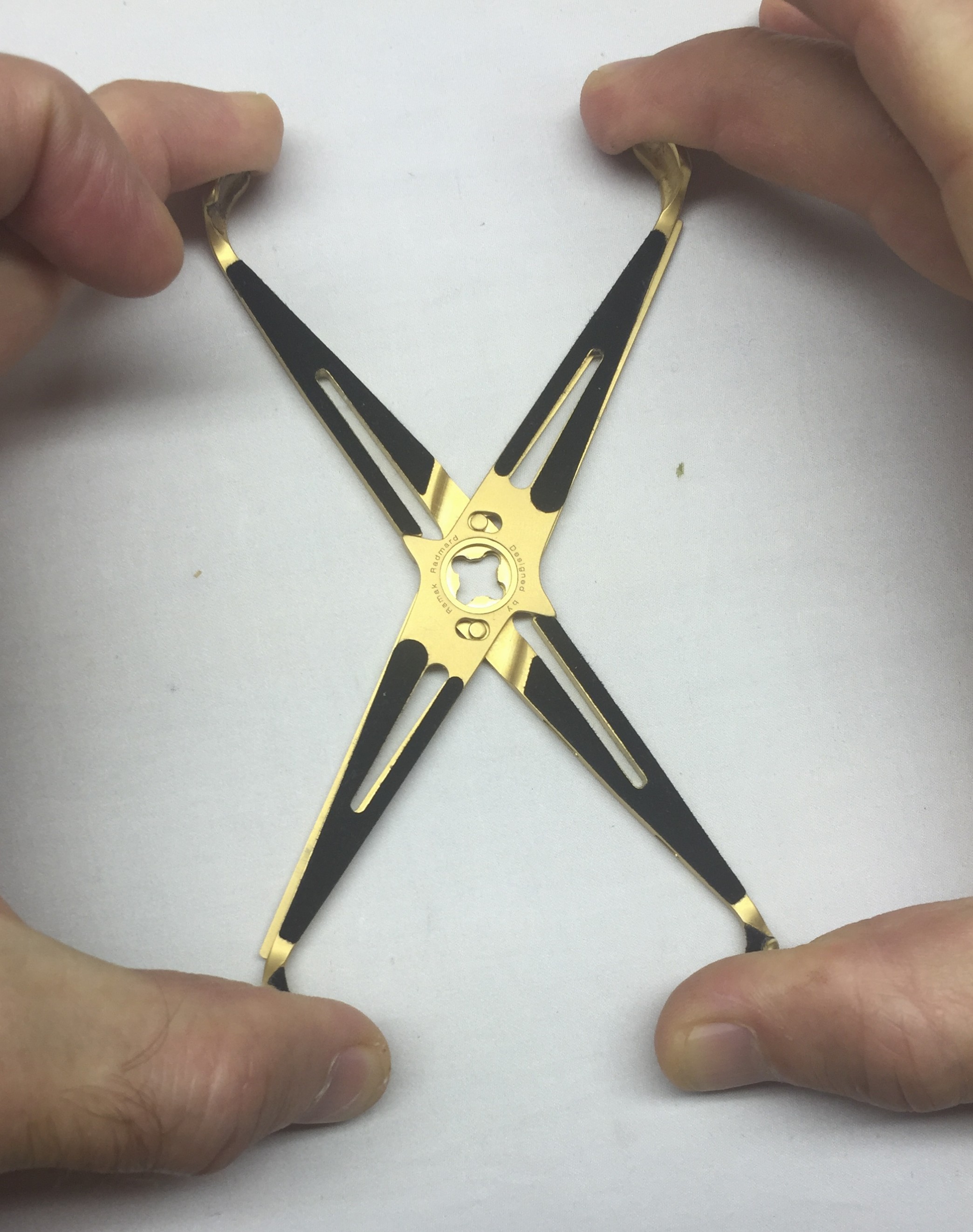
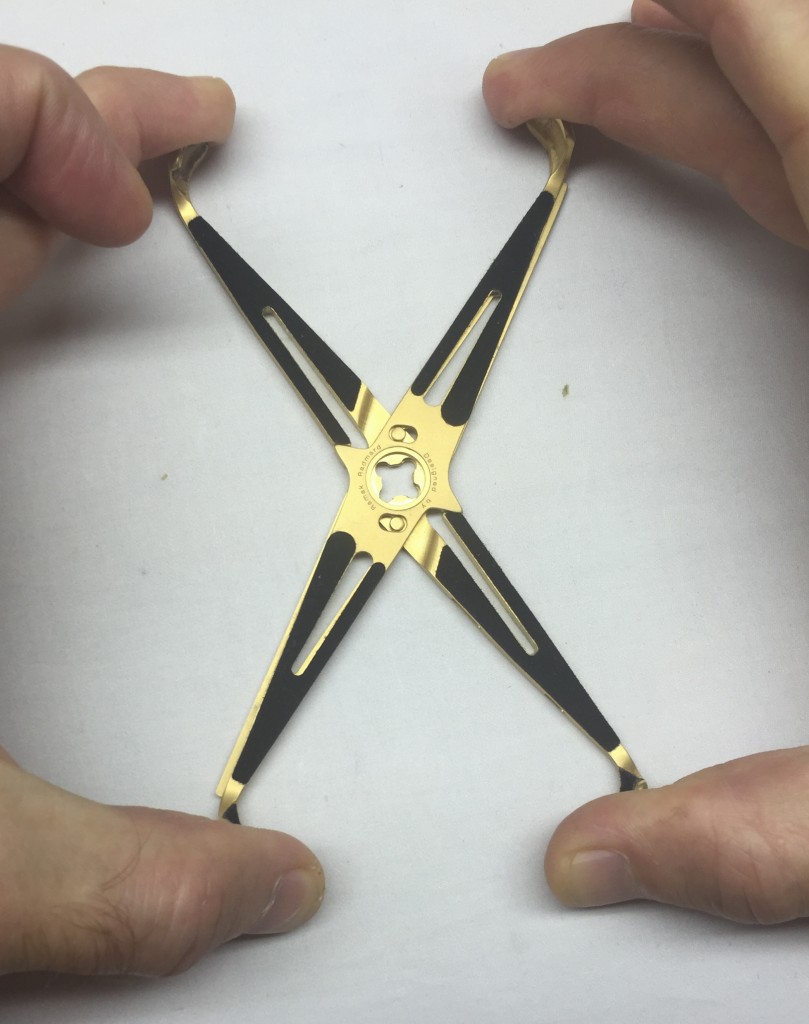
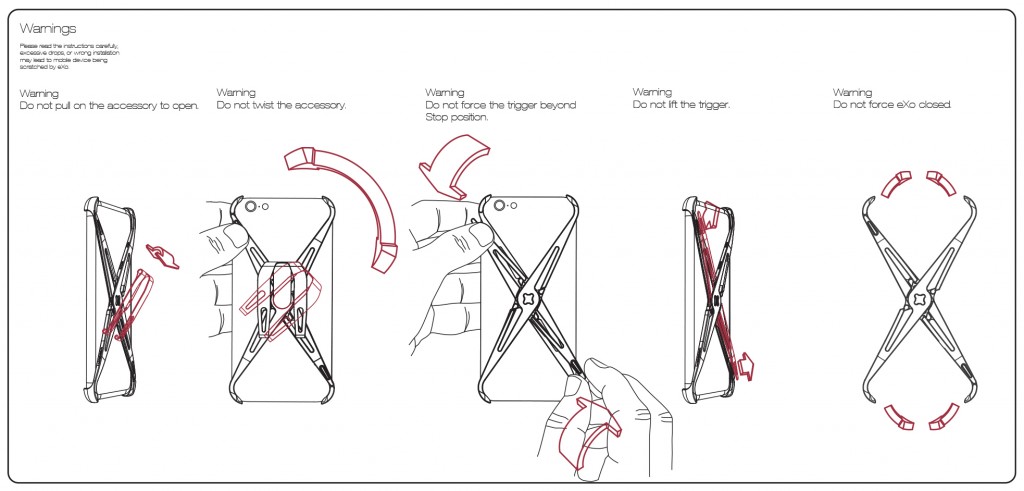 Before installing your device, lay the eXo on a flat surface and stretch the springs as shown in the picture below:
 For more information on how to install or remove your eXo, we recommend watching this instructional video.
We hope you enjoy your eXo for years to come!
info@lucidream.com
For more information on how to install or remove your eXo, we recommend watching this instructional video.
We hope you enjoy your eXo for years to come!
info@lucidream.com - iPhone Case
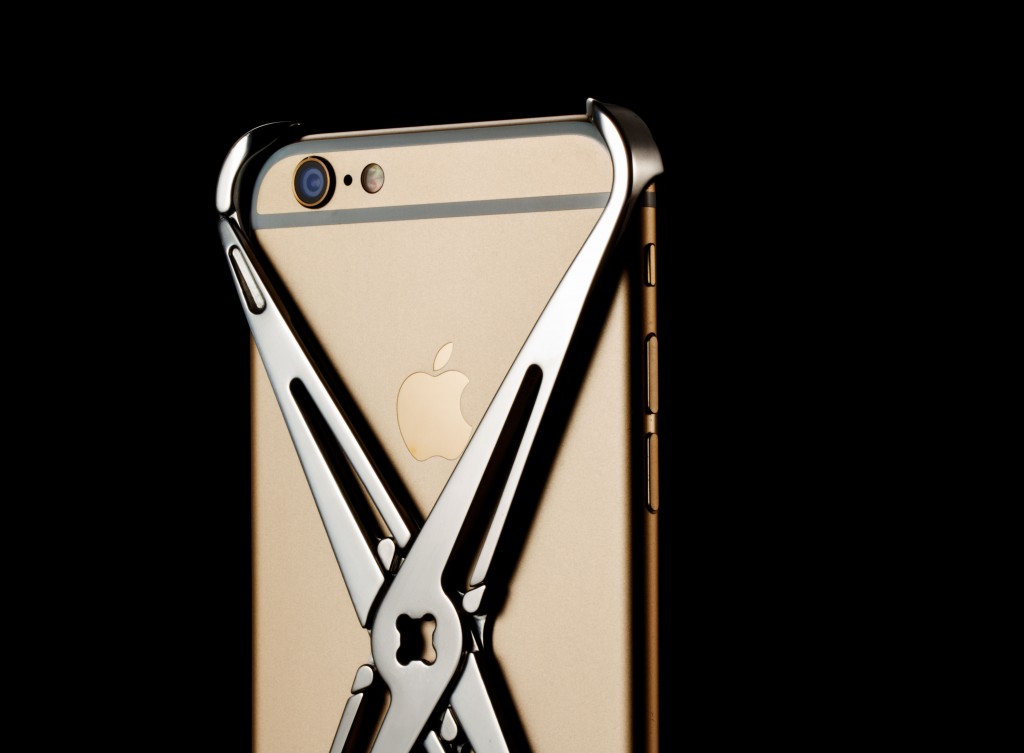
Lucidream eXo-Skeleton Premium iPhone Case
Designed by Ramak Radmard
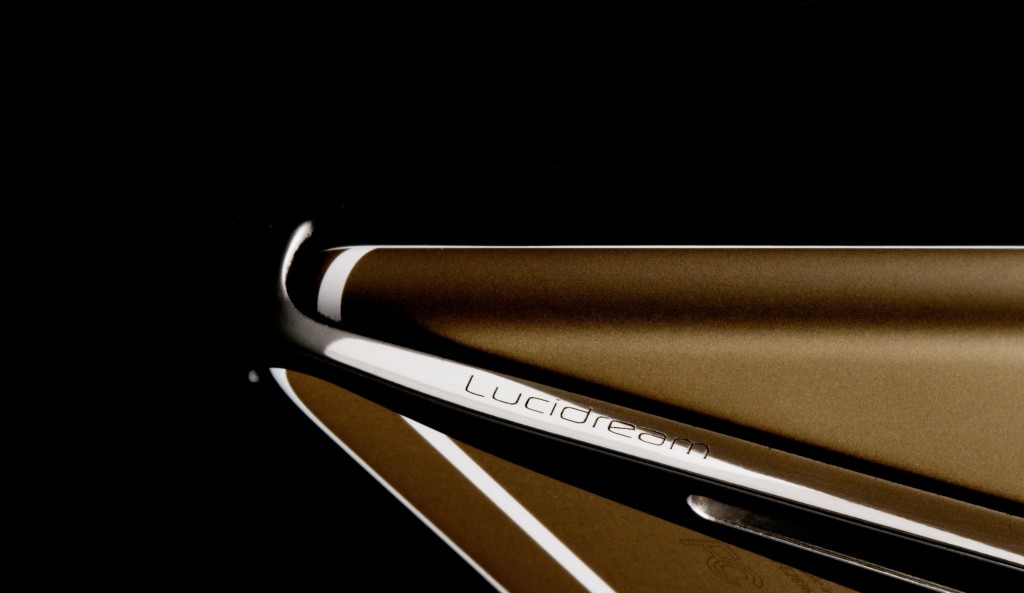
Now for iPhone 6 & 6 Plus
A Premium Stainless Steel impact absorbing iPhone case, with an integrated accessories connection, enabling functional customization.
Live on Kickstarter!
Big thanks to all the 412 backers that supported our first Kickstarter campaign, the Lucidream eXo Premium iPhone case! Thanks to our backers we reached 119% of our goal, and now we are underway with the production preparations. During our first Kickstarter campaign, many of our backers enthusiastically requested the iPhone 6 Plus eXo as well as the iPhone 6. Your excitement has propelled us to be even more energized! Thanks to your passion and zeal, we advanced our timeline and launched our newest campaign immediately, so we can get the eXo 6 and eXo 6+ iPhone Case to you as soon as possible. With our new 6 & 6+ campaign we raised more than 112% of our goal by the second week, we need your help to spread the news and reach our extended goals. Please pledge + share or just share the story of our minimalistic impact absorbing eXo-Skeleton iPhone Case, which can connect to a variety of functional accessories.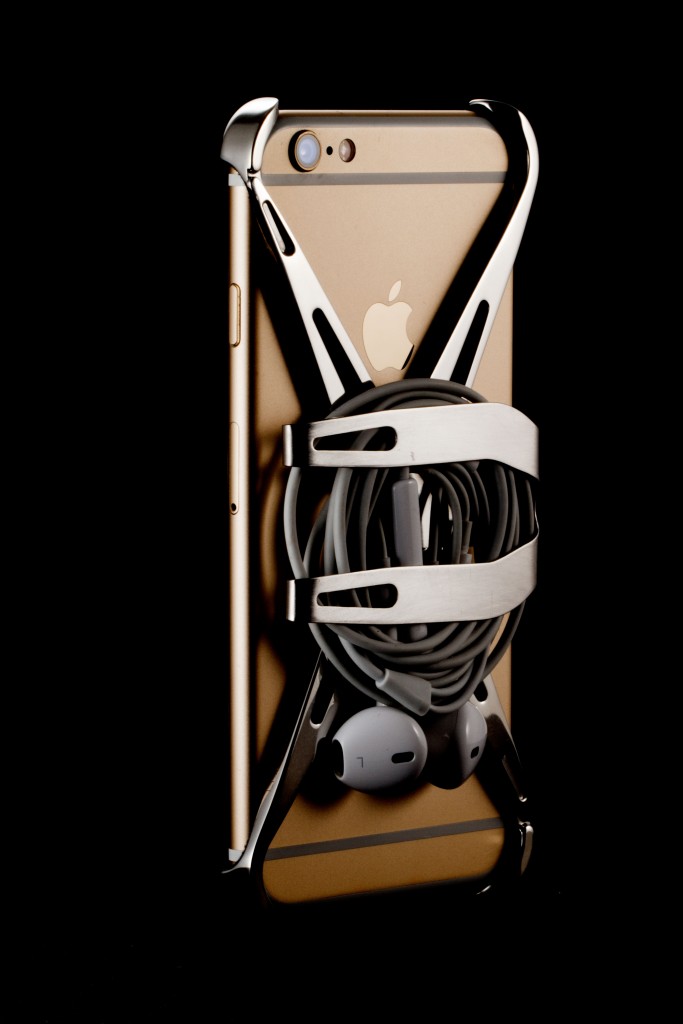
Three years ago we began with an ambitious idea.
That in an age of rapidly declining quality where the focus seems to be on cheap disposable products, there is still a place for a product that can take the class, elegance, and quality professed by the old artisan masters and merge it into the fast-paced technology driven world of today. And so with excitement and trepidation, we embarked on our journey. Recognizing that portable technology has become an almost indispensable part of our lives, our goal was to create a product that would assist this interaction between man and technology in much the same way as it happened in the 15th century, when the first portable timepiece was created. This invention helped bring man into concert with the best of technology, and it was created with such beauty that it was as much a piece of jewelry as it was a practical tool. It was brilliant and complicated in design, yet simplistic in its ease of use. Our goal was to design a product that followed this example. And so drawing on the inspiration of the finest watchmakers spanning six centuries, and employing all the knowledge and ingenuity we had available, we poured out our hearts and souls to create the finest product possible; a product that would be as practical as it was beautiful, and as beautiful as it was luxurious. Three years and over 120 prototypes later, we return to you now, ready to unveil our masterpiece.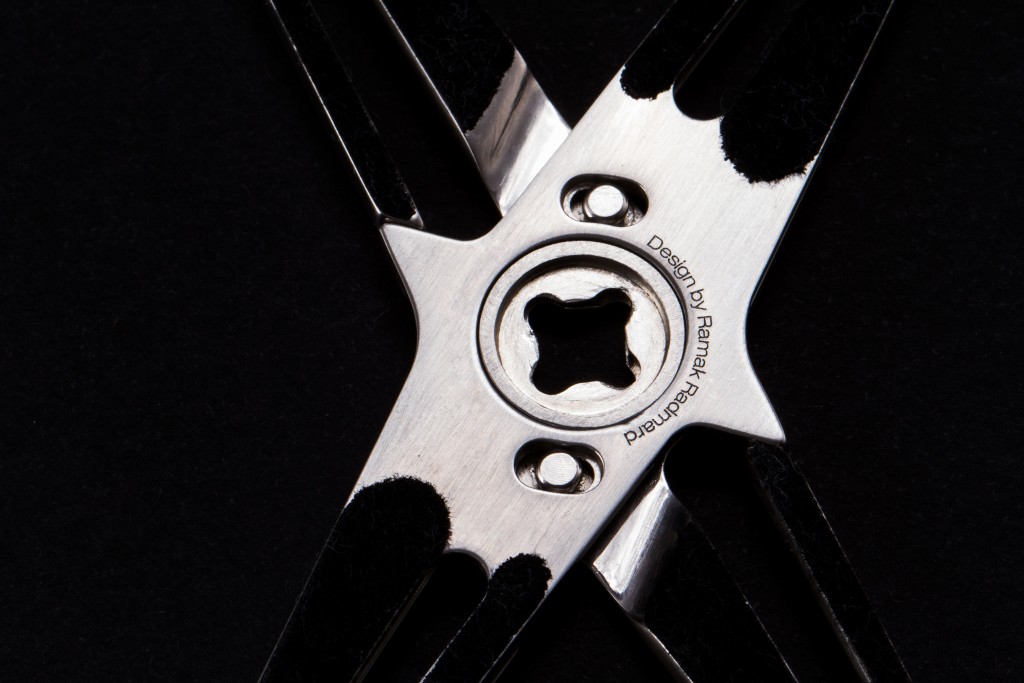 Introducing the Lucidream eXo, a revolutionary smartphone system that combines the craftsmanship of yesterday with the grace and flair of modern sophistication. With deceptively simplistic looks and understated elegance, your eXo will be your gateway to a new level of possibilities for your phone, specifically designed to provide the maximum protection and access to your phone as possible, while enhancing its capabilities one task at a time. Designed to become a total system, your eXo links up with unique attachments that specialize your phone to more effectively handle your particular tasks. We currently have four attachments already designed and ready for production, and many others in development.
The system will continue to grow with you. As each new attachment is released, your phone’s possibilities will grow with it. There is no end to the specialized attachments that can be created, and the best part is that thanks to the dedicated clover locking mechanism, even if you upgrade to a radically different phone, all you will have to do is to upgrade your eXo, and all of your attachments will be instantly ready for immediate use with your new device.
Introducing the Lucidream eXo, a revolutionary smartphone system that combines the craftsmanship of yesterday with the grace and flair of modern sophistication. With deceptively simplistic looks and understated elegance, your eXo will be your gateway to a new level of possibilities for your phone, specifically designed to provide the maximum protection and access to your phone as possible, while enhancing its capabilities one task at a time. Designed to become a total system, your eXo links up with unique attachments that specialize your phone to more effectively handle your particular tasks. We currently have four attachments already designed and ready for production, and many others in development.
The system will continue to grow with you. As each new attachment is released, your phone’s possibilities will grow with it. There is no end to the specialized attachments that can be created, and the best part is that thanks to the dedicated clover locking mechanism, even if you upgrade to a radically different phone, all you will have to do is to upgrade your eXo, and all of your attachments will be instantly ready for immediate use with your new device.
 Please help us spread the word about our project by telling your family and friends and sharing our project on your social networks. There are several share opportunities throughout the Kickstarter process and sharing your pledge is the greatest way to spread the news.
Live on www.kickstarter.com
Thank you.
info@lucidream.com
Please help us spread the word about our project by telling your family and friends and sharing our project on your social networks. There are several share opportunities throughout the Kickstarter process and sharing your pledge is the greatest way to spread the news.
Live on www.kickstarter.com
Thank you.
info@lucidream.com - Lucidream eXo-Skeleton : Premium iPhone Case Reinvented
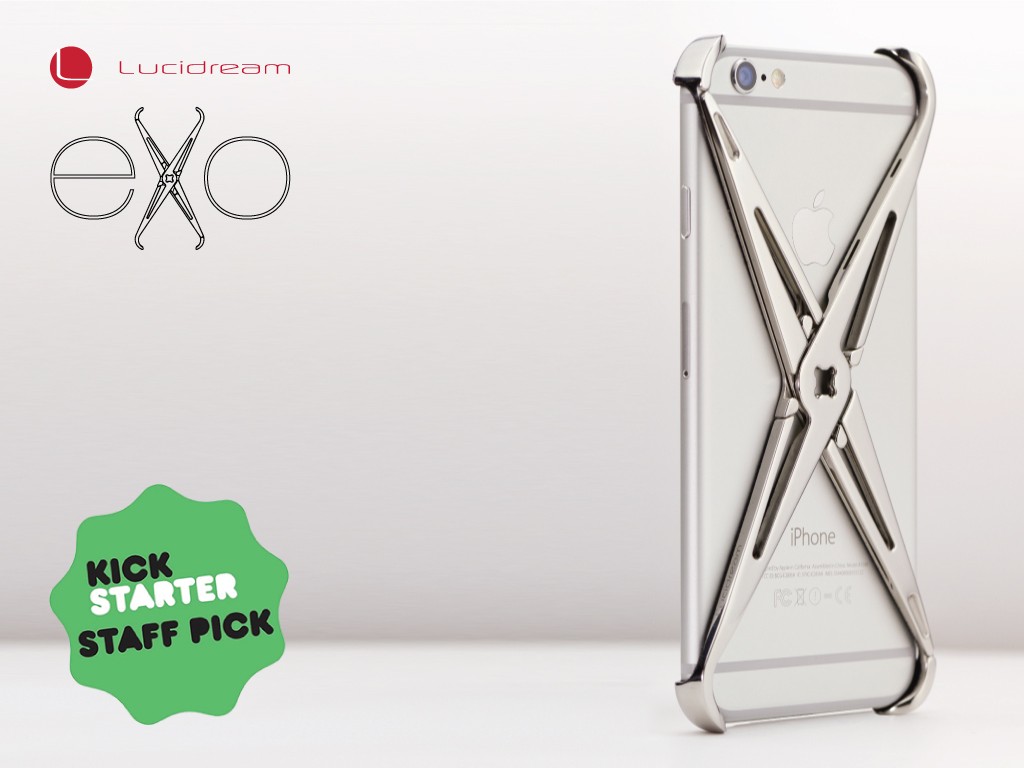
Lucidream eXo-Skeleton : Premium iPhone Case Reinvented
January 14, 2015, Montreal, QC, Canada / PRNewswire / – Lucidream, established in 1999, is an innovative industrial design and product development house, focusing on meaningful and human centric solutions. The latest Lucidream product design is on Kickstarter.com until January 30th 2015 8:30 AM EST. The elegant, minimalistic eXo-Skeleton Apple iPhone Case, which connects to a variety of premium functional accessories, is designed by the award-winning industrial designer Ramak Radmard. Building on a heritage of design and fine craftsmanship, the patent pending eXo is a result of almost 3 years of research and development. The concept has evolved from the idea of having an ecosystem of accessories that integrates digital devices with everyday life; an ecosystem of quality crafted products that are both beautiful and built to endure. eXo is only 3 mm thick at its maximum thickness. Made from high-grade stainless steel, precision manufactured and heat-treated to aerospace standards. It is hand finished and the internal surfaces are flocked. The result is a strong eXo-Skeleton and a spring loaded impact absorption system, providing luxurious security that protects the vulnerable areas of the iPhone, while leaving it virtually bare. eXo’s arms provide ergonomic textures, which makes the iPhone much easier to grip and handle. In addition, eXo is equipped with a mechanical quick connect system, providing elegant utility by securely attaching the device onto virtually anything. eXo is designed to create a premium eco-system with a quick-connect system that attaches quickly and securely to a number of functional accessories. The eXo Clip can be used as a money clip or to secure the iPhone to a belt or purse. The slim eXo Wallet is fitted with high-tech special linings protecting credit cards from unauthorized RFID access. The eXo Universal-Mount secures the iPhone onto virtually anything. The ecosystem of accessories will be compatible among all devices that have an eXo-Skeleton, starting with iPhone 6, with future introductions of iPhone 6+, iPhone 5, iPad mini and iPad Air. The company also has plans for a variety of other accessories, such as: Armband, Suction Cup Stands, Grip Rings, Lanyard, Leather Goods as well as a series of eXo integrated Wearable Sensors and Services. Live on www.kickstarter.com For press inquiries please contact: Press@lucidream.com 514-242-4243 www.lucidream.com Lucidream Industrial Design Canada - Wearables : The Convenient, More Compact Way Of Living
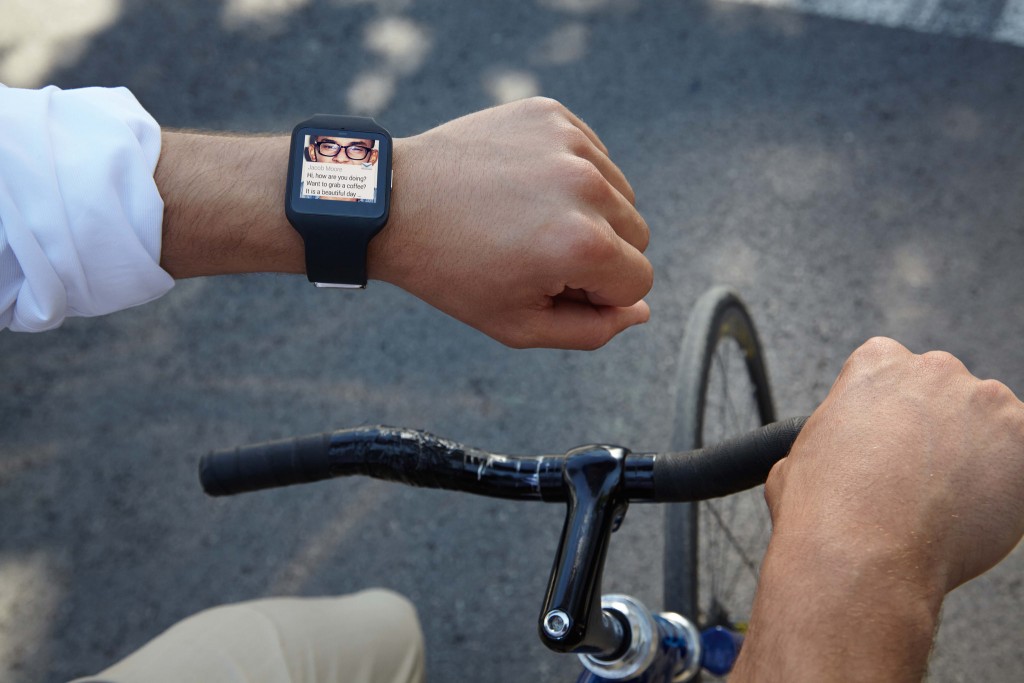
Via elektronikkbransjen Flickr Creative Commons
Wearables : The Convenient, More Compact Way Of Living
In this day and age where seemingly everything is going digital, popular brands are now getting on board with producing more reliable products that would further aim to solve problems that will in turn make people’s lives easier. Google, for example, was once simply a search engine. Surprisingly, it ventured into same-day-delivery trucks and connected home appliances. Not long after, they’ve created their very own revolutionary gadget, the Google Glass. Amazon, which used to be satisfied with e-commerce, is now manufacturing their own line of phones and experimental drones. Also, the popular social networking site, Facebook, has recently been reported to have spent $2 billion on a developer to create virtual-reality headsets. Apple is in the middle of working on enhancing its health-care data for the iPhone 6. Given all these, it is apparent that the rivalry of these tech companies has never been more intense. And now, a few of them are battling it out in the smartwatch market. The hyperbole that surrounds smartwatches rolls on, and according to NPD’s Weekly Tracking Service, there were approximately half a million smartwatches sold between October 2013 and June of this year, which accounts for $96 million in revenue.Wearables beyond the watch
Smartwatches have been around for many years, however, it has been noticeable that it hasn’t exactly dominated the interests of the mainstream consumer. The primary reason for this is said to be its low relevance to people. The everyday consumer hasn’t absorbed the habit of making calls, reading notifications and playing apps from a device attached to their wrists and many still don’t feel it’s necessary. Thus, they need to be more aware of the impressive capabilities and smart features of these wearables that can improve their lives. A typical smartwatch such as the Samsung Gear range and Apple Watch can be dependable when working out as they can be utilized as fitness trackers. These devices count steps, track individual training sessions and automatically measure how long you’ve slept. In addition to this, some wearables can be synced to Bluetooth headphones which you may use to listen to music while exercising. Aside from that, smartwatches are known as accessories to your phone, however, it can be a good platform for communication too. Instead of relying solely on your smartphones or tablets, you can get instant texts, emails, and other phone notifications direct to these devices. These features really come handy when you’re driving or while you’re generally on the go. Pebble watch does this well and what’s ideal about it is that it is compatible to both Android and iOS phones. Moreover, some smartwatches are built to make voice calls such as Samsung Gear S that can be a stand-alone device with its own SIM card slot. Android Wear, LG G Watch, and Sony Smartwatch 3 on the other hand, can’t make calls but they recognize voice commands. Other functions of wearables include weather updates, GPS, and heart-rate tracking monitors. Indeed, some smartwatches can function without the smartphone, but most work best when paired with one. And these wearables actually have some practical uses aside from their clocks. With its number of features, it can make the completion of some specific tasks a lot easier and more practical.Smartwatches can make life easy
Aside from investing in wearables that can be paired up with smartphones, it is also essential to combine them with next-generation accessories designed to make these devices much more helpful. Besides this innovative technology for accessories, it would be more enticing as well for consumers that prefer fashion over functionality if further developments on aesthetics and user experience of smartwatches see improvements. The good thing about Apple is it’s starting to develop its different collections of Apple Watch with nifty designs.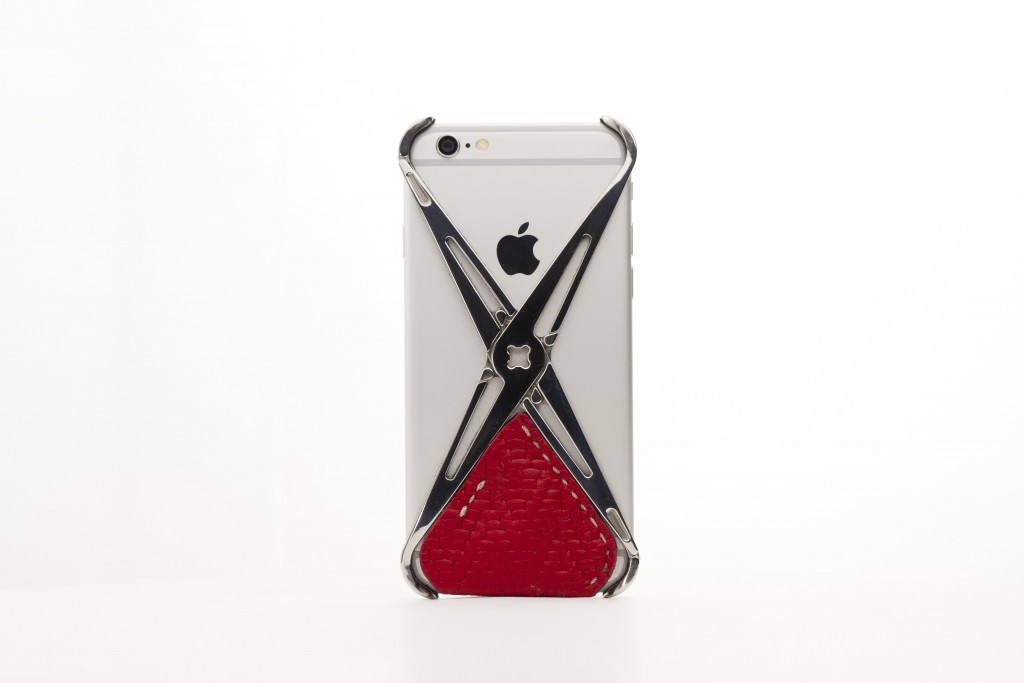 Another good example of next-generation accessories is the Lucidream eXo Premium iPhone Case in combination with it’s Clip or Armband add-ons suits the Apple Watch. Lucidream’s wearable sensor accessories utilizes Micro-electromechanical systems (MEMS) to sense it’s environment . Their wearable sensor technologies are developed for maximum functionality and flexibility as you can just attach it onto the eXo phone case without blocking the quick connection system. Aside from that, eXo case can carry two auxiliary sensors, which can be used installed or remotely. Some of the eXo wearable sensors do not have hard casings, this means that they can be the perfect carrier for customized wearable technology. With the availability of new MEMS sensors, Lucidream and the development community will design and develop unique solutions that can be incased in the Lucidream eXo wearable’s, much like a Developers Kit.
 To wrap it up, some tech enthusiasts predict that smartwatches will have their own robust and discrete functions in the future. For now, smartwatches have their limitations but soon, they are perceived to be able to make wireless payments at cash registers, become a platform for video calling, the next-generation remote control to give orders to smart appliances, and countless others. Given that, anything is possible with smartwaches, and as they are constantly being developed, more people will see the value in this emerging device.
Exclusively written by Jennifer Birch for Lucidream
@WrittenByJenni
Lucidream Industrial Design Canada
To wrap it up, some tech enthusiasts predict that smartwatches will have their own robust and discrete functions in the future. For now, smartwatches have their limitations but soon, they are perceived to be able to make wireless payments at cash registers, become a platform for video calling, the next-generation remote control to give orders to smart appliances, and countless others. Given that, anything is possible with smartwaches, and as they are constantly being developed, more people will see the value in this emerging device.
Exclusively written by Jennifer Birch for Lucidream
@WrittenByJenni
Lucidream Industrial Design Canada - Lucidream eXo Premium iPhone Clip
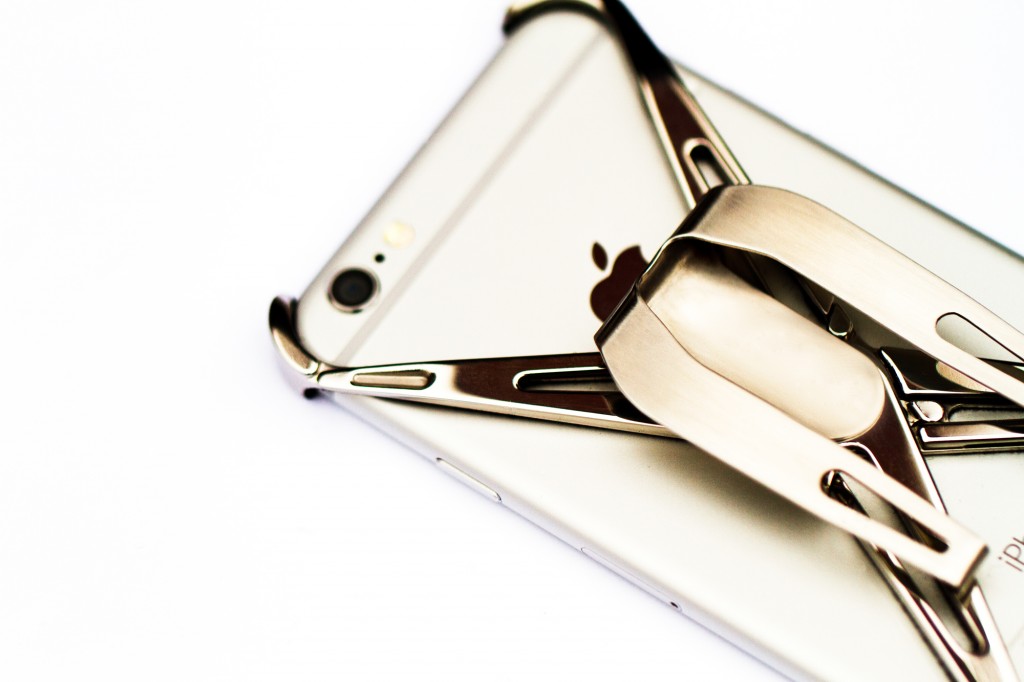
Lucidream eXo Exclusive Premium iPhone Case Clip | Best iPhone Clip out there!
Lucidream eXo Premium iPhone Case Clip | versatile and functional iPhone Clip
Lucidream eXo Premium iPhone Case Clip | iPhone Clip Our Stainless Steel Clip can be used as a money clip, keeping your very basics organized and allowing you to keep your cards, money and iPhone together. It is also a great way to secure your iPhone to your belt or purse.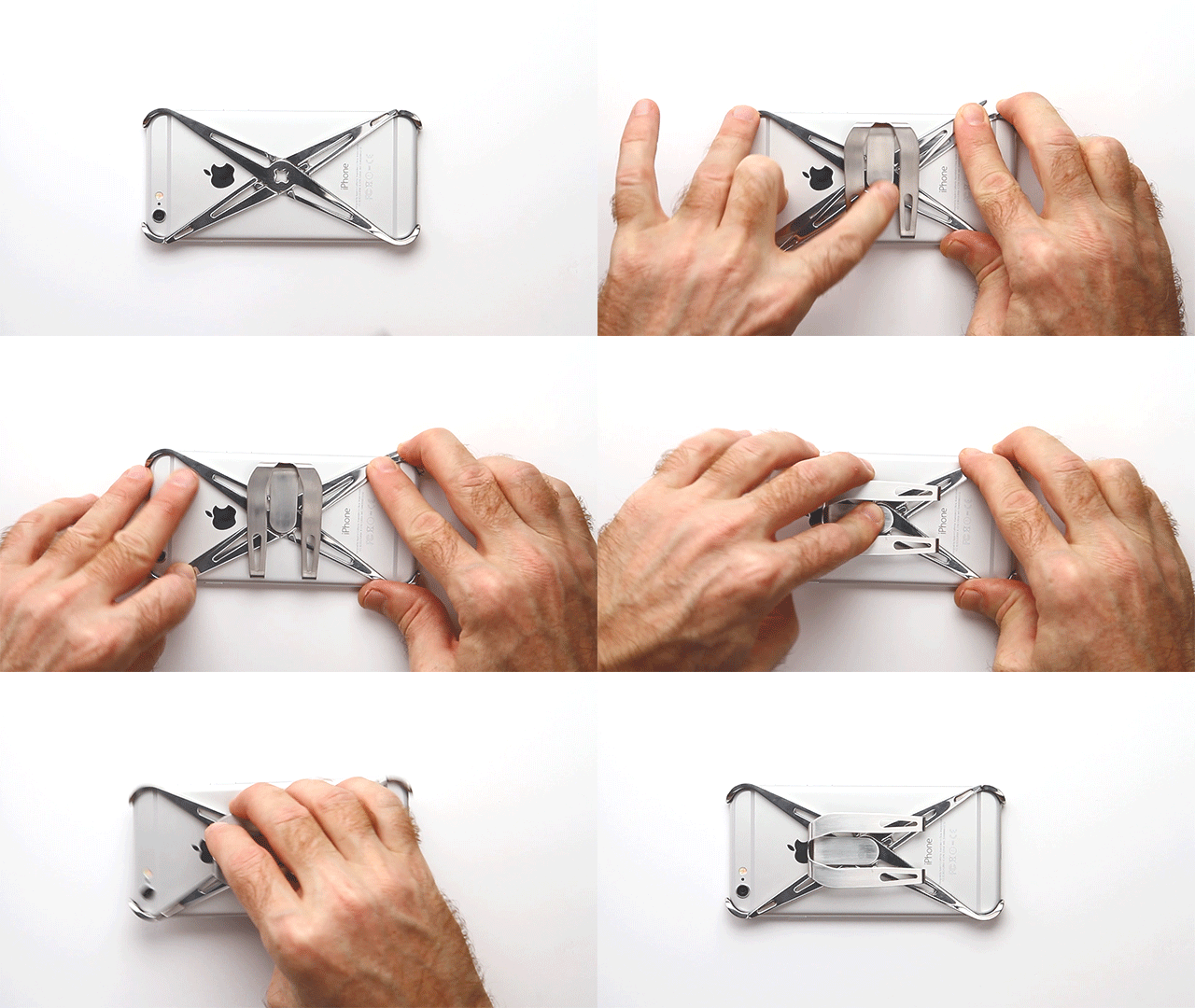 Lucidream eXo Premium iPhone Case Clip is a very versatile accessory, it is a great solution for many everyday problems.
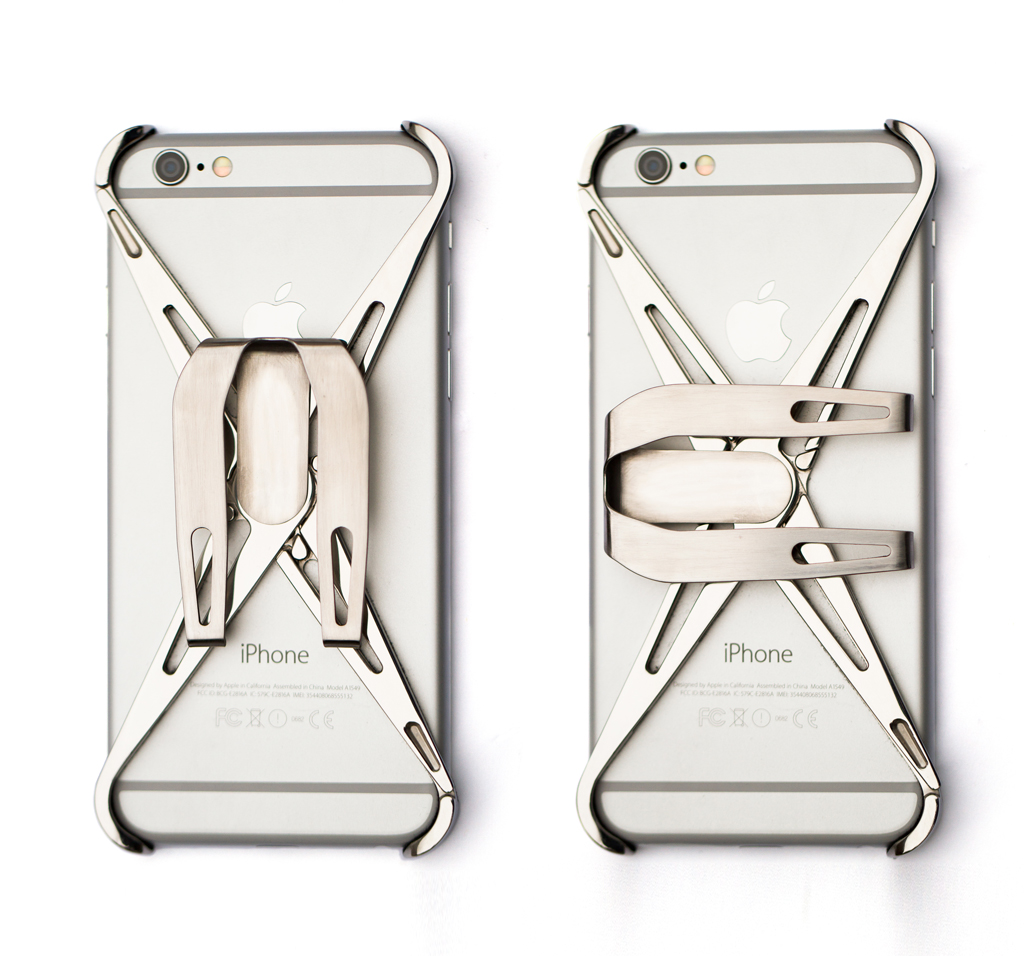 Using the Lucidream eXo ecosystem has a very luxurious feel to it and the machined, stamped and polished stainless steel iPhone Clip is both beautiful and extremely durable. A great benefit of the iPhone Case Clip is that you can mount it in a horizontal or vertical configuration, which allows for flexibility in its operational use. And yes, we solved the belt clip problem: wanting to have the iPhone in landscape position when you are sitting down, but in a portrait position when you are standing up!
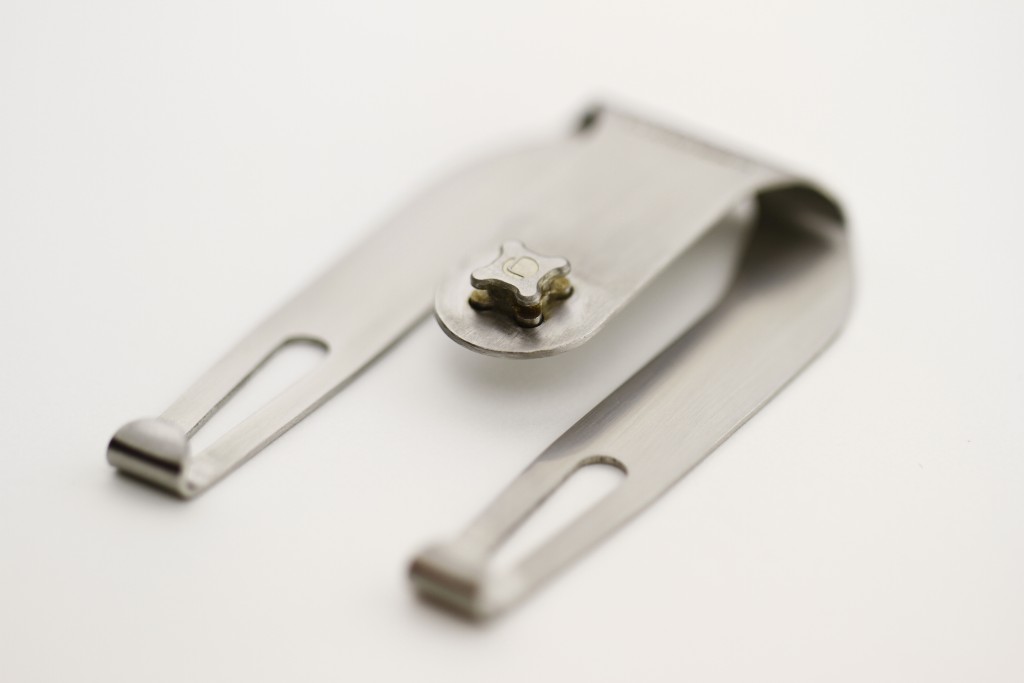
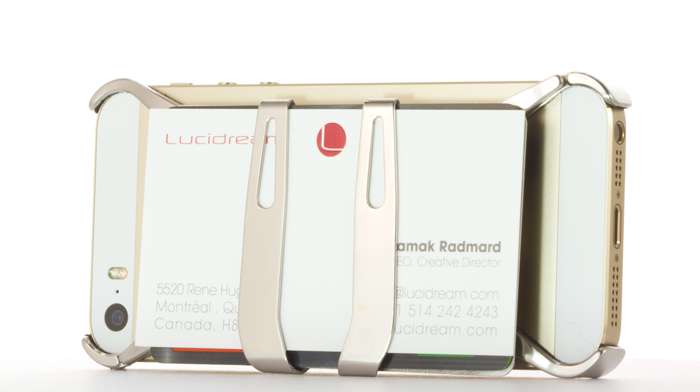
The lucidream eXo iPhone Case and iPhone Clip work together in a seamless way. One of my favorite functions of the iPhone Clip is it’s ability to be the very best money clip out there. it just works so well … 3 credit cards, 3 business cards and 3-5 bills! What else do you need?
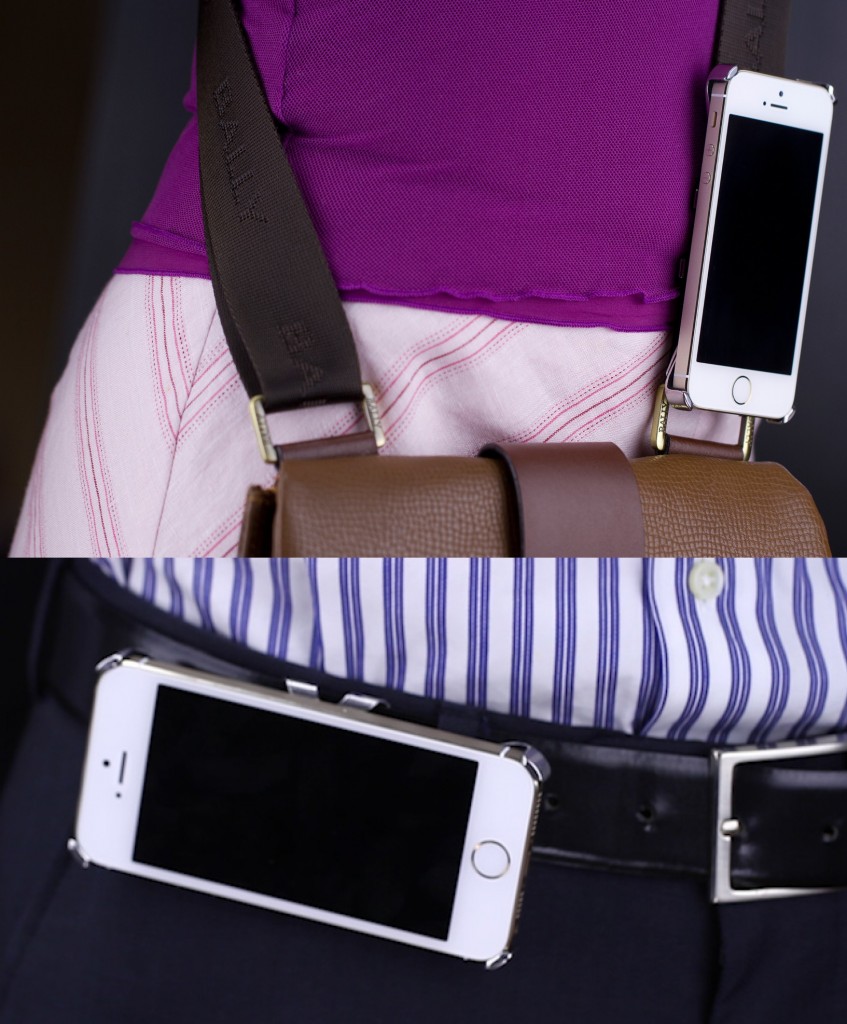 When the iPhone Clip is used with a purse, you are free to receive all your notifications without any interference from the purse.
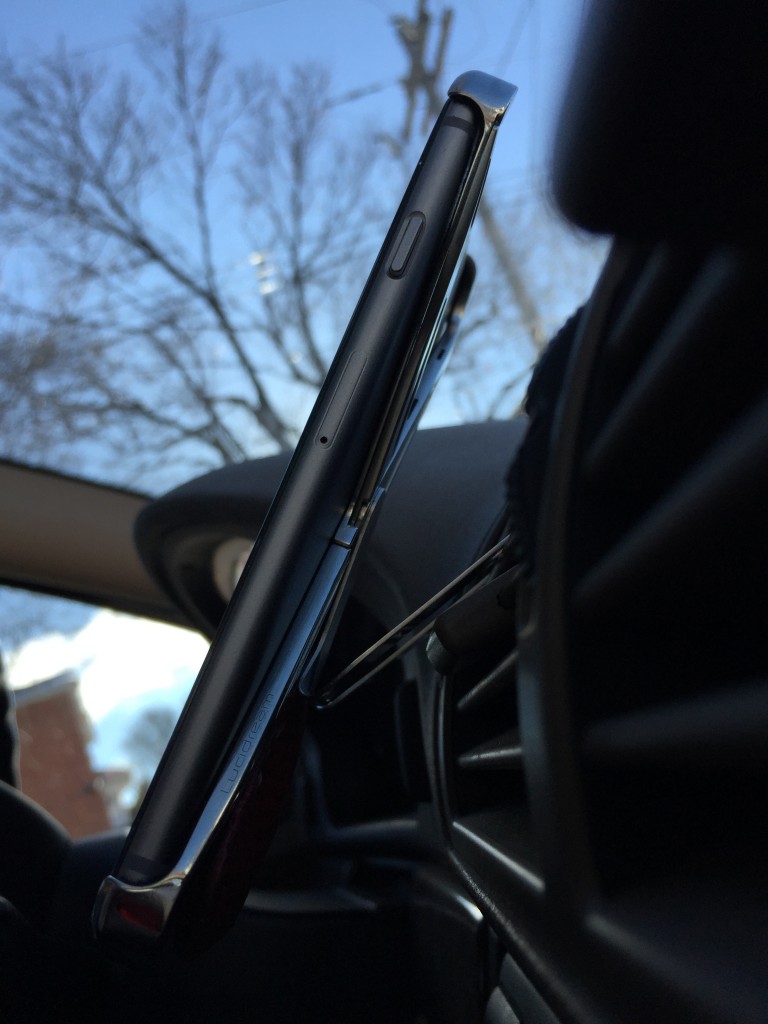 Adding to its functionality, the Lucidream iPhone clip can also be hacked and deformed to be used for customized functions.
Live on www.kickstarter.com
Your support
Please help us spread the word about our project by telling your family and friends and sharing this page on your social media. There are several share opportunities throughout the Kickstarter process and sharing your pledge is the greatest way to spread the news.
Thank you for supporting our process, fine craftsmanship and products.
Ramak Radmard Lucidream Industrial Design Canada - Lucidream eXo Wallet iPhone Case
Lucidream eXo iPhone Case Wallet
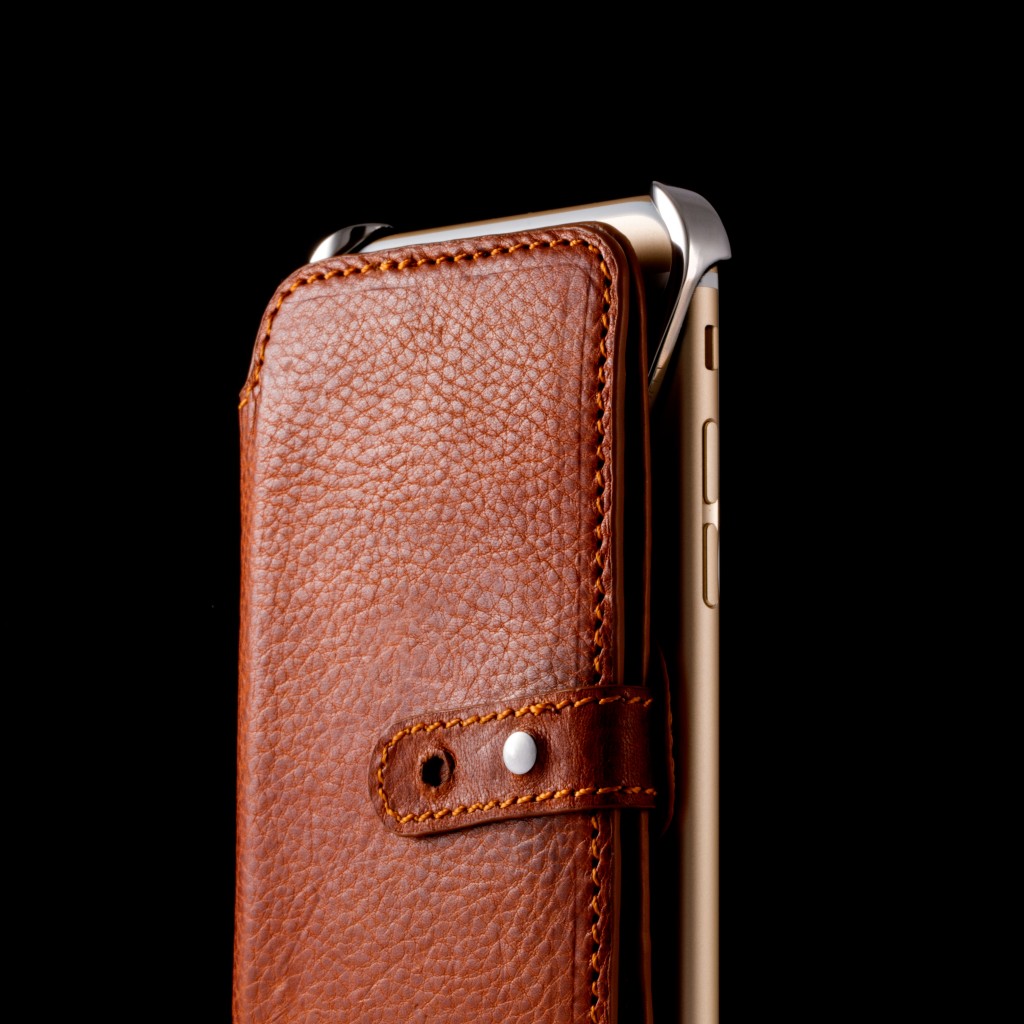
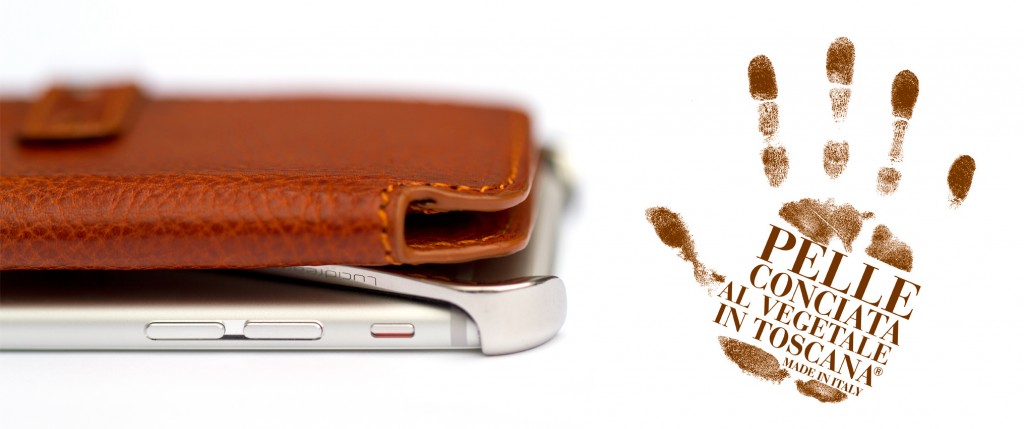
Our slim design wallet iPhone case is made with Vegetable-Tanned Leather from Tuscany and a high-tech special lining that protects your cards from unauthorized RFID access.
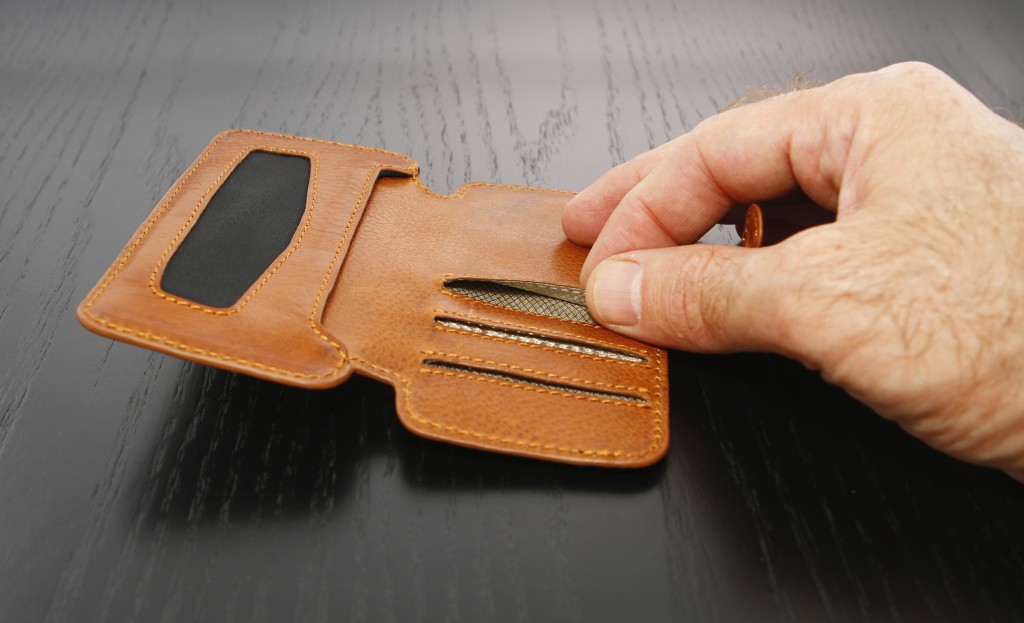
The Lucidream eXo iPhone Case Wallet can be used on its own, as well as attached to the eXo iPhone Case to keep all your favorites handy and in check.
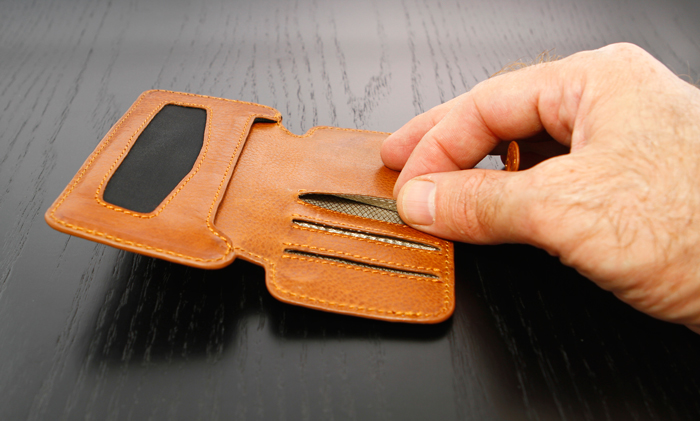
The card slots are designed to accommodate 1-3 cards per slot, plus the side pocket provides a flexible space that can be used for business cards, more credit cards or cash, receipts.
You can securely install your Lucidream eXo Wallet onto the eXo iPhone case and enjoy the added functionality of your device.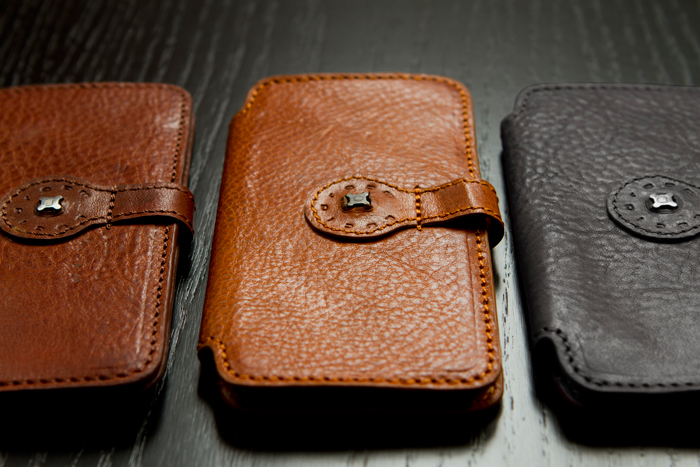
The same level of luxury design, craftsmanship and materials goes into making all our accessories, including our slim iPhone Wallet sewn from vegetable-tanned Italian leather, prepared in the old artisan way and hand finished in Tuscany.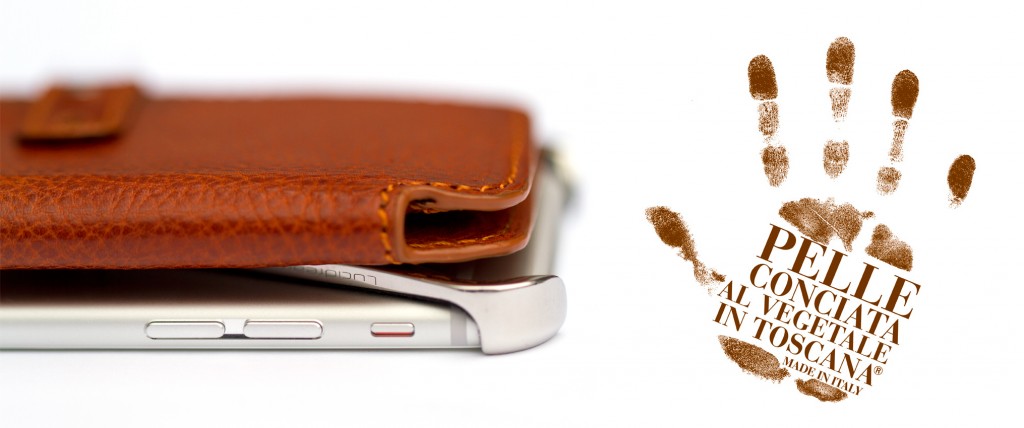
The Lucidream eXo is made from the best quality materials and is truly functional. It is the only iPhone wallet that has a stainless steel inner core to ensure that the wallet does not deform after it has been used and weathered.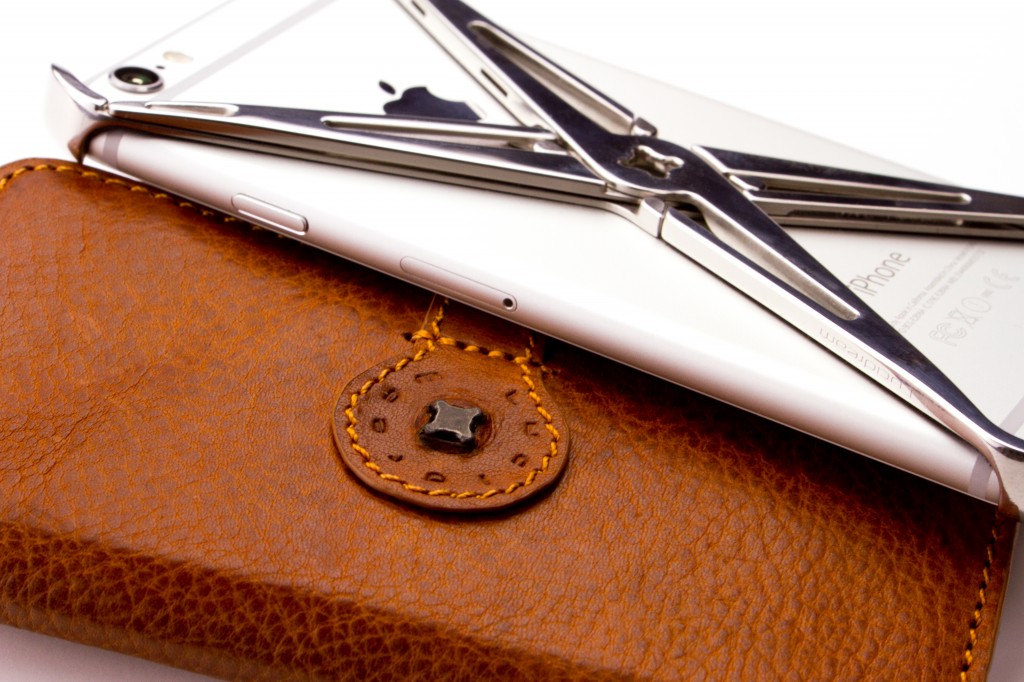
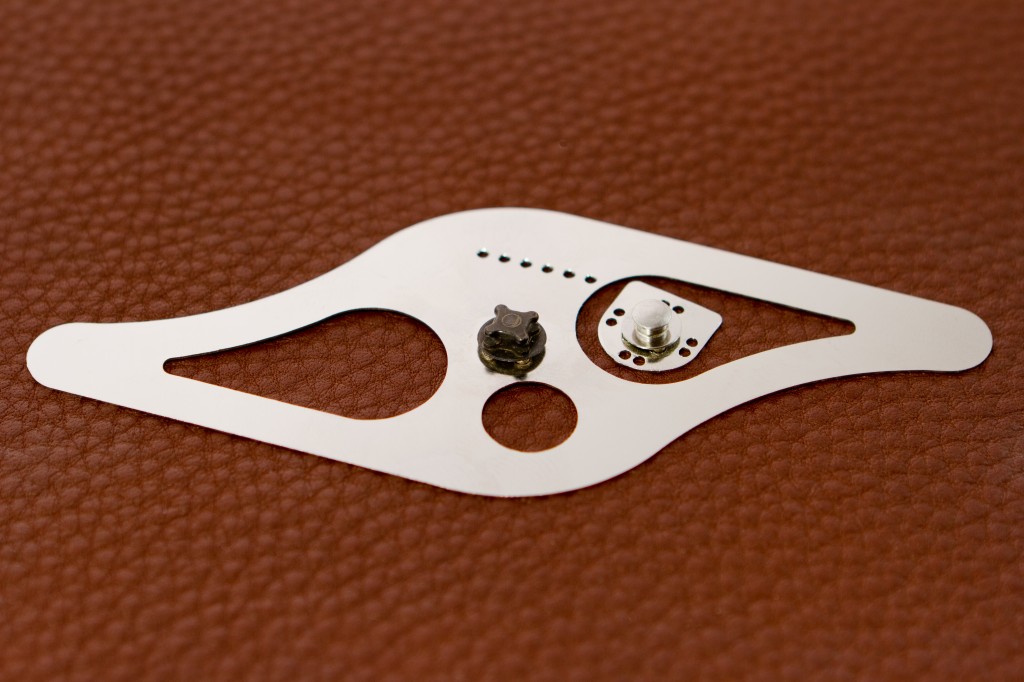
The stainless steel buckle fastened and hand sewn into the leather, creating a beautiful, durable and functional detail.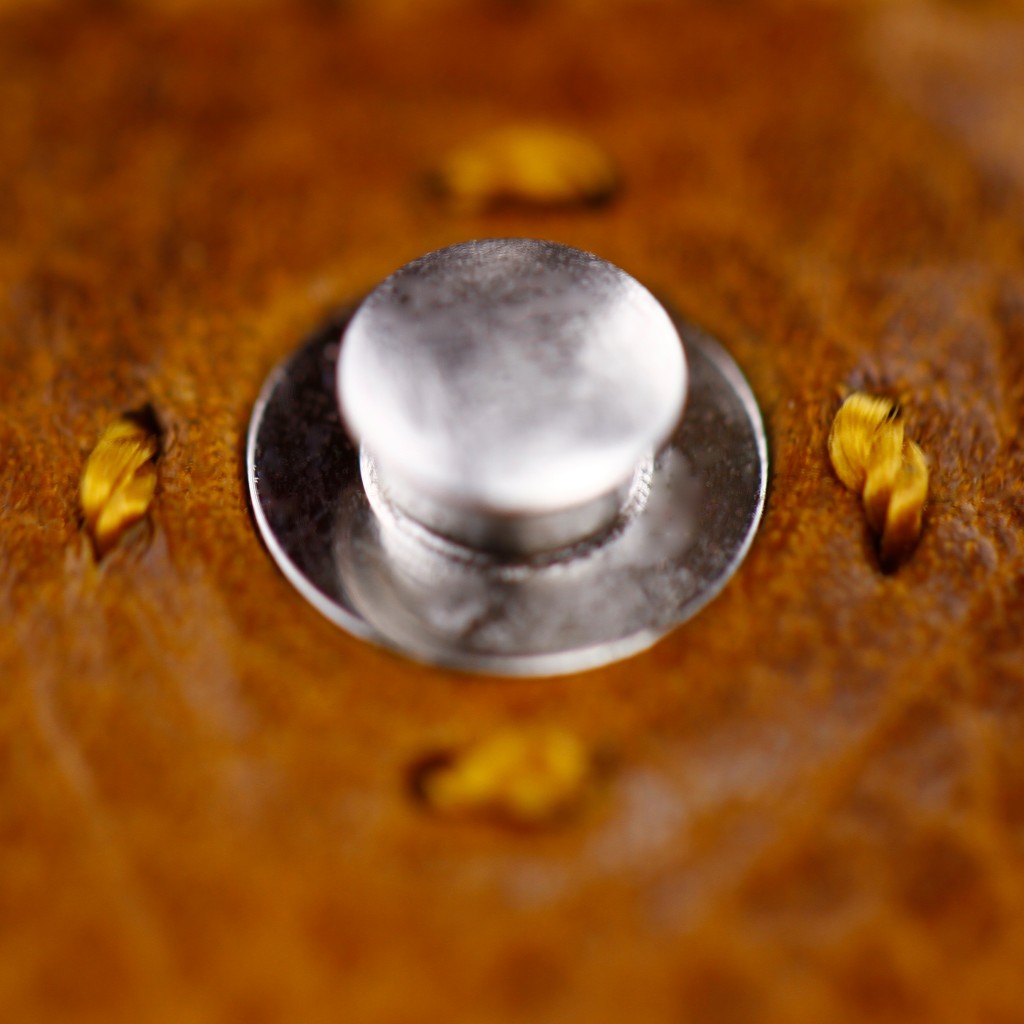
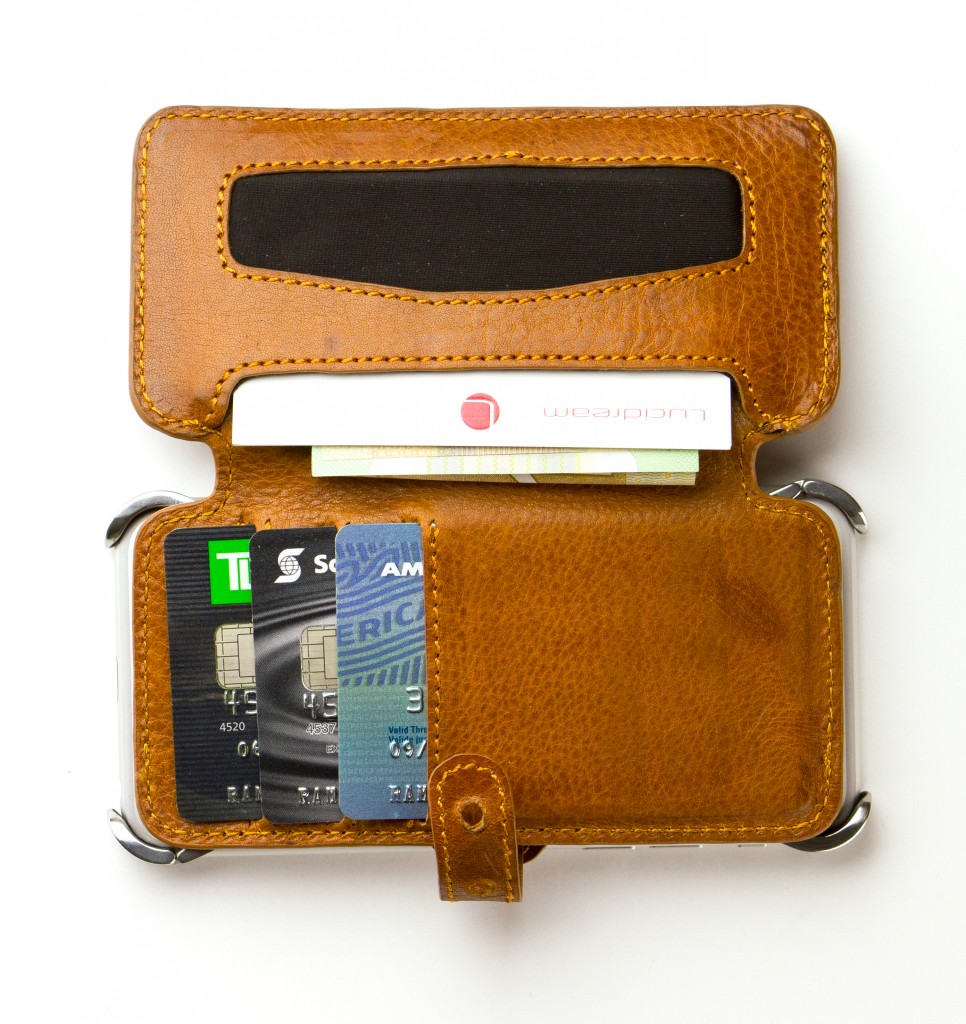 The side pocket has a premium Lycra window that allows the user to push out any cards or cash that is stored in the pocket without stretching out the leather.
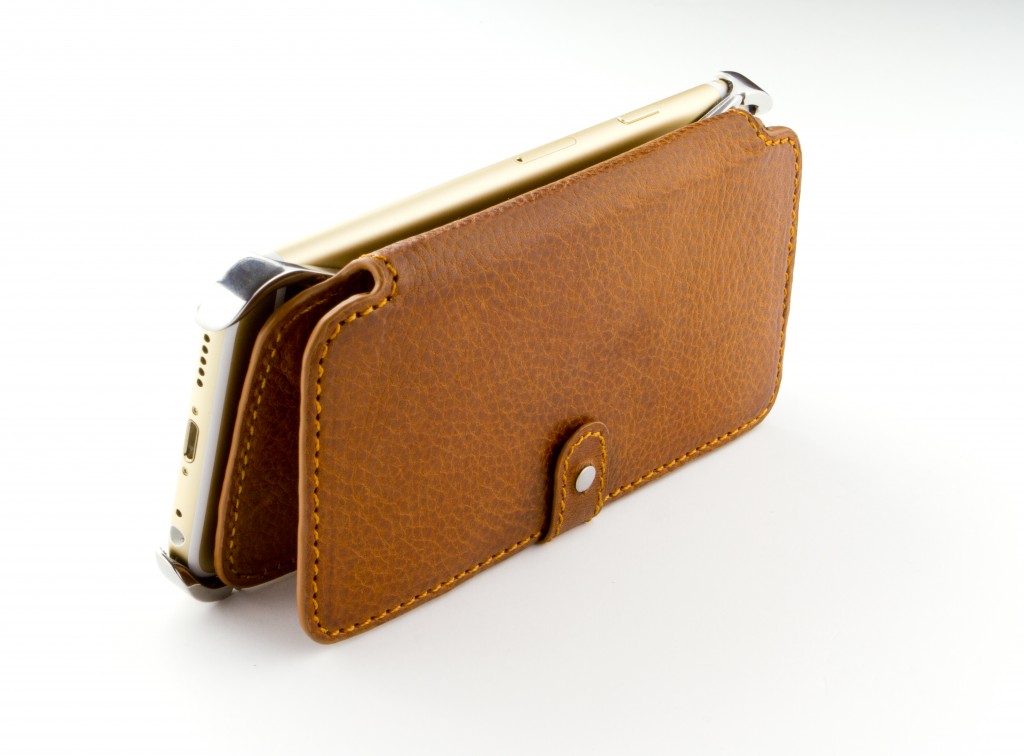 The iPhone wallet also works in unison with the eXo iPhone case to provide a convenient stand for viewing.
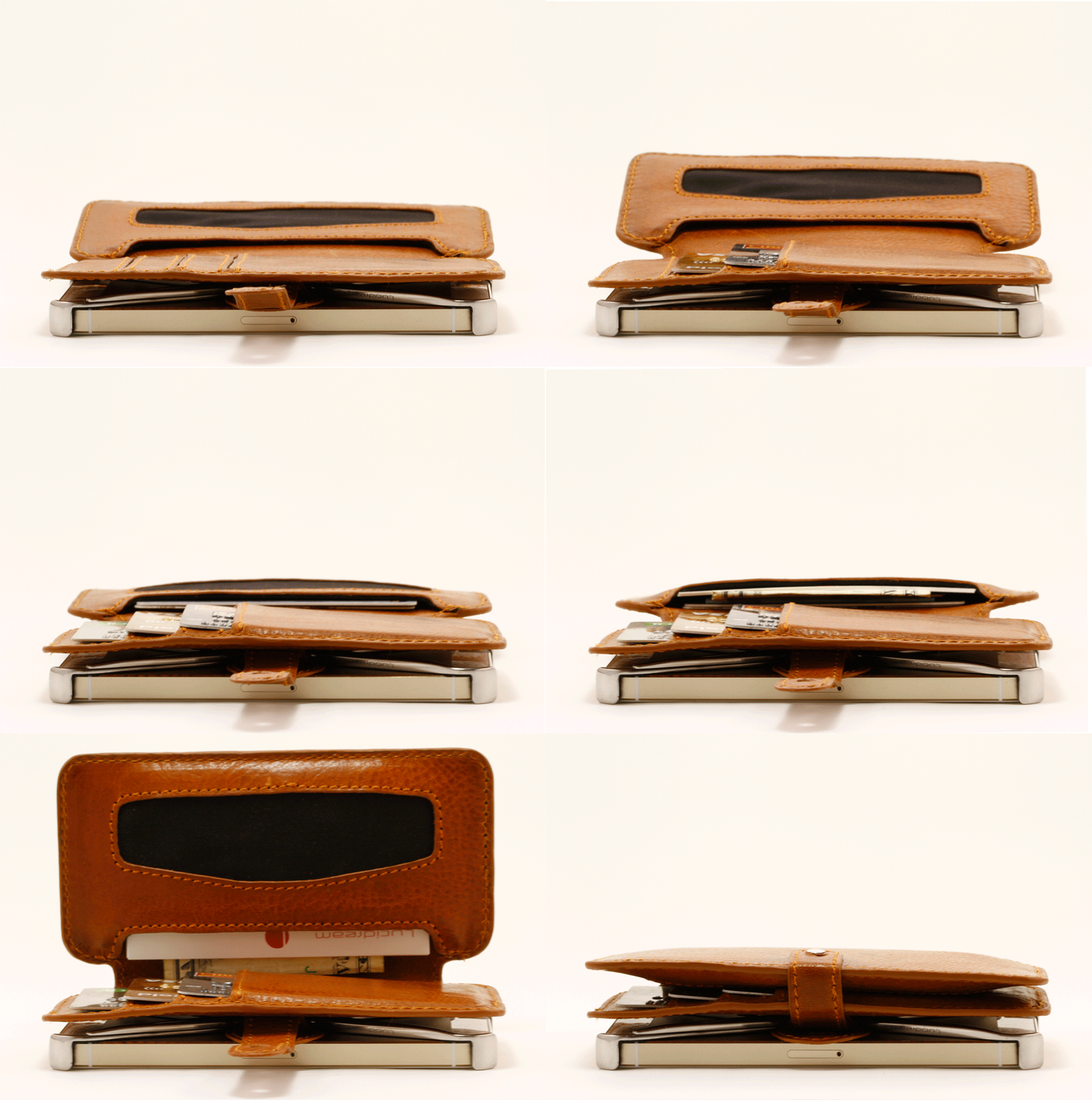
Live on www.kickstarter.com
Your support
Please help us spread the word about our project by telling your family and friends and sharing this page on your social media. There are several share opportunities throughout the Kickstarter process and sharing your pledge is the greatest way to spread the news.
Thank you for supporting our process, fine craftsmanship and products.
Ramak Radmard Lucidream Industrial Design Canada - Best Wishes from Lucidream Industrial Design Canada
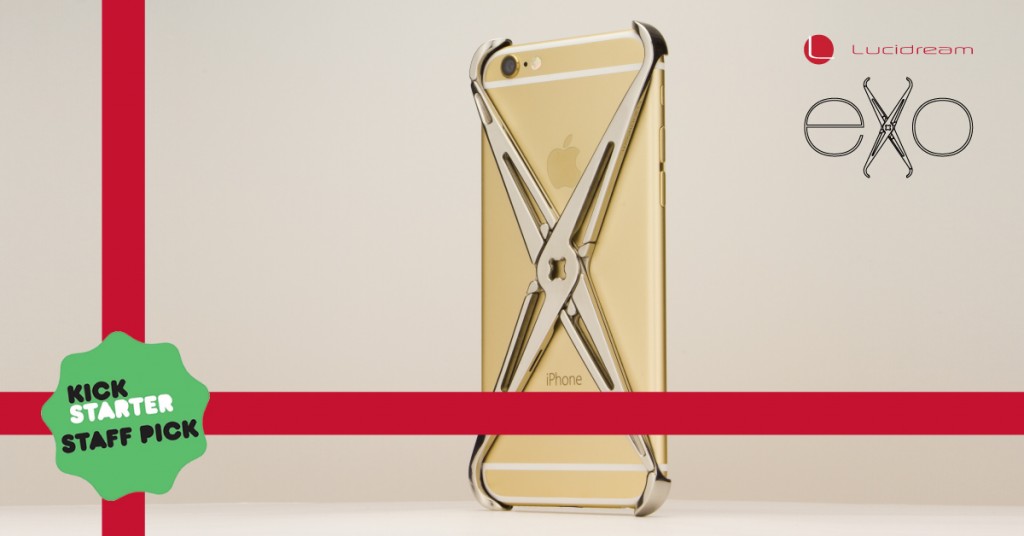
Best holiday wishes from Lucidream Industrial Design and Product Development Canada!
This holiday season we launched our best product yet, Lucidream eXo iPhone 6, on Kickstarter!
In order to spread the holiday spirit we will provide a personalized downloadable card to any of our supporters who would like to get the Lucidream eXo for that iPhone lover in their life!
After clicking any pledge level on the Lucidream eXo Kickstarter campaign, simply add a message to us, indicating who the card is for and what you would like it to say. We will personalize your Lucidream eXo X-mas card and email it to you promptly.
We at Lucidream Industrial Design Canada, would like to sincerely thank our family, friends, customers, partners and suppliers for their support in 2014. Our success would not be possible without your ongoing commitment and dedication, we hope to be your one stop strategy, innovation and industrial design partner for 2015. Best wishes to you and your loved ones in this holiday season, and we hope you enjoy a happy, healthy and most prosperous new year!Buone Feste! Happy Holidays! Bonnes Fêtes! Frohe Feiertage! Buenas Fiestas!
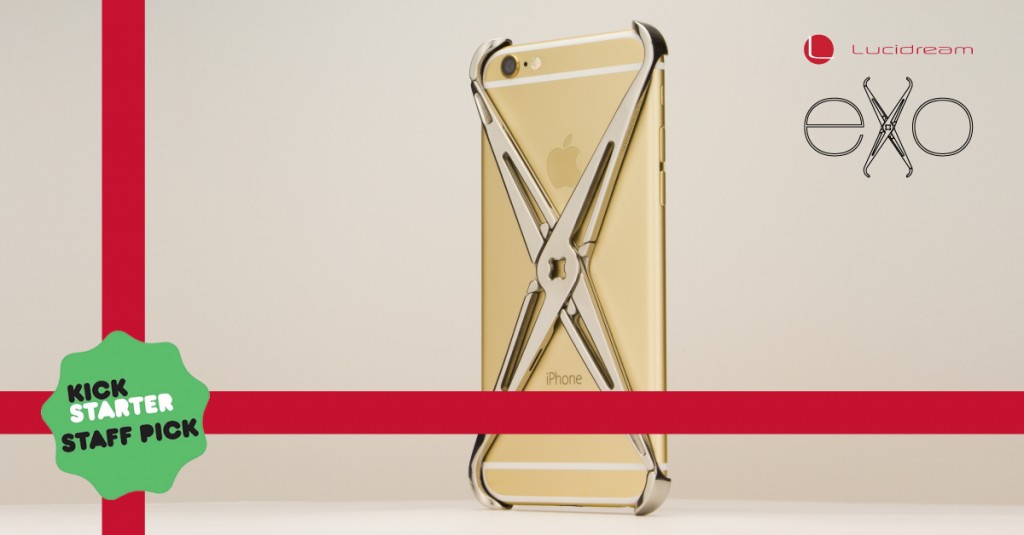 The elegant, minimalistic eXo-Skeleton Apple iPhone Case, which connects to a variety of functional accessories, is designed by the award winning Canadian industrial designer Ramak Radmard.
Building on a heritage of design and fine craftsmanship, the patent pending eXo is a result of almost 3 years of research and development. The concept has evolved from the idea of having an ecosystem of accessories that integrates digital devices with everyday life; an ecosystem of quality crafted products that are both beautiful and built to endure.
The elegant, minimalistic eXo-Skeleton Apple iPhone Case, which connects to a variety of functional accessories, is designed by the award winning Canadian industrial designer Ramak Radmard.
Building on a heritage of design and fine craftsmanship, the patent pending eXo is a result of almost 3 years of research and development. The concept has evolved from the idea of having an ecosystem of accessories that integrates digital devices with everyday life; an ecosystem of quality crafted products that are both beautiful and built to endure.
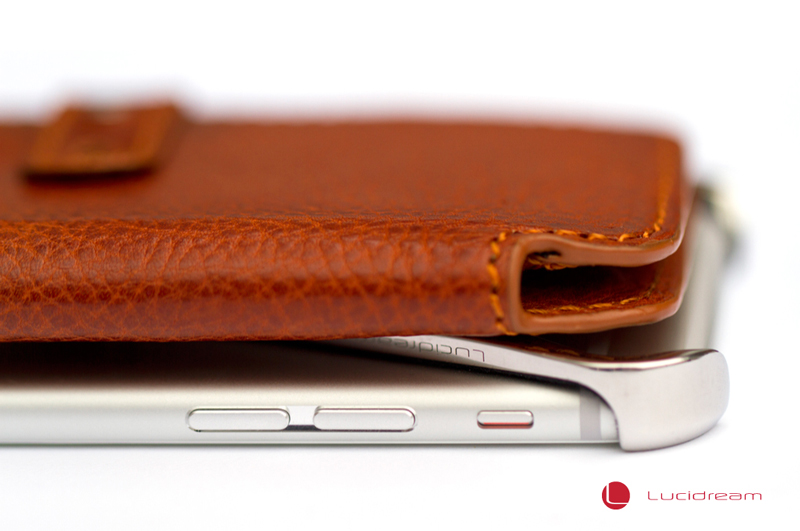 eXo is only 3 mm thick at its maximum thickness. Made from high-grade stainless steel, precision manufactured and heat-treated to aerospace standards. It is hand finished and polished, and the internal surfaces are flocked. The result is a strong eXo-Skeleton and a spring loaded impact absorption system, providing luxurious security that protects the vulnerable areas of the iPhone, while leaving it virtually bare. eXo’s arms provide ergonomic textures, which makes the iPhone much easier to grip and handle. In addition, eXo is equipped with a mechanical quick connect system, providing elegant utility by securely attaching the device onto virtually anything.
eXo is designed to create an eco-system with a quick-connect system that attaches quickly and securely to a number of functional accessories. The eXo Clip can be used as a money clip or to secure the iPhone to a belt or purse. The slim eXo Wallet is fitted with high-tech special linings protecting credit cards from unauthorized RFID access. The eXo Universal Mount secures the iPhone onto virtually anything.
The ecosystem of accessories will be compatible among all devices that have an eXo-Skeleton, starting with iPhone 6, with future introductions of iPhone 6+, iPhone 5, iPad mini and iPad Air. The company also has plans for a variety of other accessories, such as: Armband, Suction Cup Stands, Micro Universal Mounts, Grip Rings, Lanyard, Small Leather Goods as well as a series of eXo integrated Wearable Sensors and Services.
eXo is only 3 mm thick at its maximum thickness. Made from high-grade stainless steel, precision manufactured and heat-treated to aerospace standards. It is hand finished and polished, and the internal surfaces are flocked. The result is a strong eXo-Skeleton and a spring loaded impact absorption system, providing luxurious security that protects the vulnerable areas of the iPhone, while leaving it virtually bare. eXo’s arms provide ergonomic textures, which makes the iPhone much easier to grip and handle. In addition, eXo is equipped with a mechanical quick connect system, providing elegant utility by securely attaching the device onto virtually anything.
eXo is designed to create an eco-system with a quick-connect system that attaches quickly and securely to a number of functional accessories. The eXo Clip can be used as a money clip or to secure the iPhone to a belt or purse. The slim eXo Wallet is fitted with high-tech special linings protecting credit cards from unauthorized RFID access. The eXo Universal Mount secures the iPhone onto virtually anything.
The ecosystem of accessories will be compatible among all devices that have an eXo-Skeleton, starting with iPhone 6, with future introductions of iPhone 6+, iPhone 5, iPad mini and iPad Air. The company also has plans for a variety of other accessories, such as: Armband, Suction Cup Stands, Micro Universal Mounts, Grip Rings, Lanyard, Small Leather Goods as well as a series of eXo integrated Wearable Sensors and Services.
Live on www.kickstarter.com
Your support
Please help us spread the word about our project by telling your family and friends and sharing this page on your social media. There are several share opportunities throughout the Kickstarter process and sharing your pledge is the greatest way to spread the news.
Thank you for supporting our process, workmanship and products.
Ramak Radmard Lucidream Industrial Design & Product Development - Launch of the Lucidream eXo-Skeleton iPhone Case, a Premium Stainless Steel Impact Absorbing iPhone Case with an Integrated Accessories Connection, Enabling Customization
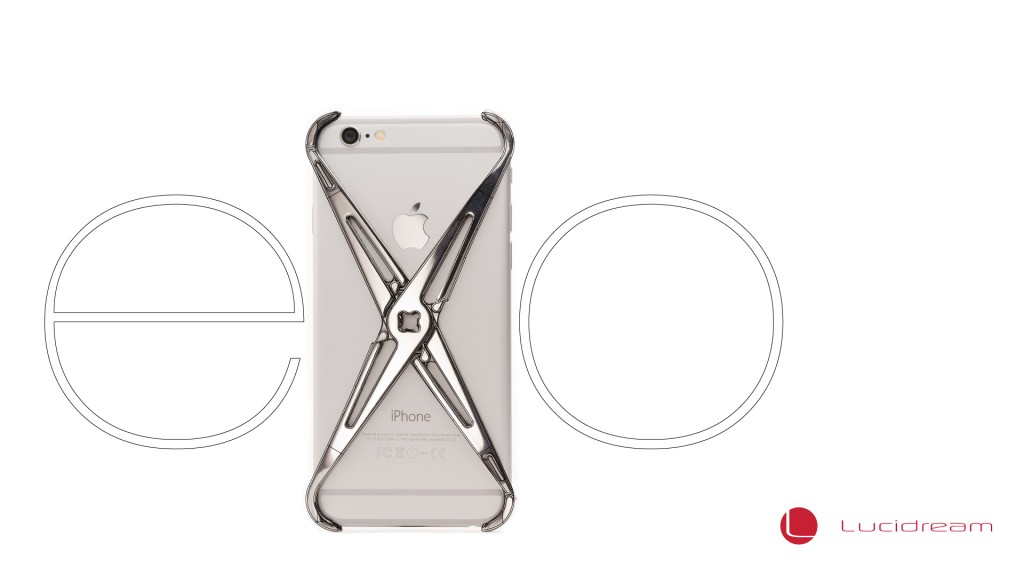
Launch of the Lucidream eXo-Skeleton iPhone Case, a Premium Stainless Steel Impact Absorbing iPhone Case with an Integrated Accessories Connection, Enabling Customization.
We are ready to launch the Lucidream eXo iPhone 6 campaign on Kickstarter.
Starting on December 1st 2014.
Lucidream, established in 1999, is an Industrial Design house specializing in product design and development of world-renowned products. Now, in addition to providing product development services, Lucidream is launching their elegant, minimalistic eXo-Skeleton iPhone Case and functional accessories Live on Kickstarter.com starting December 1st 2014.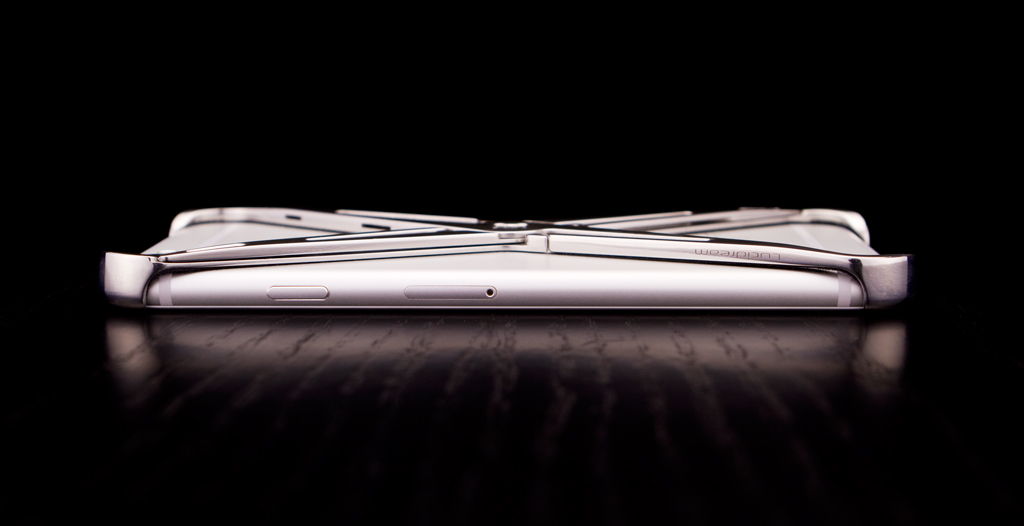 Ramak Radmard and his design house Lucidream develop innovative, meaningful and technologically challenging products. They build holistic user experiences to create unique intellectual property, design and manufacturing solutions. Now, in addition to providing product development services, Lucidream is launching their eXo-Skeleton iPhone Case and functional accessories on Kickstarter.com a social crowdfunding site.
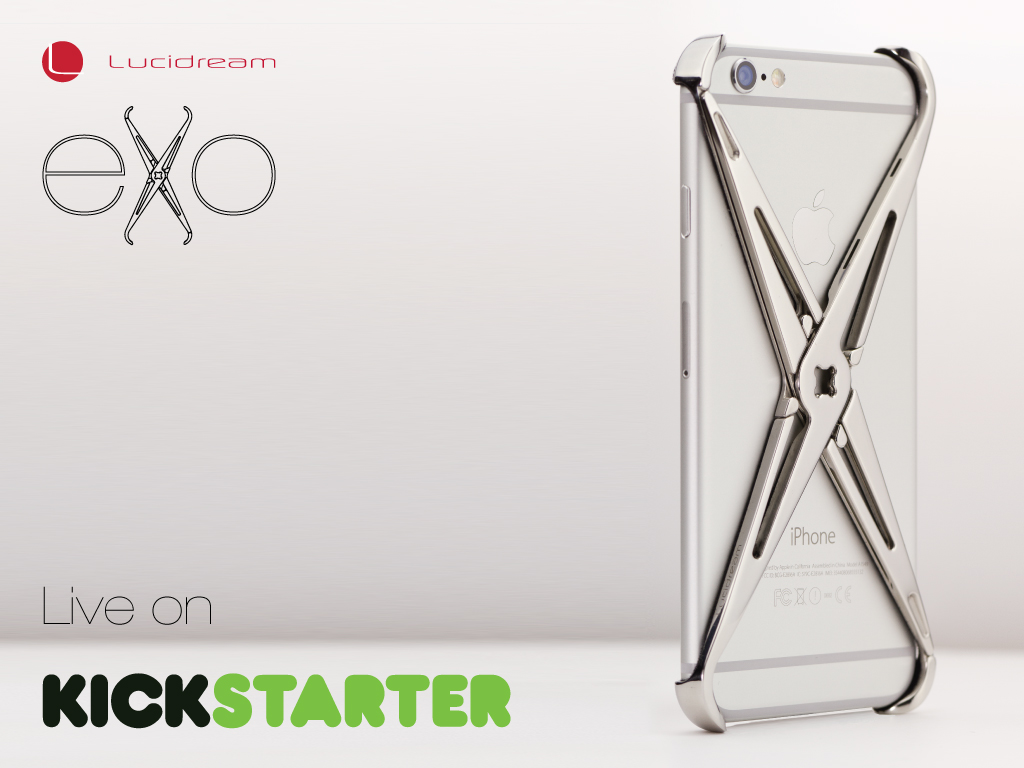 Building on a heritage of design and workmanship, eXo is a result of almost 3 years of research and development. The concept grew from the idea of having an exquisitely built ecosystem of accessories that integrates digital devices with everyday life; an ecosystem of quality crafted products that are built to endure. Inspired by the craftsmanship and quality of mechanical watch movements, Ramak Radmard has distilled the precision of dynamically moving springs into his latest design, the Lucidream eXo, bringing craftsmanship, luxury and functionality to our digital now. eXo family has evolved over the last years, through an iterative design process that has involved more than 120 prototypes, testing different configurations, technologies and manufacturing techniques. The result is a strong eXo-Skeleton and a spring loaded impact absorption system, providing luxurious security that protects the vulnerable areas of iPhone, while leaving it virtually bare. eXo’s arms also provide biomimicking ergonomic textures, which makes the iPhone much easier to grip and handle. In addition, the Lucidream eXo is equipped with a mechanical quick connect system, providing elegant utility by securely attaching the device onto virtually anything.
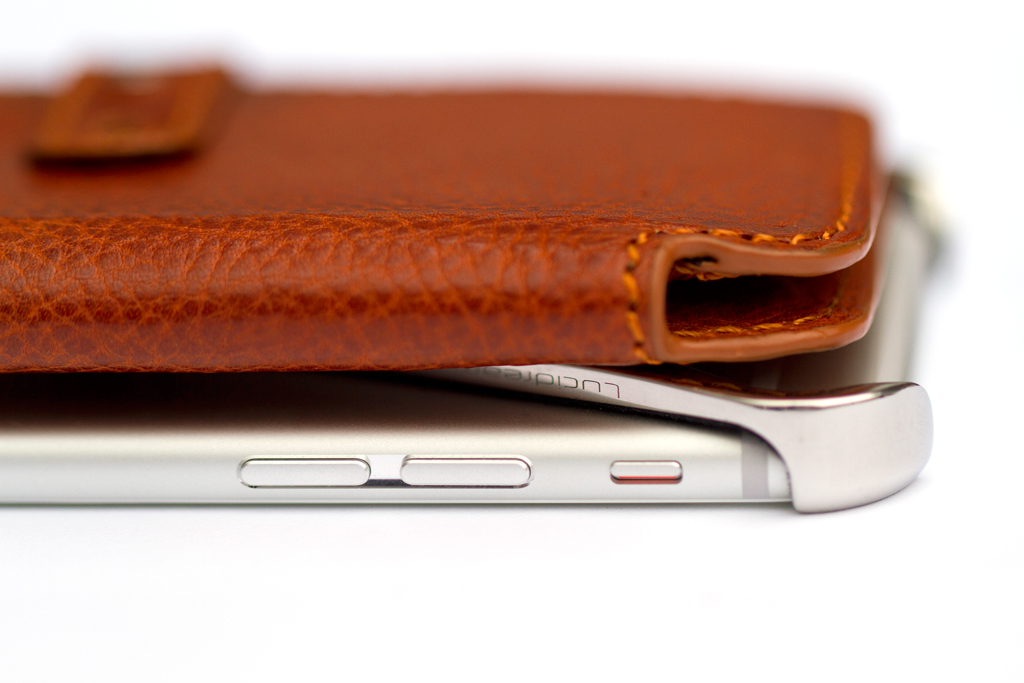 eXo weighs 48 grams and is only 3 mm thick at its maximum thickness. It is a fine tuned instrument, made from high-grade steel alloy, precision manufactured and heat treated to aerospace standards. It is hand finished and polished, and the internal surfaces are flocked.
 Importantly, the eXo-Skeleton is designed to create an eco-system. A number of functional accessories are available that attach quickly and securely to the eXo quick-connect system. The eXo Stainless Steel Clip can be used as a money clip, to keep credit cards, money and the iPhone together. It is also a great way to secure the iPhone to a belt or purse. The slim design Lucidream eXo Wallet, is made with Vegetable-Tanned Leather from Tuscany, it is fitted with a high-tech special linings that protect credit cards from unauthorized RFID access and can be used on its own, as well as attached to the eXo iPhone Case to keep all favorites handy and in check.
 A precision machined eXo Universal Mount secures the iPhone onto virtually anything, with a base that is designed to connect the Lucidream eXo iPhone Case to flat surfaces, tubes, as well as a standard 1/4? camera connector. Moreover, the minimalist Stainless Steel eXo connector, designed to be used as an Armband is perfect for people on the move.
The ecosystem of accessories will be compatible among all devices that have an eXo case, starting with iPhone 6 and future introductions of iPhone 5, iPhone 6 Plus, iPad mini and iPad Air. The company also has plans for a variety of accessories, such as: Suction Cup Stands, Micro Universal Mounts, Grip Rings, Small Leather Goods as well as a series of eXo integrated Wearable Sensors and Services. Imagine a compatible eco-system of eXo products that create a seamless user experience. Live on Kickstarter.com starting December 1st 2014.
Ramak Radmard, the CEO and Creative Director of Lucidream, is an award winning industrial designer and development specialist. Lucidream provides a one-stop resource to the consumer and premier luxury product manufacturing markets.
A precision machined eXo Universal Mount secures the iPhone onto virtually anything, with a base that is designed to connect the Lucidream eXo iPhone Case to flat surfaces, tubes, as well as a standard 1/4? camera connector. Moreover, the minimalist Stainless Steel eXo connector, designed to be used as an Armband is perfect for people on the move.
The ecosystem of accessories will be compatible among all devices that have an eXo case, starting with iPhone 6 and future introductions of iPhone 5, iPhone 6 Plus, iPad mini and iPad Air. The company also has plans for a variety of accessories, such as: Suction Cup Stands, Micro Universal Mounts, Grip Rings, Small Leather Goods as well as a series of eXo integrated Wearable Sensors and Services. Imagine a compatible eco-system of eXo products that create a seamless user experience. Live on Kickstarter.com starting December 1st 2014.
Ramak Radmard, the CEO and Creative Director of Lucidream, is an award winning industrial designer and development specialist. Lucidream provides a one-stop resource to the consumer and premier luxury product manufacturing markets.
Your support
Please help us spread the word about our project by telling your family and friends and sharing this page on your social media. There are several share opportunities throughout the Kickstarter process and sharing your pledge is the greatest way to spread the news.
Thank you for supporting our process, workmanship and products.
Ramak Radmard Lucidream Industrial Design & Product Development - Apple Watch
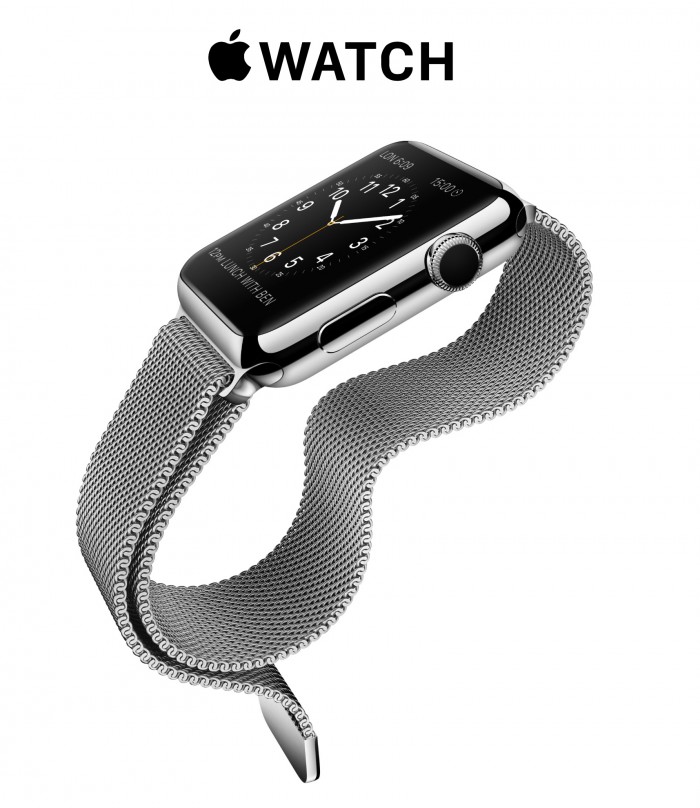
The Apple Watch (iWatch) | The Trend Towards a Decluttered Life-Style
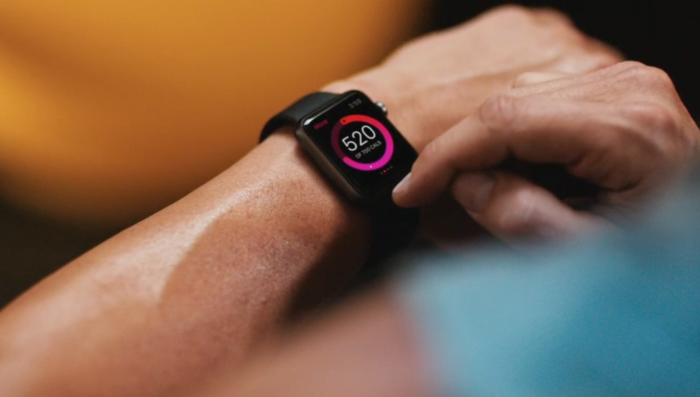
After more than two years of speculation, Apple has finally unveiled their first truly wearable device, the Apple watch. To the surprise of many, the device was not called the “iWatch”, seemingly due to the fact that Swatch already owns that trademark. The sleek design of the Apple Watch is in line with that if the new iPhone 6. However, the unique aspects of the Apple Watch lie beneath its surface. Taking advantage of the close proximity of the Watch to the user, Apple has integrated a gamut of fitness-related functionalities. From heart rate monitors to keeping track of how many minutes you spend sitting. Further more, Apple is aiming to make its devices the only ones you may need for everyday tasks, including payments when shopping. This is a trend that Apple has been setting since the 80’s with the release of the Mac, de-cluttering our desks since then. That trend still continues to this day, encompassing the smaller things we carry with us.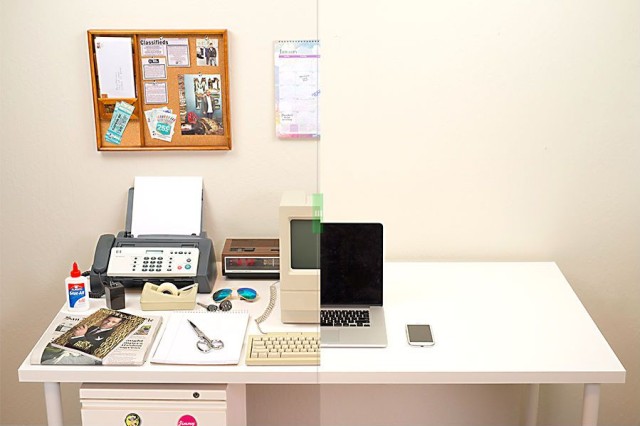 We seem to be heading back to the days that people left the house with most minimal essentials, in contrast to the past few decades. With less objects to carry, and technology working for us silently in the background, there is a need for next-generation accessories designed to integrate this technology for us.
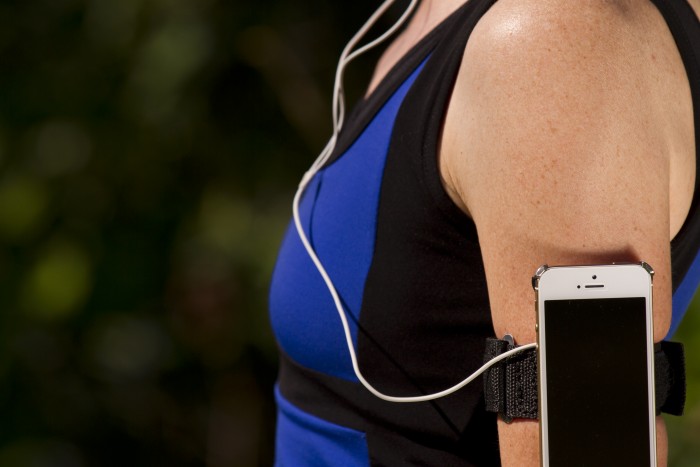
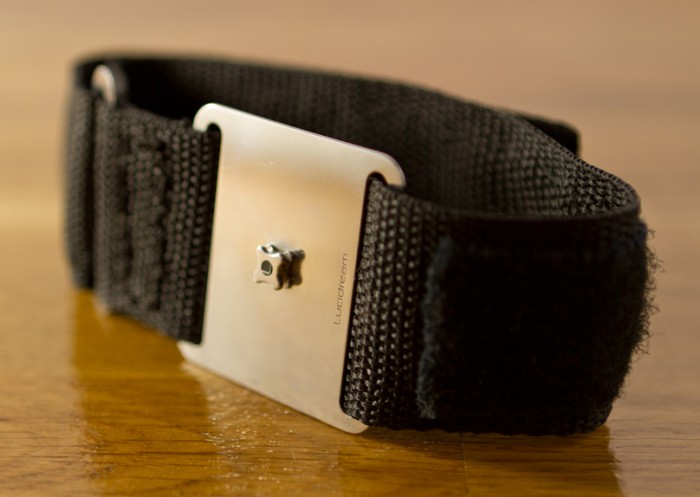 The Lucidream eXo iPhone Case in combination with its Armband add-on is a perfect example of this integration.

 Lucidream Industrial Design & Product Development
- Marine testing the Lucidream eXo iPhone Universal Mount – Coming to Kickstarter Soon

Lucidream eXo iPhone Case – Universal Mount
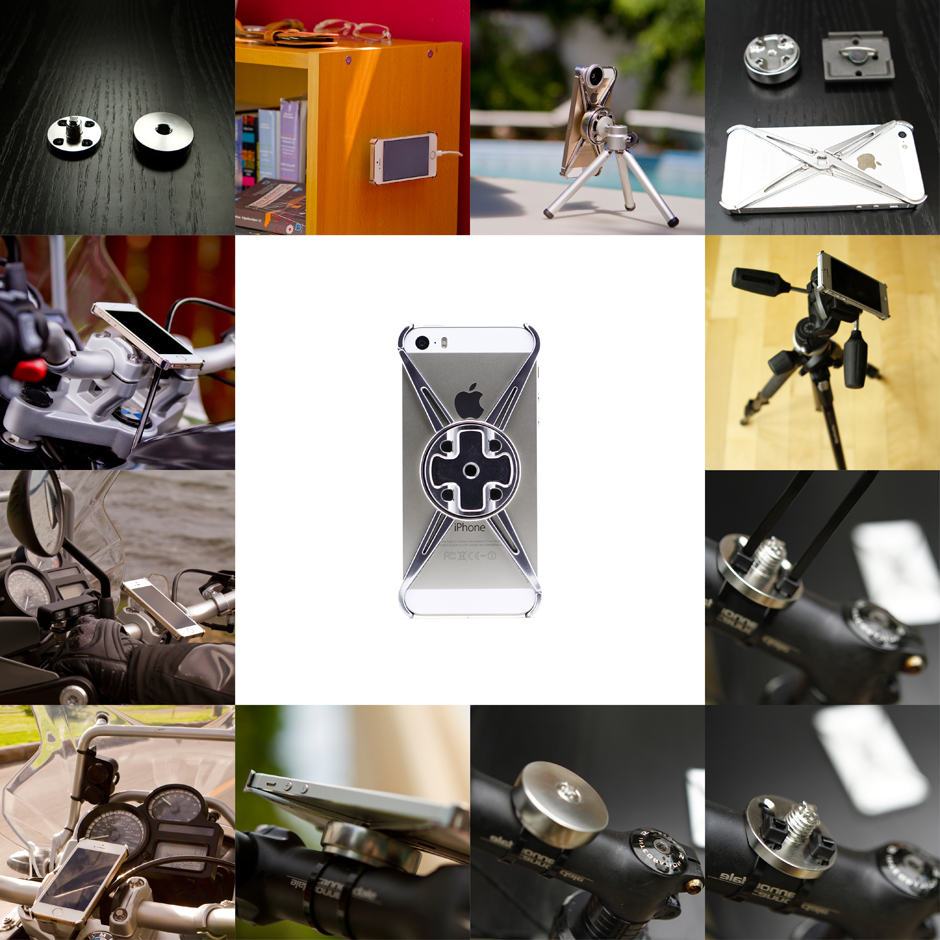
The Universal Mount is a precision machined from corrosion resistant Stainless Steel, it is an adjustable attachment base for the Lucidream eXo iPhone case.
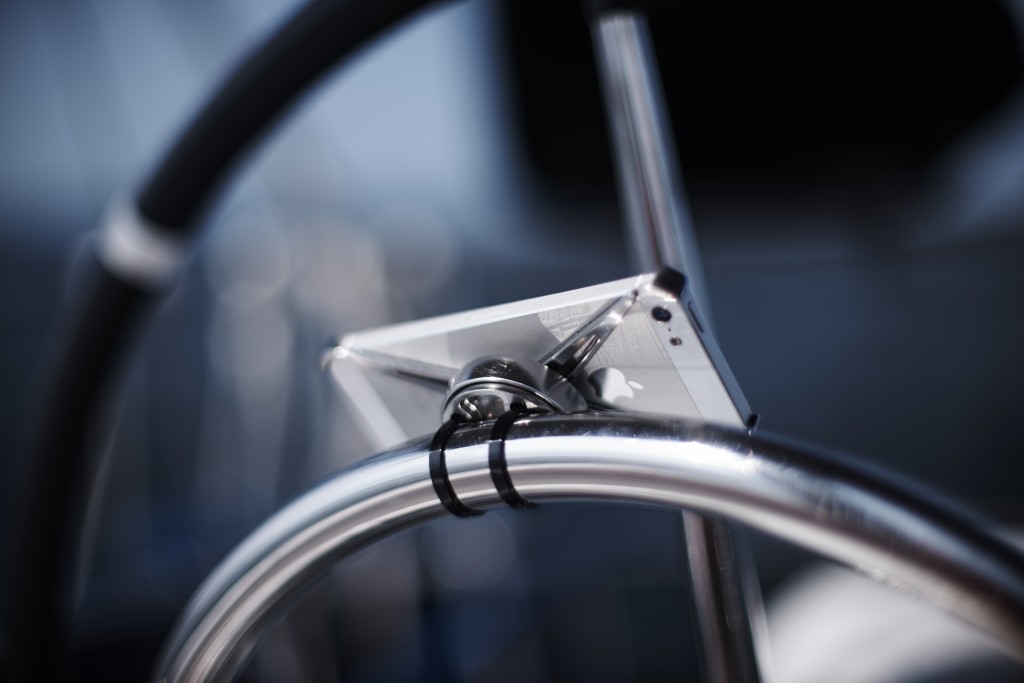 It makes a great tool for connecting your iPhone to any tubular profile, using two standard ties which can then be trimmed and covered by the Universal Mount’s cap.
 The Universal Mount is also designed to attach to any flat surfaces using fasteners. The mount is also compatible with standard 1/4″ camera connectors for you tripods and all you other photography accessories.
Your support
Please help us spread the word about our project by telling your family and friends and sharing this page on your social media. There are several share opportunities throughout the Kickstarter process and sharing your pledge is the greatest way to spread the news.
Thank you for supporting our process, workmanship and products.
Ramak Radmard Lucidream Industrial Design & Product Development - Lucidream eXo iPhone Case Coming to Kickstarter
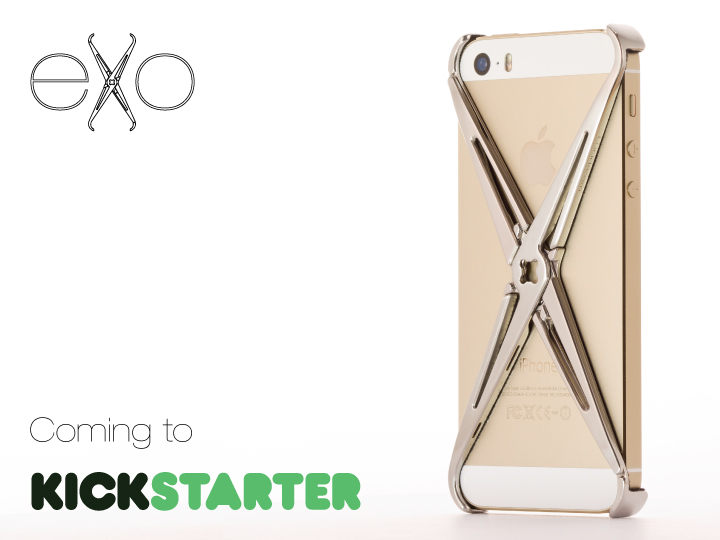
Lucidream eXo iPhone Case – Coming to Kickstarter Soon!
Lucidream eXo iPhone Case Design from Lucidream on Vimeo. Inspired by the craftsmanship and quality of mechanical watch movements, we have distilled the precision of dynamically moving springs. eXo is bringing that craftsmanship, luxury and functionality to our digital now. Building on a heritage of design and workmanship, eXo is a result of more than 2 years of research and development.
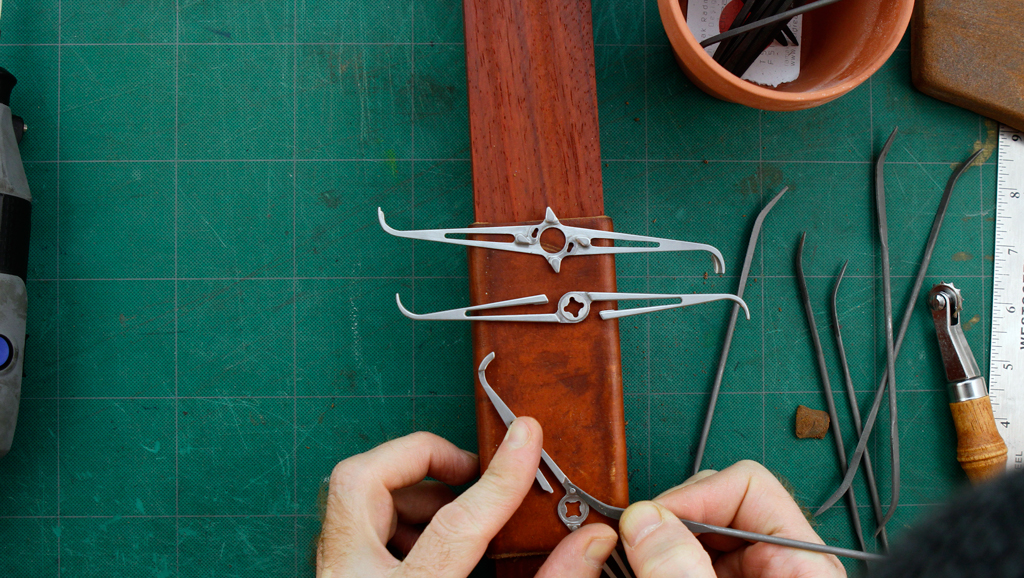 The concept grew from the idea of having an exquisitely built ecosystem of accessories that integrates your devices with your everyday life. An ecosystem of quality crafted products that are built to endure. This has been an iterative process, it has taken more than 120 prototypes, testing different configurations, technologies and manufacturing techniques, in order to satisfy this intricate design.
 We are deeply thankful to you, for helping us transform an idea into a finished line of products. We have spent the last 2 years, creating and perfecting eXo and its accessories. Now, we need your support to get the production started. We have prepared a great selection of pledge levels for you.
Your support
Please help us spread the word about our project by telling your family and friends and sharing this page on your social media. There are several share opportunities throughout the Kickstarter process and sharing your pledge is the greatest way to spread the news.
Thank you for supporting our process, workmanship and products.
Ramak Radmard Lucidream Industrial Design & Product Development - THE GLOBE AND MAIL – SKETCHBOOK RAMAK RADMARD
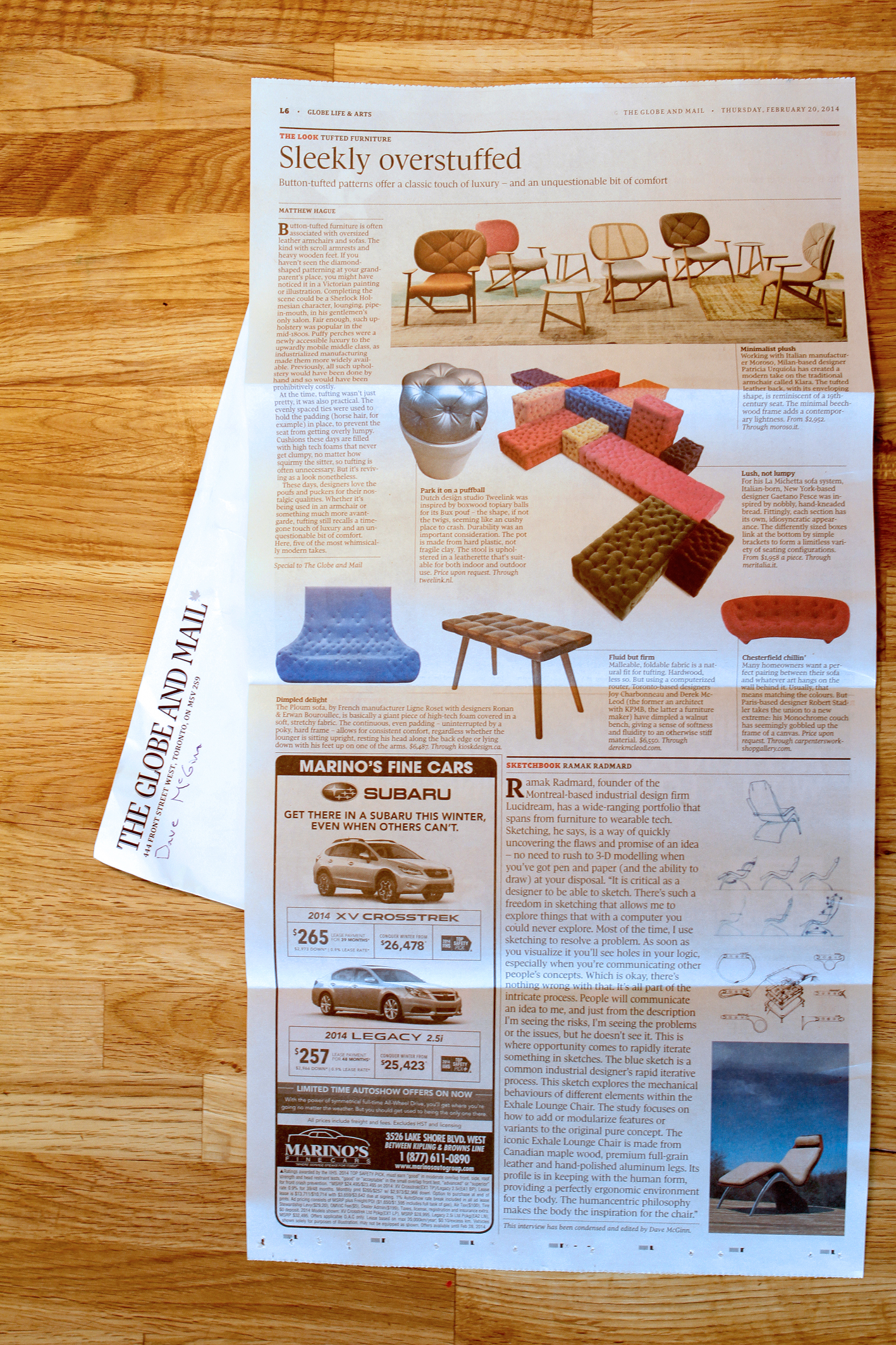
 Toronto, Ontario, Canada, February 20, 2014 – Lucidream is proud to announce that article was published in The Globe and Mail under the “GLOBE LIFE & ART” section in an article titled “Sketchbook Ramak Radmard” written by @Dave_McGinn Dave McGinn. We Discuss the importance of sketching and I share some of my concept sketches that have become real production products, as well as some concepts for wearable technology.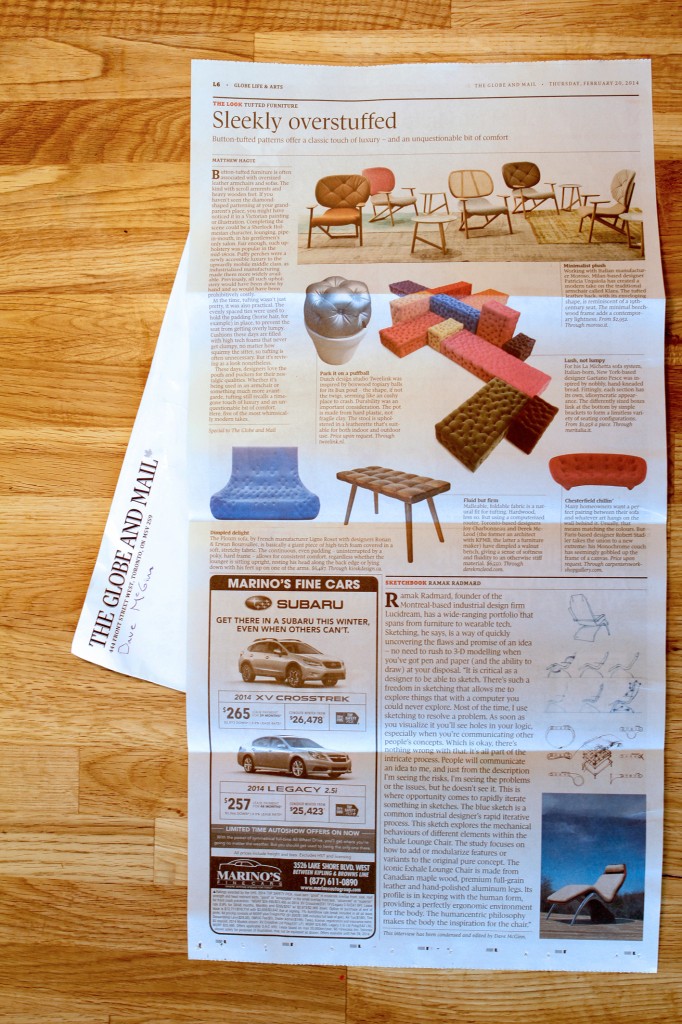
- Financial Times Global Challenge

Financial Times Global Challenge
Financial Times Global Challenge London, United Kingdom, October 22, 2012 – Lucidream & Rightsight win the prestigious Financial Times / Sightsaver Global Challenge
Rightsight is a multinational team of MBA students that consists of members from Aarhus University – Rutgers State University – IFRE / University of Pennsylvania and Lucidream their official product design and development partner. How do you feel about winning the challenge? Ramak-Lucidream: I was happy when RiteSight invited me to join their team, to collaborate on a sustainable social cause. Winning the challenge just made it incredibly sweet! This challenge has provided a great opportunity for us to design and develop a meaningful product, a completely new, innovative, customizable and affordable eyewear concept! What did you enjoy most about participating? Ramak-Lucidream: The opportunity to work with a talented global team that was tackling a meaningful problem was irresistible! Seeing the value that design thinking brought to the team was very rewarding. How would you like to develop your business plan? Ramak-Lucidream: We look forward to further developing and bring to market the Sightsaver – Rightsight solutions. We hope to demonstrate to the Sightsaver’s Executive Board the rewards associated with our system and how we will work to mitigate any residual risks. An important next step involves intellectual property management. Given the novelty of the new Lucidream modular eyewear system and the innovative methods used to allow for individualization and low cost mass production, we will require intellectual property due diligence and intellectual property protection for several newly developed concepts. What are your future plans? Ramak-Lucidream: At Lucidream, we are continually developing new products and business models for our various clients. Lucidream’s design process is always human-centered and we shape decisions around product form, functionality, usage and creation of intellectual property. We use these insights to generate innovative concepts and provide superior experiences for our clients and to their customers. Our goal is always to identify inspirational opportunities for our clients by balancing their unique advantages and developing innovative methods and solutions tailored to each specific business model. We are always looking for new challenges and opportunities to develop meaningful products and businesses. Will you stay focused on the work Sightsavers does? (if yes, why?) Ramak-Lucidream: Absolutely. Knowing how Sightsavers is trying to add value to those who cannot help themselves is an inspiration. Our involvement with Sighsavers is a great opportunity for us to invest in the global social fabric. We hope to demonstrate the differentiating factors of our accessible eyewear solution and show how our system can be an affordable solution for the masses. I believe this project has the potential to add real value to the social fabric and to create local economic growth while tackling the stigma associated with eye glasses in developing countries. On behalf of Lucidream, Founder, Creative Director & Chief Designer Ramak Radmard Source: Financial Times - Lucidream Design & Aarhus University

Lucidream Design & Aarhus University
London, 2012 – Lucidream Design is proud to announce their assistance to students from Aarhus University, School of Business and Social Sciences who have won the prestigious final in Financial Times MBA Challenge 2012. Read the Full Post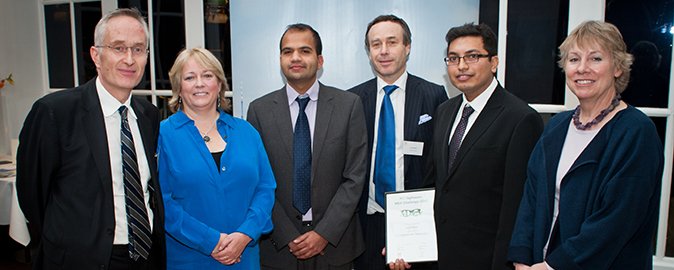
From the left: Sir Michael Barber (chief education advisor to Pearson), Caroline Harper (CEO of Sightsavers), Dev Bhargava (member of Team RiteSight and Sustaianable Full-time MBA alumnus, AU), Lionel Barber (editor of the FT), Rajiv Vaid Basaiawmoit (Team leader – RiteSight and Sustaianable Full-time MBA alumnus, AU) and Della Bradshaw (FT Business Education Editor). Foto: Chris Jelf
A group of students from Aarhus University, School of Business and Social Sciences have won the final in Financial Times MBA Challenge 2012 with their idea to change the mindset of people in northeast India to wearring glasses through campaigns that use games, loyalty schemes and versatile glasses.Team leader for the RiteSight team Rajiv Vaid Basaiawmoit, MBA from Aarhus University, is both happy and humble: – We are very happy to be joint winners of this noble challenge. To be a winner is of course always a very special feeling – but the icing on the cake here is not that we are winners but that our ideas and proposed solutions will be used in some form or another to bring about positive impact in the world we live & share in. Two teams were announced winners, the other was a team called the Glass Strangers. In the final, the team from Aarhus battled against five other teams from all over the world about who could come up with the best business plan for marketing glasses for children and teenagers in developing countries. The six finalists were chosen among hundreds of MBA teams. Poor eyesight stops progress For school children with poor eyesight, the outcome is often a poor school performance and frustrating school years. Rajiv Vaid Basaiawmoit explains the problem: – The importance of good eyesight is an often overlooked problem in light of bigger problems out there such as social inequality, poverty and lack of access to education. However, if one does not have access to good eyesight – how can he/she have access to education? How can they fight their way out of poverty? Thus, basic access to quality eyecare is a necessity in the world that we live in and more so it is important to overcome barriers – like the social stigmatization of glasses in the developing world – so that they can no longer be held back to the progress they deserve. Even though the problem could often be easily solved by a pair of glasses, the children are not given glasses because it is not socially acceptable. Ultimately, it makes more young people drop out of school because they cannot complete it without having vision correction surgery, but on the other hand don’t wish to wear glasses either. Board and computer games to pave the way In their efforts to change attitudes to glasses among Indians, the team from Aarhus has decided to focus on a special computer game where all participants must wear glasses. – India has a caste system … The only time people don’t think about their strata is when they are playing games. A game is something that brings everyone together – creating a level playing field that breaks boundaries, says Rajiv Vaid Basaiawmoit. A board version of the game will be developed for schools with no access to computers. The goal is that the special glasses which you have to wear to play the game will help increase the players’ empathy with spectacle wearers. In addition to the special games, the team will also introduce a wide range of designer glasses to help challenge the taboo of wearing glasses. To this end, the award-winning Canadian designer Ramak Radmard has lent the team a hand. And, finally, designs should be made available with plain glass so people with good eyesight can wear them as fashion items or for solidarity, like friendship bracelets. Team RiteSight The group from Aarhus, consisting of students from the US, Europe and Asia, calls themselves RiteSight. To start with, they have decided to focus their business plan on north-east India. Five members of the seven-strong team are current or former students at Aarhus University:- Dev Bhargava, Sustainable Full Time MBA alumnus, Aarhus University, Business and Social Science, Denmark
- Kathleen Wagner, MSc Innovation Management, Aarhus University, Denmark
- Rajiv Vaid Basaiawmoit, Sustainable Full Time MBA alumnus, Aarhus University, Business and Social Science, Denmark
- Enoch Yeboah Agyepong, Sustainable Full Time MBA alumnus, Aarhus University, Business and Social Science, Denmark
- Anders Laursen, Sustainable Full Time MBA, Aarhus University, Business and Social Science, Denmark
- Aaron Basaiawmoit, Young India Fellowship Programme, an IFRE Initiative in collaboration with UPenn, India
- Ishanie Niyogi, Master of City and Regional Planning, Rutgers State University of New Jersey, USA
School of Business and Social Sciences, AwardsLucidream Design & Aarhus University
On behalf of Lucidream Design, Founder, Creative Director & Chief Designer Ramak Radmard Source: Aarhus University, School of Business and Social Sciences - FT & Sightsavers MBA Challenge
Financial Times & Sightsavers MBA Challenge
London, England, October, 12, 2012 – Lucidream is proud to report their cooperation with a group of students from Aarhus University, School of Business and Social Sciences who have won the final in Financial Times MBA Challenge 2012 with their idea to change the mindset of people in northeast India to wearing glasses through campaigns that use games, loyalty schemes and versatile glasses. Read the Full Post On behalf of Lucidream,
Founder, Creative Director & Chief Designer
Ramak Radmard
Source: Sightsavers.org
On behalf of Lucidream,
Founder, Creative Director & Chief Designer
Ramak Radmard
Source: Sightsavers.org - Toronto Industrial Design Firms | 10 Industrial Design Firms
 Toronto, Ontario, Canada, August 30, 2008 – Lucidream is making waves in Toronto as one of ten industrial designs you should know about in Piccsy.com’s ‘Toronto Creatives’ post.
Toronto Industrial Design | 10 Industrial Design Firms | YOU SHOULD KNOW ABOUT
The post reads:
Toronto Industrial Design | 10 Industrial Design Firms | YOU SHOULD KNOW ABOUT Combine one part applied art, one part applied science, two parts aesthetics and ergonomics with a pinch of improved marketability and production and you’ve got the recipe for the fundamentals of industrial design. From touch screen interface tables and walls to organic waste green bins, you’ve probably used something crafted by one of these firms. These Toronto-based connoisseurs of product development and design are taking preliminary concepts and converting them into commercialized technological solutions as they introduce new products to the market. Through their range of comprehensive services each firm is improving people’s lives with innovation and the implementation of new ideas. “Lucidream specializes in product development and design. Designer, Ramak Radmard believes that the distinguishing factor in any product lies in the value it adds to the user, in terms of functionality, environmental impacts, aesthetics as well as value. Considering that the value of a product is defined by the manufacturer as well as the end user, the challenge of every project is to achieve equilibrium between these perspectives, without sacrificing the spirit of the product.” Read the Full PostToronto Industrial Design | 10 Industrial Design Firms | YOU SHOULD KNOW ABOUT
On behalf of Lucidream, Founder, Creative Director & Chief Designer Ramak Radmard Source: Piccsy.com - Financial Times Sightsavers Challenge
 The Financial Times partnered with Sightsavers, the FT’s chosen charity for its 2011-2012 seasonal appeal, to set a global challenge for MBA participants:
What is the Financial Times Sightsavers Challenge?
Finalist team RiteSight, partners with Ramak Radmard and Lucidream to design a completely new holistic eyewear concept for developing countries, addressing the stigma that is attached to wearing glasses! I was happy when RiteSight invited me to join their team. I know that my expertise in product design and development, and my familiarity with the eyewear industry, will be an asset to many aspects of this project. The opportunity to work with a talented young global team that are tackling a meaningful problem is irresistible! My goal is to make this basic sense accessible. I also believe, by empowering all the stakeholders throughout the product lifecycle we can add value to their social fabric and create local economic growth. Ramak Radmard Lucidream product design and development : Financial Times Sightsavers Challenge“Develop a business plan to market glasses to children or young people (aged 16 to 25) in one or more developing country in Africa or Asia.”
” In some developing countries, there is a stigma attached to wearing glasses. A child in need of a pair of spectacles is seen as inferior or badly behaved because they can’t keep up at school. Often, they are shouted at by teachers and their parents who do not understand why the child is struggling.”
——————————————————
Montreal Industrial Designer Montreal :: Toronto Industrial Designer Toronto
- A day as an Industrial Designer & Product DeveloperThis video tells the story of one product detail and one industrial designer / product developer. The video is a time-laps photography of sketching, conceptualization, designing, prototyping, modelling, 3D modelling, engineering analysis and manufacturing. Designed by Ramak Radmard Lucidream Industrial Design & Product Development Industrial Designer – Product Developer :: Montreal, Quebec : Toronto, Ontario, Canada
- Lucidream Industrial Design by Ramak RadmardWe are product story tellers… We facilitate the process and framework to develop your products and tell it’s story to its audience. We identify inspirational opportunities for our clients by balancing their unique advantages; marketing channels, sourcing options and manufacturing capabilities. Diving deeply into their presented opportunity we discover and strategize innovate methods and solutions that add value to the business model. Focusing on the design, development, sourcing and delivery of integrated products and marketing solutions. Communicating compelling products stories through insight, strategy, innovation and design. Industrial Design Montreal, Quebec, Canada | Montreal Industrial Designer Montreal | Toronto Industrial Designer Toronto | Montreal Designers Industriels Montreal, Quebec, Canada.
- Free Lucidream Insight, Strategy, Innovation & Design Consultation
Free Lucidream Insight, Strategy, Innovation & Design Consultation
Free Lucidream Insight, Strategy, Innovation & Design Consultation
Contact us for a free design consultation, we can assess the condition of your concept and help you.Free product design and development consultation!
We are offering a free design and product development consulting session. Every January I get a surge of enquiries in regards to product design, development and marketing of new ideas. Finally realize that eureka of an idea! There are many things to consider at this stage. The majority of these initiatives don’t pan out, sometimes for all the wrong reasons. That is why I want to offer some free consultation, so people and companies can get access to a wider perspective of what they need to accomplish in order to have a successful product introduction.
- Free Product Design and Development Consultation!
Free product design and development consultation!
I am offering a free product development consulting session. Every January I get a surge of enquiries in regards to product design, development and marketing of new ideas. It seems that a lot of new synapses fire up during the holidays and many New Year resolutions are made to finally realize that eureka of an idea! There are many things to consider at this stage. The majority of these initiatives don’t pan out, sometimes for all the wrong reasons. That is why I want to offer some free consultation, so people and companies can get access to a wider perspective of what they need to accomplish in order to have a successful product introduction. - We are product storytellers
We are product storytellers
As We are product storytellers we facilitate the process and framework to develop your product and tell it’s story to its audience.
We are product storytellers
We identify inspirational opportunities for our clients by balancing their unique advantages; marketing channels, sourcing options and manufacturing capabilities. Diving deeply into their presented opportunity we discover and strategize innovate methods and solutions that add value to the business model. Focusing on the design, development, sourcing and delivery of integrated products and marketing solutions. Communicating compelling products stories through insight, strategy, innovation and design. Montreal We are product storytellers : Montreal Industrial Designer : Toronto Industrial Designer - BEST WISHES
 Best wishes and happy holidays from Ramak Radmard Lucidream :: strategy, innovation & design I would like to sincerely thank our friends, customers, partners and dealers for their support in 2011. Our success would not be possible without your ongoing commitment and dedication, we hope to be your one stop strategy, innovation and design partner for 2012. Best wishes to you and your loved ones in this holiday season, and we hope you enjoy a happy, healthy and most prosperous new year! Buone Feste! Happy Holidays! Bonnes Fêtes! Frohe Feiertage! Buenas fiestas! http://www.lucidream.com/
 - Sustainable Practice
Design research is awareness, system thinking is perspective and design thinking is iteration.
Fusion of these factors is “Sustainable Practice”, making fit products.
- www.Lucidream.com | Design Updated
a design thinking, researching, strategical, innovative, product design and development boutique, focused on addressing customer requirements.
www.Lucidream.com updated;

Industrial Designer / Designer Industriel :: Montreal, Quebec, Canada.
——
A design thinking, researching, strategical, innovative, product design and development boutique, focused on addressing customer requirements.
Lucidream is a product design consulting firm specializing in the design and development of modern solutions. We are dedicated to the application of modern and functional designs. We believe products are an extension of the function and a celebration of form. We design products that are the marriage of art and technology, a functional and a dynamic sculpture. Lucidream’s objectives are to meet the needs of our clients, to improve the quality of life for their clients and to respect the environment when developing new products.We facilitate the process and framework to develop your product and tell its story to your audience.We identify inspirational opportunities for our clients by balancing their unique advantages; technology, marketing channels, sourcing options and manufacturing capabilities. Exploring their presented opportunity, we discover and strategize innovate methods and solutions that add value to their business model. We focus on the design, development, sourcing, branding and delivery of integrated products and marketing solutions.Professional Chartered Member of Industrial Designers Society of America (IDSA), Association of Canadian Industrial Designers (ACID) and Association of Quebec’s Industrial Designers (ADIQ)
Industrial Design, Product Design, Product Development, Design Thinking, Design Research & Strategy.
Montréal, Québec, Canada
Industrielle / Designer Industriel :: Montréal, Québec, Canada.
——
Une pensée de conception, de recherche, stratégique, conception et développement de produits boutique innovante, axée sur la lutte aux exigences des clients.
Professionnel agréé membre de l’Industrielle Designers Society of America (IDSA), Association des designers industriels du Canada (ACID) et l’Association des designers industriels du Québec (ADIQ)
Design industriel, conception de produits, développement de produits, Design Thinking, Design & Stratégie de recherche.
Montréal, Québec, Canada
- Industrial Designer / Designer Industriel Montreal, Quebec, Canada

En tant que Designer Industriel Montréal, nous sommes enregistrés auprès MDEIE comme une boutique de conseil design industriel
Designer Industriel Montreal
Design Industriel à Montréal, Québec, Canada, ainsi que la reconnaissance par IDSA, ACIDE & ADIQ
Ministère du Développement économique, de l’Innovation et de l’Exportation (MDEIE) nous reconnaît comme un conseil de design industriel de l’entrepreneur, permettant à nos clients de bénéficier en obtenant des remboursements d’impôt sur les dépenses admissibles qui correspondent à 65% des honoraires versés en vertu du contrat .
Se il vous plaît visitez le site MEDEIE pour plus d’infos:
Cordialement,
Ramak Radmard, IDSA, ACIDE, ADIQ
Designer Industriel Montreal
Nous nous spécialisons dans les solutions de la pensée de conception, qui se concentre sur la recherche de conception pour obtenir la stratégie de conception et développement de produits industriels optimale.
———
As a Designer Industriel Montreal we are registered with MDEIE as an Industrial Design
Design Industriel consulting boutique in Montreal, Quebec, Canada as well as recognition by IDSA, ACID & ADIQ
Ministère du Développement économique, de l’Innovation et de l’Exportation (MDEIE) recognizes us as a consulting Industrial Design contractor, allowing our clients to benefit by obtaining tax refunds on qualified expenditures which correspond to 65% of the fees paid under the contract.
Please visit the MEDEIE Site for more info:
Sincerely,
Ramak Radmard, IDSA, ACID, ADIQ
We specialize in design thinking solutions, which focuses on design research to derive the optimum industrial design and product development strategy.
———
Designer Industriel Montreal
Industrial Design, Product Design, Product Development, Design Thinking, Design Research
Montréal, Québec, Canada
Canadian Industrial Designer
- Lucidream Design on Facebook!
 //
// Lucidream Design on Facebook
Lucidream Design on Facebook
Now find Lucidream Design on Facebook, please join us and stay in touch!Lucidream on Facebook - Design Thinking Architecture :: Noor, an ecological / self-sustaining desert oasis
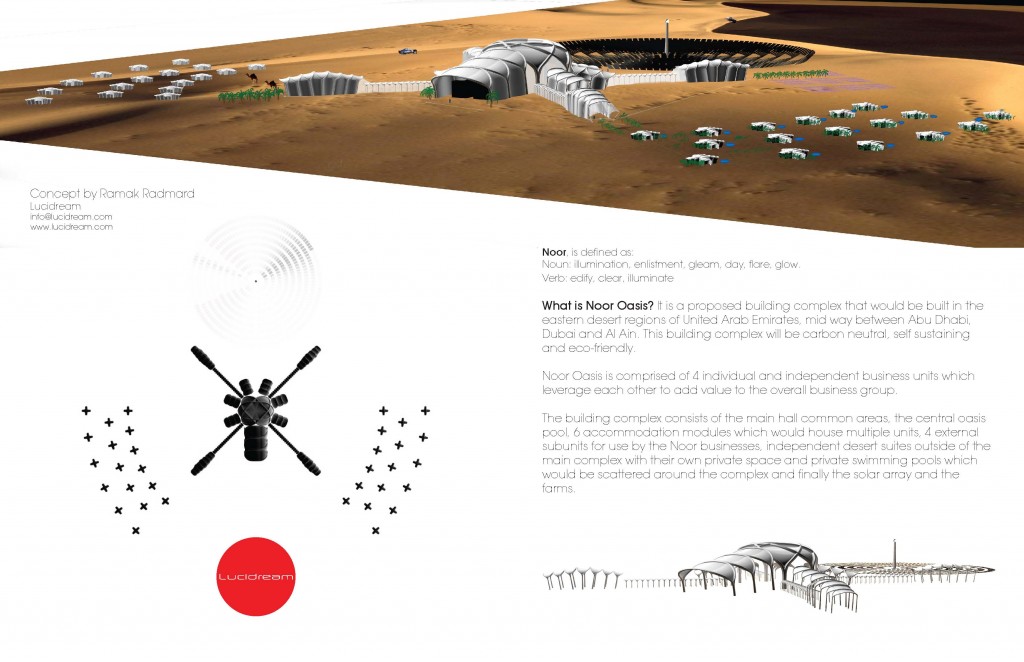
Design Thinking Architecture :: Noor, an ecological / self-sustaining desert oasis
Noor, is defined as:
Noun: illumination, enlistment, gleam, day, flare, glow. Verb: edify, clear, illuminateWhat is Noor Oasis?
It is a proposed building complex that would be built in the eastern desert regions of United Arab Emirates, mid way between Abu Dhabi, Dubai and Al Ain. This building complex will be carbon neutral, self sustaining and eco-friendly. Noor Oasis is a Design Thinking solution that is comprised of 4 individual and independent business units which leverage each other to add value to the overall business group. The building complex consists of the main hall common areas, the central oasis pool, 6 accommodation modules which would house multiple units, 4 external sub-units for use by the Noor businesses, independent desert suites outside of the main complex with their own private space and private swimming pools which would be scattered around the complex and finally the solar array and the farms. We are working with several parties to realize this concept, if you are interested, please feel free to contact me. Ramak Radmard www.lucidream.com
- Idea Exchange, a design thinking solution to: Product design, development, manufacturing and commercialization.
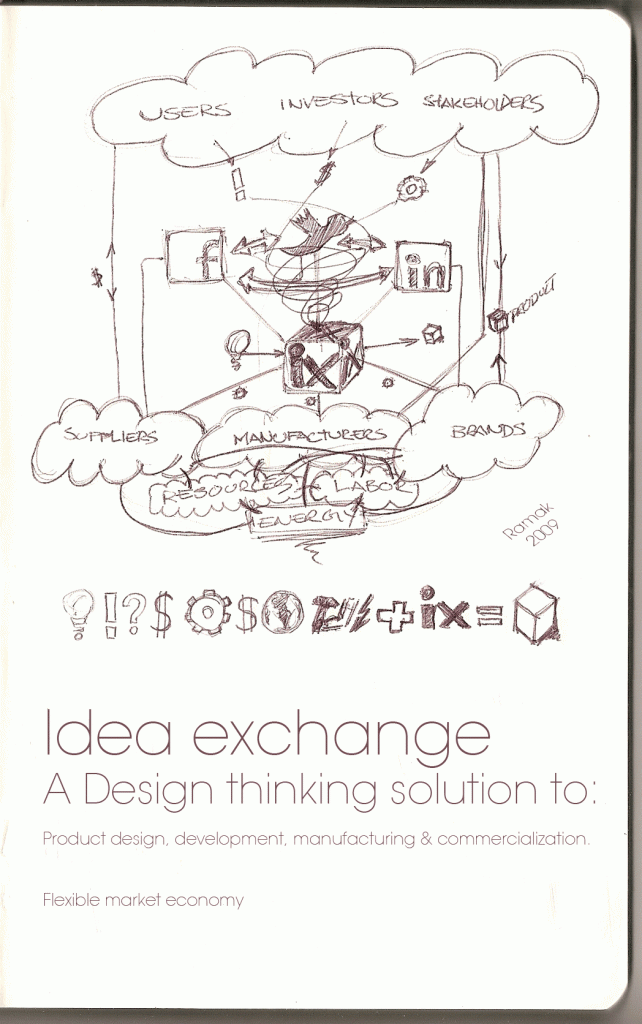
Idea exchange : design thinking
By sharing a concept, one risks loosing the idea to others and thereby loosing any potential revenues or acknowledgments from the concept, but only by sharing one can create new opportunities. This business model proposes a secure network, that provides an environment for all people who are interested, to be a part of global product and resource selection. The first aspect of this proposal is that products will only be produced if there is enough demand-committed on the project. This is demonstrated by the presale, barter participation in a project or investments made towards the concept or product by the stakeholders & shareholders. This represents opportunities for financiers, developers, manufacturers, buyers, as well as the labor markets of all levels to connect, produce, distribute, buy and sell products on a trusted network.Here is how the concept works:
A new design thinking concept is created by an (Intellectual Property Owner, anyone), this is posted on the system or a controlled group, network, category or as private as a reply to a request for a product. The concept is nominated for review when it has created enough investment for a review; the review is preformed by a PRB (Product Review Board), which consists of the social group for the particular product’s stakeholders, buyers from all level of purchasing spectrum; investors, financiers, institutions, distributors, retailers, environmentalists and consumers. This review board functions much like stock exchange and/or online purchase, where buyers can pre-purchase the resultant product and/or stocks and gain voting influence in a product or concept opposed to a company, early investors can potentially profit at much higher levels than the later adaptors who are coming on board after the product has been proven and risks have been mitigated. Likewise a request for a product can be created by anyone in any buying capacity, creating requests such as:- A sponsored development bid for a “widget”,
- A we need a better “widget” our budget is X$,
- Or the famous, wouldn’t be nice to have a “widget”
Other benefits:
- Ability to create product criteria’s such as: efficiency, ecological, labeling, fair wage, ethical, carbon tax, % renewable energy consumed, and other criteria.
- Create an excellent link to physical products and markets
- Industrial design and product development case study
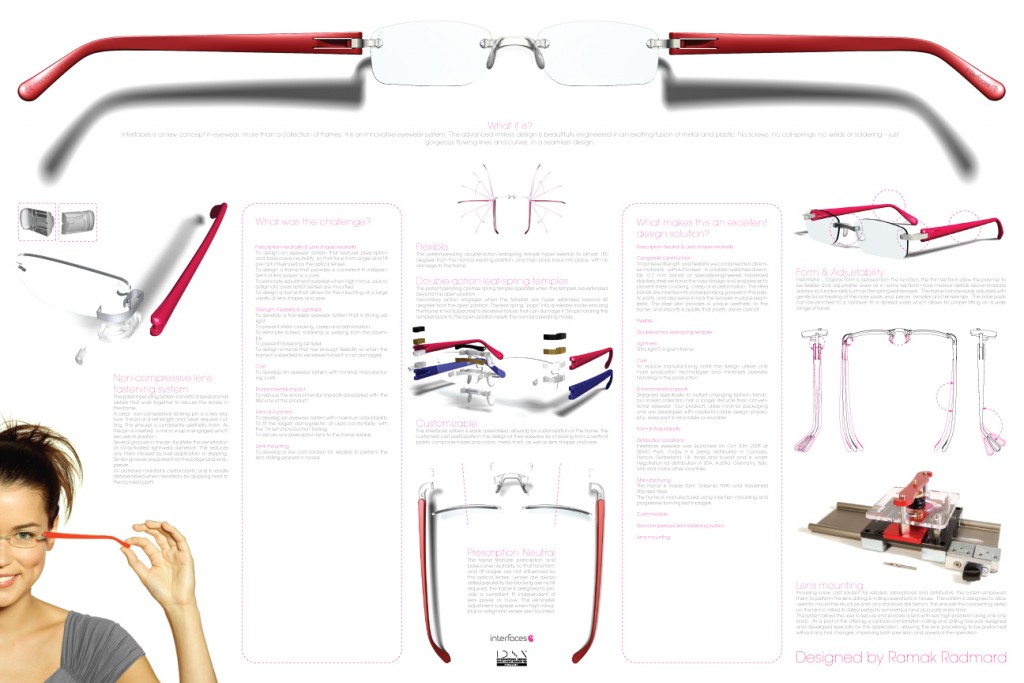
What was the Industrial design and product development challenge?
Industrial design and product development of a Prescription neutrality & Lens shape neutrality
Industrial design and product development criteria: To design an eyewear system that features prescription and base-curve neutrality, so that face form angle and tilt are not influenced by the optical lenses. To design a frame that provides a consistent fit independent of lens power or curves. To eliminate adjustment surprises when high minus, plus or astigmatic prescription lenses are mounted. To design a frame that allows for the mounting of a large variety of lens shapes and sizes.
Strength, Flexibility & Lightness
To develop a frameless eyewear system that is strong yet light. To prevent stress cracking, creep and deformation. To eliminate screws, soldering or welding from the assembly. To prevent loosening temples. To design a frame that has enough flexibility so when the frame is subjected to excessive forces it is not damaged.
Industrial design and product development Cost
To develop an eyewear system with minimal manufacturing costs.
Industrial design and product development Environmental impact
To reduce the environmental impacts associated with the lifecycle of the product.
Industrial design and product development Form & Function
To develop an eyewear system with maximum adjustability. To fit the largest demographic of users comfortably, with the 1st set of production tooling. To secure any prescription lens to the frame reliably.
Lens mounting
To develop a low cost solution for retailers to perform the lens drilling process in house.
See how we can help you with your industrial design and product development.
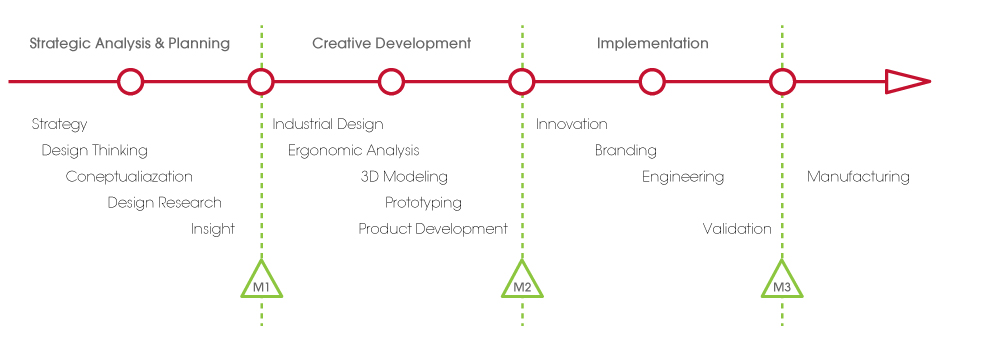 For more help on your industrial design and product development contact us:
- 2009 IDEA Awards
Boston, Massachusetts , USA, December 01 2009 – Creative directions and Product design by Ramak Radmard , a new concept in eyewear:
Ramak Radmard has received the IDSA IDEA Award, The award was presented at the Wentworth Institute of Technology on December 01 2009 by the Industrial Designers Society of America. The award show brings together industry and academic participants from across the world to review the latest developments in industrial design, product design and product development and brings together industry participants to honor the key players in the design industry. Lucidream has continually demarked itself by the quality of its innovative product design solutions. First launched in 1999, our services have significantly contributed to improving the way our clients do business. “We are very pleased that the eyewear system has been recognized as a best of its breed,” said Ramak Radmard, Creative Director and Chief Designer. interfaces eyewear system, no screws, no coil springs, no welds, no soldering—just a seamless design of flowing lines and curves. Customers can design their own eyewear by choosing from a variety of component sizes and colors, the finish of the metal, and the shape and size of the lenses.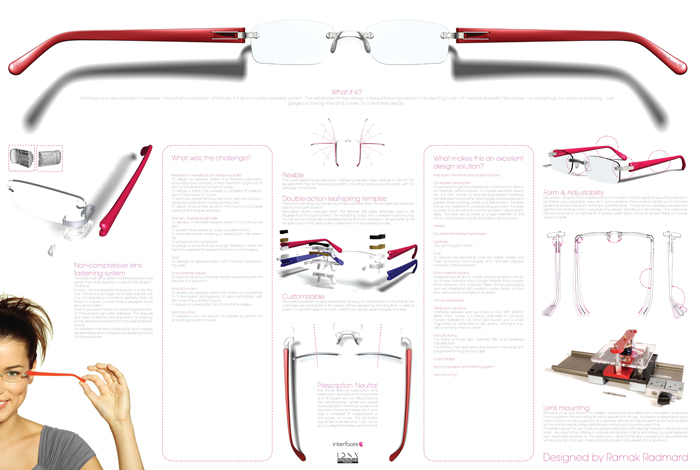 View Interfaces Glasses
On behalf of Lucidream,
Founder, Creative Director & Chief Designer
Ramak Radmard
Source: IDEA Awards 2009
View Interfaces Glasses
On behalf of Lucidream,
Founder, Creative Director & Chief Designer
Ramak Radmard
Source: IDEA Awards 2009 - Finalist IDEA® 2009 : International Design Excellence Awards
Industrial Designers Society of America IDSA has identified Montreal designer Ramak Radmard as a finalist in the International Design Excellence Awards IDEA® 2009.
Industrial Designers Society of America IDSA has identified Montreal designer Ramak Radmard as a finalist in the International Design Excellence Awards IDEA® 2009.
In recognition of his work in a Montreal, Quebec, Canada based company. Design Excellence Awards winner Ramak Radmard - Strategy based Industrial Design firm in Montreal, Canada | Lucidream Industrial Designer Canada
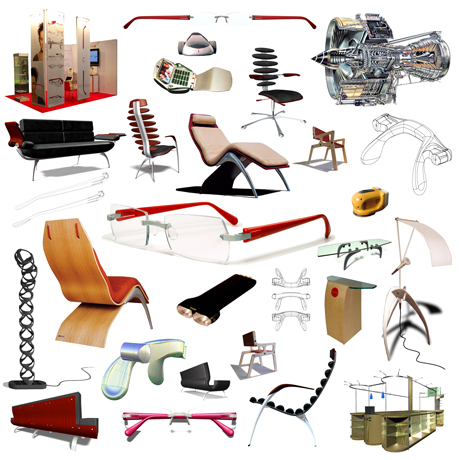 Strategy based Industrial Design firm in Montreal, Quebec, Canada Lucidream, Invent, Design & Develop Capabilities
Strategy based Industrial Design firm in Montreal, Canada | Lucidream industrial designer Canada
Lucidream is a strategy based firm in Montreal, Canada | We help industries innovate Lucidream industrial designer Canada
Strategy based Industrial Design firm in Montreal, Canada | Lucidream industrial designer Canada
Ramak Radmard and his design house Lucidream develop innovative, meaningful and technologically challenging products, building holistic user experiences to create unique intellectual property, design and manufacturing solutions. We create innovative concepts and provide superior experiences for our clients – and their customers. Follow us on Twitter: @LucidreamDesign https://www.linkedin.com/company/lucidream/ Like on us Facebook: Lucidream Industrial Design firm in Montreal, Canada | Lucidream industrial designer Canada
 - Design Canada Design Montreal Design Open House
Design Canada Design, Montreal Design, Open House
Hello Design Canada Design,

Visit the Main site
Montreal Design Blog, Montreal industrial design blog, industrial design, design thinking, design research, product design, brand design, product development, award winning design, Montreal Design, Quebec Design, Canada Design. Toronto Design, Ottawa Design, Vancouver Design, Calgary Design, Ontario Design, Alberta Design, British Columbia Design?
Its today and tomorrow so get out there and see some interesting montreal people doing some interesting design work…
Montreal design open house
Airdrie, Alberta Design Canada Design
Brooks, Alberta Design Canada Design
Calgary, Alberta Design Canada Design Camrose, Alberta Design Canada Design Cold Lake, Alberta Design Canada Design Edmonton, Alberta Design Canada Design Fort Saskatchewan Alberta Design Canada Design Grande Prairie, Alberta Design Canada Design Leduc, Alberta Design Canada Design Lethbridge, Alberta Design Canada Design Lloydminster, Alberta Design Canada Design Medicine Hat, Alberta Design Canada Design Red Deer, Alberta Design Canada Design Spruce Grove, Alberta Design Canada Design St. Albert, Alberta Design Canada Design Wetaskiwin, Alberta Design Canada DesignAbbotsford, British Columbia Design Canada Design
Armstrong, British Columbia Design Canada Design Burnaby, British Columbia Design Canada Design Campbell River, British Columbia Design Canada Design Castlegar, British Columbia Design Canada Design Chilliwack, British Columbia Design Canada Design Colwood, British Columbia Design Canada Design Coquitlam, British Columbia Design Canada Design Courtenay, British Columbia Design Canada Design Cranbrook, British Columbia Design Canada Design Dawson Creek, British Columbia Design Canada Design Duncan, British Columbia Design Canada Design Enderby, British Columbia Design Canada Design Fernie, British Columbia Design Canada Design Fort St. John, British Columbia Design Canada Design Grand Forks, British Columbia Design Canada Design Greenwood, British Columbia Design Canada Design Kamloops, British Columbia Design Canada Design Kelowna, British Columbia Design Canada Design Kimberley, British Columbia Design Canada Design Kitimat, British Columbia Design Canada Design Langford, British Columbia Design Canada Design Langley, British Columbia Design Canada Design Merritt, British Columbia Design Canada Design Nanaimo, British Columbia Design Canada Design Nelson , British Columbia Design Canada Design New Westminster, British Columbia Design Canada Design North Vancouver, British Columbia Design Canada Design Parksville, British Columbia Design Canada Design Penticton, British Columbia Design Canada Design Pitt Meadows, British Columbia Design Canada Design Port Alberni, British Columbia Design Canada Design Port Coquitlam, British Columbia Design Canada Design Port Moody, British Columbia Design Canada Design Powell River, British Columbia Design Canada Design Prince George, British Columbia Design Canada Design Prince Rupert , British Columbia Design Canada Design Quesnel, British Columbia Design Canada Design Revelstoke, British Columbia Design Canada Design Richmond, British Columbia Design Canada Design Rossland, British Columbia Design Canada Design Salmon Arm, British Columbia Design Canada Design Surrey, British Columbia Design Canada Design Terrace, British Columbia Design Canada Design Trail, British Columbia Design Canada Design Vancouver, British Columbia Design Canada Design Vernon, British Columbia Design Canada Design Victoria, British Columbia Design Canada Design White Rock, British Columbia Design Canada Design Williams Lake, British Columbia Design Canada DesignBrandon, Manitoba Design Canada Design
Dauphin, Manitoba Design Canada Design Flin Flon, Manitoba Design Canada Design Portage la Prairie, Manitoba Design Canada Design Selkirk , Manitoba Design Canada Design Steinbach, Manitoba Design Canada Design Thompson, Manitoba Design Canada Design Winkler, Manitoba Design Canada Design Winnipeg, Manitoba Design Canada DesignBathurst, New Brunswick Design Canada Design
Campbellton, New Brunswick Design Canada Design Dieppe, New Brunswick Design Canada Design Edmundston, New Brunswick Design Canada Design Fredericton, New Brunswick Design Canada Design Miramichi, New Brunswick Design Canada Design Moncton, New Brunswick Design Canada Design Saint John, New Brunswick Design Canada DesignCorner Brook, Newfoundland and Labrador Design Canada Design
Mount Pearl, Newfoundland and Labrador Design Canada Design St. John’s, Newfoundland and Labrador Design Canada DesignYellowknife, Northwest Territories Design Canada Design
Halifax , Nova Scotia Design Canada Design
Sydney, Nova Scotia Design Canada Design Dartmouth, Nova Scotia Design Canada DesignBarrie, Ontario Design Canada Design
Belleville, Ontario Design Canada Design Brampton, Ontario Design Canada Design Brant, Ontario Design Canada Design Brantford, Ontario Design Canada Design Brockville, Ontario Design Canada Design Burlington, Ontario Design Canada Design Cambridge, Ontario Design Canada Design Chatham-Kent, Ontario Design Canada Design Clarence-Rockland, Ontario Design Canada Design Cornwall, Ontario Design Canada Design Dryden, Ontario Design Canada Design Elliot Lake, Ontario Design Canada Design Greater Sudbury, Ontario Design Canada Design Guelph, Ontario Design Canada Design Haldimand County, Ontario Design Canada Design Hamilton, Ontario Design Canada Design Kawartha Lakes, Ontario Design Canada Design Kenora, Ontario Design Canada Design Kingston, Ontario Design Canada Design Kitchener, Ontario Design Canada Design London, Ontario Design Canada Design Mississauga, Ontario Design Canada Design Niagara Falls, Ontario Design Canada Design Norfolk County, Ontario Design Canada Design North Bay, Ontario Design Canada Design Orillia, Ontario Design Canada Design Oshawa, Ontario Design Canada Design Ottawa, Ontario Design Canada Design Owen Sound, Ontario Design Canada Design Pembroke, Ontario Design Canada Design Peterborough, Ontario Design Canada Design Pickering, Ontario Design Canada Design Prince Edward County, Ontario Design Canada Design Port Colborne , Ontario Design Canada Design Quinte West, Ontario Design Canada Design Sarnia, Ontario Design Canada Design Sault Ste. Marie, Ontario Design Canada Design St. Catharines , Ontario Design Canada Design St. Thomas, Ontario Design Canada Design Stratford, Ontario Design Canada Design Temiskaming Shores, Ontario Design Canada Design Thorold, Ontario Design Canada Design Thunder Bay, Ontario Design Canada Design Timmins, Ontario Design Canada Design Toronto, Ontario Design Canada Design Vaughan, Ontario Design Canada Design Waterloo, Ontario Design Canada Design Welland, Ontario Design Canada Design Windsor, Ontario Design Canada Design Woodstock, Ontario Design Canada DesignCharlottetown, Prince Edward Island Design Canada Design
Summerside, Prince Edward Island Design Canada DesignActon Vale, Quebec Design Canada Design
Alma, Quebec Design Canada Design Amos, Quebec Design Canada Design Amqui, Quebec Design Canada Design L’Ancienne-Lorette, Quebec Design Canada Design L’Assomption, Quebec Design Canada Design Asbestos, Quebec Design Canada Design Baie-Comeau, Quebec Design Canada Design Baie-d’Urfé, Quebec Design Canada Design Baie-James, Quebec Design Canada Design Baie-Saint-Paul, Quebec Design Canada Design Barkmere, Quebec Design Canada Design Beaconsfield, Quebec Design Canada Design Beauceville, Quebec Design Canada Design Beauharnois, Quebec Design Canada Design Beaupré, Quebec Design Canada Design Bécancour, Quebec Design Canada Design Bedford, Quebec Design Canada Design Belleterre, Quebec Design Canada Design Beloeil , Quebec Design Canada Design Berthierville, Quebec Design Canada Design Blainville, Quebec Design Canada Design Bois-des-Filion, Quebec Design Canada Design Boisbriand, Quebec Design Canada Design Bonaventure, Quebec Design Canada Design Boucherville, Quebec Design Canada Design Bromont, Quebec Design Canada Design Brossard, Quebec Design Canada Design Brownsburg-Chatham, Quebec Design Canada Design Cabano, Quebec Design Canada Design Candiac, Quebec Design Canada Design Cap-Chat, Quebec Design Canada Design Cap-Santé, Quebec Design Canada Design Carignan, Quebec Design Canada Design Carleton-sur-mer, Quebec Design Canada Design Causapscal, Quebec Design Canada Design Chambly, Quebec Design Canada Design Chandler, Quebec Design Canada Design Chapais, Quebec Design Canada Design Charlemagne, Quebec Design Canada Design Châteauguay, Quebec Design Canada Design Château-Richer, Quebec Design Canada Design Chibougamau, Quebec Design Canada Design Clermont, Quebec Design Canada Design Coaticook, Quebec Design Canada Design Contrecoeur, Quebec Design Canada Design Cookshire-Eaton, Quebec Design Canada Design Côte-Saint-Luc, Quebec Design Canada Design Cowansville, Quebec Design Canada Design Danville, Quebec Design Canada Design Daveluyville, Quebec Design Canada Design Dégelis, Quebec Design Canada Design Delson , Quebec Design Canada Design Desbiens, Quebec Design Canada Design Deux-Montagnes, Quebec Design Canada Design Disraeli, Quebec Design Canada Design Dolbeau-Mistassini, Quebec Design Canada Design Dollard-des-Ormeaux, Quebec Design Canada Design Donnacona, Quebec Design Canada Design Dorval, Quebec Design Canada Design Drummondville, Quebec Design Canada Design Dunham, Quebec Design Canada Design Duparquet, Quebec Design Canada Design East Angus, Quebec Design Canada Design L’Épiphanie, Quebec Design Canada Design Estérel, Quebec Design Canada Design Farnham, Quebec Design Canada Design Fermont, Quebec Design Canada Design Forestville, Quebec Design Canada Design Fossambault-sur-le-Lac, Quebec Design Canada Design Gaspé, Quebec Design Canada Design Gatineau, Quebec Design Canada Design Gracefield, Quebec Design Canada Design Granby, Quebec Design Canada Design Grande-Rivière, Quebec Design Canada Design Hampstead, Quebec Design Canada Design Hudson, Quebec Design Canada Design Huntingdon, Quebec Design Canada Design L’Île-Cadieux, Quebec Design Canada Design L’Île-Dorval, Quebec Design Canada Design L’Île-Perrot, Quebec Design Canada Design Joliette, Quebec Design Canada Design Kingsey Falls, Quebec Design Canada Design Kirkland, Quebec Design Canada Design Lac-Brome, Quebec Design Canada Design Lac-Delage, Quebec Design Canada Design Lac-Mégantic, Quebec Design Canada Design Lac-Saint-Joseph, Quebec Design Canada Design Lac-Sergent, Quebec Design Canada Design Lachute, Quebec Design Canada Design Lachine, Quebec Design Canada Design Laval, Quebec Design Canada Design Lavaltrie, Quebec Design Canada Design Lebel-sur-Quévillon, Quebec Design Canada Design Léry, Quebec Design Canada Design Lévis, Quebec Design Canada Design Longueuil, Quebec Design Canada Design Lorraine, Quebec Design Canada Design Louiseville, Quebec Design Canada Design Macamic, Quebec Design Canada Design Magog, Quebec Design Canada Design Malartic, Quebec Design Canada Design La Malbaie, Quebec Design Canada Design Maniwaki, Quebec Design Canada Design Marieville, Quebec Design Canada Design Mascouche, Quebec Design Canada Design Matagami, Quebec Design Canada Design Matane, Quebec Design Canada Design Mercier, Quebec Design Canada Design Métabetchouan–Lac-à-la-Croix, Quebec Design Canada Design Métis-sur-Mer, Quebec Design Canada Design Mirabel, Quebec Design Canada Design Mont-Joli, Quebec Design Canada Design Mont-Laurier, Quebec Design Canada Design Mont-Royal, Quebec Design Canada Design Mont-Saint-Hilaire, Quebec Design Canada Design Mont-Tremblant, Quebec Design Canada Design Montmagny, Quebec Design Canada Design Montreal, Quebec Design Canada Design Montréal-Est, Quebec Design Canada Design Montréal-Ouest, Quebec Design Canada Design Murdochville, Quebec Design Canada Design Neuville, Quebec Design Canada Design New Richmond, Quebec Design Canada Design Nicolet, Quebec Design Canada Design Normandin, Quebec Design Canada Design Notre-Dame-de-l’Île-Perrot, Quebec Design Canada Design Notre-Dame-des-Prairies, Quebec Design Canada Design Notre-Dame-du-Lac, Quebec Design Canada Design Otterburn Park, Quebec Design Canada Design Paspébiac, Quebec Design Canada Design Percé, Quebec Design Canada Design Pincourt, Quebec Design Canada Design Plessisville, Quebec Design Canada Design La Pocatière, Quebec Design Canada Design Pohénégamook, Quebec Design Canada Design Pointe-Claire, Quebec Design Canada Design Pont-Rouge, Quebec Design Canada Design Port-Cartier, Quebec Design Canada Design Portneuf, Quebec Design Canada Design La Prairie, Quebec Design Canada Design Princeville, Quebec Design Canada Design Prévost, Quebec Design Canada Design Quebec City, Quebec Design Canada Design Repentigny, Quebec Design Canada Design Richelieu, Quebec Design Canada Design Richmond, Quebec Design Canada Design Rigaud , Quebec Design Canada Design Rimouski, Quebec Design Canada Design Rivière-du-Loup, Quebec Design Canada Design Rivière-Rouge, Quebec Design Canada Design Roberval, Quebec Design Canada Design Rosemère, Quebec Design Canada Design Rouyn-Noranda, Quebec Design Canada Design Saguenay, Quebec Design Canada Design Sainte-Adèle, Quebec Design Canada Design Sainte-Agathe-des-Monts, Quebec Design Canada Design Sainte-Anne-de-Beaupré, Quebec Design Canada Design Sainte-Anne-de-Bellevue, Quebec Design Canada Design Sainte-Anne-des-Monts, Quebec Design Canada Design Sainte-Anne-des-Plaines, Quebec Design Canada Design Saint-Augustin-de-Desmaures, Quebec Design Canada Design Saint-Basile, Quebec Design Canada Design Saint-Basile-le-Grand, Quebec Design Canada Design Saint-Bruno-de-Montarville, Quebec Design Canada Design Sainte-Catherine, Quebec Design Canada Design Sainte-Catherine-de-la-Jacques-Cartier, Quebec Design Canada Design Saint-Césaire, Quebec Design Canada Design Saint-Constant, Quebec Design Canada Design Saint-Eustache, Quebec Design Canada Design Saint-Félicien, Quebec Design Canada Design Saint-Gabriel, Quebec Design Canada Design Saint-Georges, Quebec Design Canada Design Saint-Hyacinthe, Quebec Design Canada Design Saint-Jean-sur-Richelieu, Quebec Design Canada Design Saint-Jérôme, Quebec Design Canada Design Saint-Joseph-de-Beauce, Quebec Design Canada Design Saint-Joseph-de-Sorel, Quebec Design Canada Design Sainte-Julie, Quebec Design Canada Design Saint-Lambert, Quebec Design Canada Design Saint-Lazare, Quebec Design Canada Design Saint-Lin-Laurentides, Quebec Design Canada Design Saint-Marc-des-Carrières, Quebec Design Canada Design Sainte-Marguerite-du-Lac-Masson, Quebec Design Canada Design Sainte-Marie, Quebec Design Canada Design Sainte-Marthe-sur-le-Lac, Quebec Design Canada Design Saint-Ours, Quebec Design Canada Design Saint-Pamphile, Quebec Design Canada Design Saint-Pascal, Quebec Design Canada Design Saint-Pie, Quebec Design Canada Design Saint-Raymond, Quebec Design Canada Design Saint-Rémi, Quebec Design Canada Design Saint-Sauveur , Quebec Design Canada Design Sainte-Thérèse, Quebec Design Canada Design Saint-Tite, Quebec Design Canada Design Salaberry-de-Valleyfield, Quebec Design Canada Design La Sarre, Quebec Design Canada Design Schefferville, Quebec Design Canada Design Scotstown, Quebec Design Canada Design Senneterre, Quebec Design Canada Design Sept-Îles, Quebec Design Canada Design Shawinigan, Quebec Design Canada Design Sherbrooke, Quebec Design Canada Design Sorel-Tracy, Quebec Design Canada Design Stanstead, Quebec Design Canada Design Sutton, Quebec Design Canada Design Témiscaming, Quebec Design Canada Design Terrebonne, Quebec Design Canada Design Thetford Mines, Quebec Design Canada Design Thurso, Quebec Design Canada Design Trois-Pistoles , Quebec Design Canada Design Trois-Rivières, Quebec Design Canada Design La Tuque, Quebec Design Canada Design Val-d’Or, Quebec Design Canada Design Valcourt, Quebec Design Canada Design Varennes, Quebec Design Canada Design Vaudreuil-Dorion, Quebec Design Canada Design Victoriaville, Quebec Design Canada Design Ville-Marie, Quebec Design Canada Design Warwick, Quebec Design Canada Design Waterloo, Quebec Design Canada Design Waterville, Quebec Design Canada Design Westmount, Quebec Design Canada Design Windsor, Quebec Design Canada DesignEstevan, Saskatchewan Design Canada Design
Flin Flon, Saskatchewan Design Canada Design Humboldt, Saskatchewan Design Canada Design Lloydminster, Saskatchewan Design Canada Design Martensville, Saskatchewan Design Canada Design Meadow Lake, Saskatchewan Design Canada Design Melfort, Saskatchewan Design Canada Design Melville, Saskatchewan Design Canada Design Moose Jaw, Saskatchewan Design Canada Design North Battleford, Saskatchewan Design Canada Design Prince Albert, Saskatchewan Design Canada Design Regina, Saskatchewan Design Canada Design Saskatoon, Saskatchewan Design Canada Design Swift, Saskatchewan Design Canada Design Weyburn, Saskatchewan Design Canada Design Yorkton, Saskatchewan Design Canada Design Whitehorse, Yukon Design Canada Design Airdrie, Alberta Design Canada Design Brooks, Alberta Design Canada Design Calgary, Alberta Design Canada Design Camrose, Alberta Design Canada Design Cold Lake, Alberta Design Canada Design Edmonton, Alberta Design Canada Design Fort Saskatchewan, Alberta Design Canada Design Grande Prairie, Alberta Design Canada Design Leduc, Alberta Design Canada Design Lethbridge, Alberta Design Canada Design Lloydminster, Alberta Design Canada Design Medicine Hat, Alberta Design Canada Design Red Deer, Alberta Design Canada Design Spruce Grove, Alberta Design Canada Design St. Albert, Alberta Design Canada Design Wetaskiwin, Alberta Design Canada Design Abbotsford, British Columbia Design Canada Design Armstrong, British Columbia Design Canada Design Burnaby, British Columbia Design Canada Design Campbell River, British Columbia Design Canada Design Castlegar, British Columbia Design Canada Design Chilliwack, British Columbia Design Canada Design Colwood, British Columbia Design Canada Design Coquitlam, British Columbia Design Canada Design Courtenay, British Columbia Design Canada Design Cranbrook, British Columbia Design Canada Design Dawson Creek, British Columbia Design Canada Design Duncan, British Columbia Design Canada Design Enderby, British Columbia Design Canada Design Fernie, British Columbia Design Canada Design Fort St. John, British Columbia Design Canada Design Grand Forks, British Columbia Design Canada Design Greenwood, British Columbia Design Canada Design Kamloops, British Columbia Design Canada Design Kelowna, British Columbia Design Canada Design Kimberley, British Columbia Design Canada Design Kitimat, British Columbia Design Canada Design Langford, British Columbia Design Canada Design Langley, British Columbia Design Canada Design Merritt, British Columbia Design Canada Design Nanaimo, British Columbia Design Canada Design Nelson , British Columbia Design Canada Design New Westminster, British Columbia Design Canada Design North Vancouver, British Columbia Design Canada Design Parksville, British Columbia Design Canada Design Penticton, British Columbia Design Canada Design Pitt Meadows, British Columbia Design Canada Design Port Alberni, British Columbia Design Canada Design Port Coquitlam, British Columbia Design Canada Design Port Moody, British Columbia Design Canada Design Powell River, British Columbia Design Canada Design Prince George, British Columbia Design Canada Design Prince Rupert , British Columbia Design Canada Design Quesnel, British Columbia Design Canada Design Revelstoke, British Columbia Design Canada Design Richmond, British Columbia Design Canada Design Rossland, British Columbia Design Canada Design Salmon Arm, British Columbia Design Canada Design Surrey, British Columbia Design Canada Design Terrace, British Columbia Design Canada Design Trail, British Columbia Design Canada Design Vancouver, British Columbia Design Canada Design Vernon, British Columbia Design Canada Design Victoria, British Columbia Design Canada Design White Rock, British Columbia Design Canada Design Williams Lake, British Columbia Design Canada Design Brandon, Manitoba Design Canada Design Dauphin, Manitoba Design Canada Design Flin Flon, Manitoba Design Canada Design Portage la Prairie, Manitoba Design Canada Design Selkirk , Manitoba Design Canada Design Steinbach, Manitoba Design Canada Design Thompson, Manitoba Design Canada Design Winkler, Manitoba Design Canada Design Winnipeg, Manitoba Design Canada Design Bathurst, New Brunswick Design Canada Design Campbellton, New Brunswick Design Canada Design Dieppe, New Brunswick Design Canada Design Edmundston, New Brunswick Design Canada Design Fredericton, New Brunswick Design Canada Design Miramichi, New Brunswick Design Canada Design Moncton, New Brunswick Design Canada Design Saint John, New Brunswick Design Canada Design Corner Brook, Newfoundland and Labrador Design Canada Design Mount Pearl, Newfoundland and Labrador Design Canada Design St. John’s, Newfoundland and Labrador Design Canada Design Yellowknife, Northwest Territories Design Canada Design Halifax , Nova Scotia Design Canada Design Sydney, Nova Scotia Design Canada Design Dartmouth, Nova Scotia Design Canada Design Barrie, Ontario Design Canada Design Belleville, Ontario Design Canada Design Brampton, Ontario Design Canada Design Brant, Ontario Design Canada Design Brantford, Ontario Design Canada Design Brockville, Ontario Design Canada Design Burlington, Ontario Design Canada Design Cambridge, Ontario Design Canada Design Chatham-Kent, Ontario Design Canada Design Clarence-Rockland, Ontario Design Canada Design Cornwall, Ontario Design Canada Design Dryden, Ontario Design Canada Design Elliot Lake, Ontario Design Canada Design Greater Sudbury, Ontario Design Canada Design Guelph, Ontario Design Canada Design Haldimand County, Ontario Design Canada Design Hamilton, Ontario Design Canada Design Kawartha Lakes, Ontario Design Canada Design Kenora, Ontario Design Canada Design Kingston, Ontario Design Canada Design Kitchener, Ontario Design Canada Design London, Ontario Design Canada Design Mississauga, Ontario Design Canada Design Niagara Falls, Ontario Design Canada Design Norfolk County, Ontario Design Canada Design North Bay, Ontario Design Canada Design Orillia, Ontario Design Canada Design Oshawa, Ontario Design Canada Design Ottawa, Ontario Design Canada Design Owen Sound, Ontario Design Canada Design Pembroke, Ontario Design Canada Design Peterborough, Ontario Design Canada Design Pickering, Ontario Design Canada Design Prince Edward County, Ontario Design Canada Design Port Colborne , Ontario Design Canada Design Quinte West, Ontario Design Canada Design Sarnia, Ontario Design Canada Design Sault Ste. Marie, Ontario Design Canada Design St. Catharines , Ontario Design Canada Design St. Thomas, Ontario Design Canada Design Stratford, Ontario Design Canada Design Temiskaming Shores, Ontario Design Canada Design Thorold, Ontario Design Canada Design Thunder Bay, Ontario Design Canada Design Timmins, Ontario Design Canada Design Toronto, Ontario Design Canada Design Vaughan, Ontario Design Canada Design Waterloo, Ontario Design Canada Design Welland, Ontario Design Canada Design Windsor, Ontario Design Canada Design Woodstock, Ontario Design Canada Design Charlottetown, Prince Edward Island Design Canada Design Summerside, Prince Edward Island Design Canada Design Acton Vale, Quebec Design Canada Design Alma, Quebec Design Canada Design Amos, Quebec Design Canada Design Amqui, Quebec Design Canada Design L’Ancienne-Lorette, Quebec Design Canada Design L’Assomption, Quebec Design Canada Design Asbestos, Quebec Design Canada Design Baie-Comeau, Quebec Design Canada Design Baie-d’Urfé, Quebec Design Canada Design Baie-James, Quebec Design Canada Design Baie-Saint-Paul, Quebec Design Canada Design Barkmere, Quebec Design Canada Design Beaconsfield, Quebec Design Canada Design Beauceville, Quebec Design Canada Design Beauharnois, Quebec Design Canada Design Beaupré, Quebec Design Canada Design Bécancour, Quebec Design Canada Design Bedford, Quebec Design Canada Design Belleterre, Quebec Design Canada Design Beloeil , Quebec Design Canada Design Berthierville, Quebec Design Canada Design Blainville, Quebec Design Canada Design Bois-des-Filion, Quebec Design Canada Design Boisbriand, Quebec Design Canada Design Bonaventure, Quebec Design Canada Design Boucherville, Quebec Design Canada Design Bromont, Quebec Design Canada Design Brossard, Quebec Design Canada Design Brownsburg-Chatham, Quebec Design Canada Design Cabano, Quebec Design Canada Design Candiac, Quebec Design Canada Design Cap-Chat, Quebec Design Canada Design Cap-Santé, Quebec Design Canada Design Carignan, Quebec Design Canada Design Carleton-sur-mer, Quebec Design Canada Design Causapscal, Quebec Design Canada Design Chambly, Quebec Design Canada Design Chandler, Quebec Design Canada Design Chapais, Quebec Design Canada Design Charlemagne, Quebec Design Canada Design Châteauguay, Quebec Design Canada Design Château-Richer, Quebec Design Canada Design Chibougamau, Quebec Design Canada Design Clermont, Quebec Design Canada Design Coaticook, Quebec Design Canada Design Contrecoeur, Quebec Design Canada Design Cookshire-Eaton, Quebec Design Canada Design Côte-Saint-Luc, Quebec Design Canada Design Cowansville, Quebec Design Canada Design Danville, Quebec Design Canada Design Daveluyville, Quebec Design Canada Design Dégelis, Quebec Design Canada Design Delson , Quebec Design Canada Design Desbiens, Quebec Design Canada Design Deux-Montagnes, Quebec Design Canada Design Disraeli, Quebec Design Canada Design Dolbeau-Mistassini, Quebec Design Canada Design Dollard-des-Ormeaux, Quebec Design Canada Design Donnacona, Quebec Design Canada Design Dorval, Quebec Design Canada Design Drummondville, Quebec Design Canada Design Dunham, Quebec Design Canada Design Duparquet, Quebec Design Canada Design East Angus, Quebec Design Canada Design L’Épiphanie, Quebec Design Canada Design Estérel, Quebec Design Canada Design Farnham, Quebec Design Canada Design Fermont, Quebec Design Canada Design Forestville, Quebec Design Canada Design Fossambault-sur-le-Lac, Quebec Design Canada Design Gaspé, Quebec Design Canada Design Gatineau, Quebec Design Canada Design Gracefield, Quebec Design Canada Design Granby, Quebec Design Canada Design Grande-Rivière, Quebec Design Canada Design Hampstead, Quebec Design Canada Design Hudson, Quebec Design Canada Design Huntingdon, Quebec Design Canada Design L’Île-Cadieux, Quebec Design Canada Design L’Île-Dorval, Quebec Design Canada Design L’Île-Perrot, Quebec Design Canada Design Joliette, Quebec Design Canada Design Kingsey Falls, Quebec Design Canada Design Kirkland, Quebec Design Canada Design Lac-Brome, Quebec Design Canada Design Lac-Delage, Quebec Design Canada Design Lac-Mégantic, Quebec Design Canada Design Lac-Saint-Joseph, Quebec Design Canada Design Lac-Sergent, Quebec Design Canada Design Lachute, Quebec Design Canada Design Lachine, Quebec Design Canada Design Laval, Quebec Design Canada Design Lavaltrie, Quebec Design Canada Design Lebel-sur-Quévillon, Quebec Design Canada Design Léry, Quebec Design Canada Design Lévis, Quebec Design Canada Design Longueuil, Quebec Design Canada Design Lorraine, Quebec Design Canada Design Louiseville, Quebec Design Canada Design Macamic, Quebec Design Canada Design Magog, Quebec Design Canada Design Malartic, Quebec Design Canada Design La Malbaie, Quebec Design Canada Design Maniwaki, Quebec Design Canada Design Marieville, Quebec Design Canada Design Mascouche, Quebec Design Canada Design Matagami, Quebec Design Canada Design Matane, Quebec Design Canada Design Mercier, Quebec Design Canada Design Métabetchouan–Lac-à-la-Croix, Quebec Design Canada Design Métis-sur-Mer, Quebec Design Canada Design Mirabel, Quebec Design Canada Design Mont-Joli, Quebec Design Canada Design Mont-Laurier, Quebec Design Canada Design Mont-Royal, Quebec Design Canada Design Mont-Saint-Hilaire, Quebec Design Canada Design Mont-Tremblant, Quebec Design Canada Design Montmagny, Quebec Design Canada Design Montreal, Quebec Design Canada Design Montréal-Est, Quebec Design Canada Design Montréal-Ouest, Quebec Design Canada Design Murdochville, Quebec Design Canada Design Neuville, Quebec Design Canada Design New Richmond, Quebec Design Canada Design Nicolet, Quebec Design Canada Design Normandin, Quebec Design Canada Design Notre-Dame-de-l’Île-Perrot, Quebec Design Canada Design Notre-Dame-des-Prairies, Quebec Design Canada Design Notre-Dame-du-Lac, Quebec Design Canada Design Otterburn Park, Quebec Design Canada Design Paspébiac, Quebec Design Canada Design Percé, Quebec Design Canada Design Pincourt, Quebec Design Canada Design Plessisville, Quebec Design Canada Design La Pocatière, Quebec Design Canada Design Pohénégamook, Quebec Design Canada Design Pointe-Claire, Quebec Design Canada Design Pont-Rouge, Quebec Design Canada Design Port-Cartier, Quebec Design Canada Design Portneuf, Quebec Design Canada Design La Prairie, Quebec Design Canada Design Princeville, Quebec Design Canada Design Prévost, Quebec Design Canada Design Quebec City, Quebec Design Canada Design Repentigny, Quebec Design Canada Design Richelieu, Quebec Design Canada Design Richmond, Quebec Design Canada Design Rigaud , Quebec Design Canada Design Rimouski, Quebec Design Canada Design Rivière-du-Loup, Quebec Design Canada Design Rivière-Rouge, Quebec Design Canada Design Roberval, Quebec Design Canada Design Rosemère, Quebec Design Canada Design Rouyn-Noranda, Quebec Design Canada Design Saguenay, Quebec Design Canada Design Sainte-Adèle, Quebec Design Canada Design Sainte-Agathe-des-Monts, Quebec Design Canada Design Sainte-Anne-de-Beaupré, Quebec Design Canada Design Sainte-Anne-de-Bellevue, Quebec Design Canada Design Sainte-Anne-des-Monts, Quebec Design Canada Design Sainte-Anne-des-Plaines, Quebec Design Canada Design Saint-Augustin-de-Desmaures, Quebec Design Canada Design Saint-Basile, Quebec Design Canada Design Saint-Basile-le-Grand, Quebec Design Canada Design Saint-Bruno-de-Montarville, Quebec Design Canada Design Sainte-Catherine, Quebec Design Canada Design Sainte-Catherine-de-la-Jacques-Cartier, Quebec Design Canada Design Saint-Césaire, Quebec Design Canada Design Saint-Constant, Quebec Design Canada Design Saint-Eustache, Quebec Design Canada Design Saint-Félicien, Quebec Design Canada Design Saint-Gabriel, Quebec Design Canada Design Saint-Georges, Quebec Design Canada Design Saint-Hyacinthe, Quebec Design Canada Design Saint-Jean-sur-Richelieu, Quebec Design Canada Design Saint-Jérôme, Quebec Design Canada Design Saint-Joseph-de-Beauce, Quebec Design Canada Design Saint-Joseph-de-Sorel, Quebec Design Canada Design Sainte-Julie, Quebec Design Canada Design Saint-Lambert, Quebec Design Canada Design Saint-Lazare, Quebec Design Canada Design Saint-Lin-Laurentides, Quebec Design Canada Design Saint-Marc-des-Carrières, Quebec Design Canada Design Sainte-Marguerite-du-Lac-Masson, Quebec Design Canada Design Sainte-Marie, Quebec Design Canada Design Sainte-Marthe-sur-le-Lac, Quebec Design Canada Design Saint-Ours, Quebec Design Canada Design Saint-Pamphile, Quebec Design Canada Design Saint-Pascal, Quebec Design Canada Design Saint-Pie, Quebec Design Canada Design Saint-Raymond, Quebec Design Canada Design Saint-Rémi, Quebec Design Canada Design Saint-Sauveur , Quebec Design Canada Design Sainte-Thérèse, Quebec Design Canada Design Saint-Tite, Quebec Design Canada Design Salaberry-de-Valleyfield, Quebec Design Canada Design La Sarre, Quebec Design Canada Design Schefferville, Quebec Design Canada Design Scotstown, Quebec Design Canada Design Senneterre, Quebec Design Canada Design Sept-Îles, Quebec Design Canada Design Shawinigan, Quebec Design Canada Design Sherbrooke, Quebec Design Canada Design Sorel-Tracy, Quebec Design Canada Design Stanstead, Quebec Design Canada Design Sutton, Quebec Design Canada Design Témiscaming, Quebec Design Canada Design Terrebonne, Quebec Design Canada Design Thetford Mines, Quebec Design Canada Design Thurso, Quebec Design Canada Design Trois-Pistoles , Quebec Design Canada Design Trois-Rivières, Quebec Design Canada Design La Tuque, Quebec Design Canada Design Val-d’Or, Quebec Design Canada Design Valcourt, Quebec Design Canada Design Varennes, Quebec Design Canada Design Vaudreuil-Dorion, Quebec Design Canada Design Victoriaville, Quebec Design Canada Design Ville-Marie, Quebec Design Canada Design Warwick, Quebec Design Canada Design Waterloo, Quebec Design Canada Design Waterville, Quebec Design Canada Design Westmount, Quebec Design Canada Design Windsor, Quebec Design Canada Design Estevan, Saskatchewan Design Canada Design Flin Flon, Saskatchewan Design Canada Design Humboldt, Saskatchewan Design Canada Design Lloydminster, Saskatchewan Design Canada Design Martensville, Saskatchewan Design Canada Design Meadow Lake, Saskatchewan Design Canada Design Melfort, Saskatchewan Design Canada Design Melville, Saskatchewan Design Canada Design Moose Jaw, Saskatchewan Design Canada Design North Battleford, Saskatchewan Design Canada Design Prince Albert, Saskatchewan Design Canada Design Regina, Saskatchewan Design Canada Design Saskatoon, Saskatchewan Design Canada Design Swift, Saskatchewan Design Canada Design Weyburn, Saskatchewan Design Canada Design Yorkton, Saskatchewan Design Canada Design Whitehorse, Yukon Design Canada Design Whitehorse, Yukon, Canada Montreal Design Blog, Montreal industrial design blog, industrial design, design thinking, design research, product design, brand design, product development, award winning design, Montreal Design, Quebec Design, Canada Design. Toronto Design, Ottawa Design, Vancouver Design, Calgary Design, Ontario Design, Alberta Design, British Columbia Design?Its today and tomorrow so get out there and see some interesting montreal people doing some interesting design work…Montreal design open house
- Good Morning Lucidreamers – Industrial Design
In the next little while I will be sharing some of our Industrial Design stories…
We specialize in design thinking solutions, which focuses on design research to derive the optimum industrial design and product development strategy.
Ramak Radmard, IDSA, ACID, ADIQ In the next little while I will be sharing some of our Industrial Design stories… We specialize in design thinking solutions, which focuses on design research to derive the optimum industrial design and product development strategy. www.lucidream.com - VISION MAGAZINE
 Paris, France, November 1, 2008 – Lucidream does an interview with Vision, an eyewear magazine, by Paddy Kamen. Read interview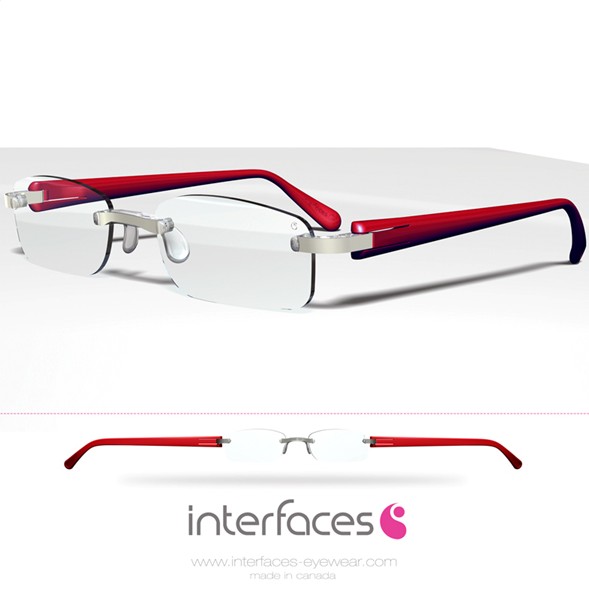
On behalf of Lucidream,
Founder, Creative Director & Chief Designer Ramak Radmard Source: Vision Magazine - SILMO Interfaces Eyewear Launch
 Paris, France, October 28, 2008 – Creative directions and Product design by Ramak Radmard, the interfaces eyewear system is designed with user comfort and individuality in mind. Its profile is in keeping with the human form, providing a perfectly ergonomic eyewear. The aesthetic characteristics of the frame make a unique and clean statement of elegance and sophistication.
To achieve strength and flexibility we combined two dissimilar materials – without screws – in a solder/weld-free assembly. Bands of specially engineered stainless steel reinforce the nylon ridge and end-pieces to prevent stress cracking and unwanted deformation. The steel bands are inserted into corresponding grooves on the plastic parts, and also serve to lock the temples in place. The steel provides an aesthetic “front view” to the frame, and imparts a quality that plastic alone cannot.
The coil-free spring temple operates when the temples are extended beyond the open position, secondary action engages when the temples are hyper extended beyond 45 degrees from the open position. The leaf spring “pops” into a release mode ensuring the frame is not subjected to excessive forces that can damage it. Simply rotating the temples back to the open position resets the normal operating mode.
The frames feature prescription and base-curve neutrality, so that the optical lenses do not influence face form and pantoscopic tilt. Lenses are always drilled parallel to the blocking axis (no tilt) and the frame is designed to provide a consistent fit independent of lens power or curve. This eliminates adjustment surprises when high minus, plus or astigmatic lenses are mounted. This is achieved by minimizing contact between the frame components and either the front or rear lens surface.
View Interfaces Glasses
On behalf of Lucidream,
Founder, Creative Director & Chief Designer
Ramak Radmard
Source: Lucidream
Paris, France, October 28, 2008 – Creative directions and Product design by Ramak Radmard, the interfaces eyewear system is designed with user comfort and individuality in mind. Its profile is in keeping with the human form, providing a perfectly ergonomic eyewear. The aesthetic characteristics of the frame make a unique and clean statement of elegance and sophistication.
To achieve strength and flexibility we combined two dissimilar materials – without screws – in a solder/weld-free assembly. Bands of specially engineered stainless steel reinforce the nylon ridge and end-pieces to prevent stress cracking and unwanted deformation. The steel bands are inserted into corresponding grooves on the plastic parts, and also serve to lock the temples in place. The steel provides an aesthetic “front view” to the frame, and imparts a quality that plastic alone cannot.
The coil-free spring temple operates when the temples are extended beyond the open position, secondary action engages when the temples are hyper extended beyond 45 degrees from the open position. The leaf spring “pops” into a release mode ensuring the frame is not subjected to excessive forces that can damage it. Simply rotating the temples back to the open position resets the normal operating mode.
The frames feature prescription and base-curve neutrality, so that the optical lenses do not influence face form and pantoscopic tilt. Lenses are always drilled parallel to the blocking axis (no tilt) and the frame is designed to provide a consistent fit independent of lens power or curve. This eliminates adjustment surprises when high minus, plus or astigmatic lenses are mounted. This is achieved by minimizing contact between the frame components and either the front or rear lens surface.
View Interfaces Glasses
On behalf of Lucidream,
Founder, Creative Director & Chief Designer
Ramak Radmard
Source: Lucidream - MIDO Interfaces Eyewear Launch
 Milan, Italy, August 17, 2008 – Designed by Ramak Radmard the interfaces eyewear system is designed with user comfort and individuality in mind. Its profile is in keeping with the human form, providing a perfectly ergonomic eyewear. The aesthetic characteristics of the frame make a unique and clean statement of elegance and sophistication.
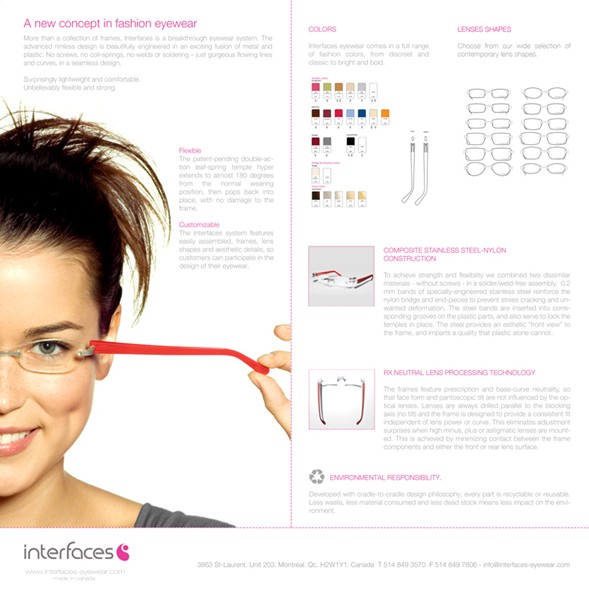 To achieve strength and flexibility we combined two dissimilar materials – without screws – in a solder/weld-free assembly. Bands of specially-engineered stainless steel reinforce the nylon ridge and end-pieces to prevent stress cracking and unwanted deformation. The steel bands are inserted into corresponding grooves on the plastic parts, and also serve to lock the temples in place. The steel provides an aesthetic “front view” to the frame, and imparts a quality that plastic alone cannot.
The coil-free spring temple operates when the temples are extended beyond the open position, secondary action engages when the temples are hyper extended beyond 45 degrees from the open position. The leaf spring “pops” into a release mode ensuring the frame is not subjected to excessive forces that can damage it. Simply rotating the temples back to the open position resets the normal operating mode.
The frames feature prescription and base-curve neutrality, so that the optical lenses do not influence face form and pantoscopic tilt . Lenses are always drilled parallel to the blocking axis (no tilt) and the frame is designed to provide a consistent fit independent of lens power or curve. This eliminates adjustment surprises when high minus, plus or astigmatic lenses are mounted. This is achieved by minimizing contact between the frame components and either the front or rear lens surface.
View Interfaces Glasses
On behalf of Lucidream,
Founder, Creative Director & Chief Designer
Ramak Radmard
Source: Lucidream
To achieve strength and flexibility we combined two dissimilar materials – without screws – in a solder/weld-free assembly. Bands of specially-engineered stainless steel reinforce the nylon ridge and end-pieces to prevent stress cracking and unwanted deformation. The steel bands are inserted into corresponding grooves on the plastic parts, and also serve to lock the temples in place. The steel provides an aesthetic “front view” to the frame, and imparts a quality that plastic alone cannot.
The coil-free spring temple operates when the temples are extended beyond the open position, secondary action engages when the temples are hyper extended beyond 45 degrees from the open position. The leaf spring “pops” into a release mode ensuring the frame is not subjected to excessive forces that can damage it. Simply rotating the temples back to the open position resets the normal operating mode.
The frames feature prescription and base-curve neutrality, so that the optical lenses do not influence face form and pantoscopic tilt . Lenses are always drilled parallel to the blocking axis (no tilt) and the frame is designed to provide a consistent fit independent of lens power or curve. This eliminates adjustment surprises when high minus, plus or astigmatic lenses are mounted. This is achieved by minimizing contact between the frame components and either the front or rear lens surface.
View Interfaces Glasses
On behalf of Lucidream,
Founder, Creative Director & Chief Designer
Ramak Radmard
Source: Lucidream - PowerGen LifeView Launch
PowerGen International
Orlando, Florida, USA, December 8, 2005 – Lucidream is proud to announce the launch of LEA’s LifeView Engine Life Monitoring & Management System. LifeView provides a tool by which gas turbine operators and after-market service providers can work together to fundamentally change the traditional gas turbine after market business model. The system allows the operator to take an active role in managing the life of their gas turbine engine and ensures optimum asset availability and efficiency. No longer does an operator need to be familiar with the intricacies and maintenance requirements of the gas turbine engine to be in control of running costs. Using LifeView will ensure that your asset availability is optimized, while reducing your exposure to needless repairs and un-required removals by maximizing your engines performance, keeping track of component life and serviceability and providing a reliable mean to estimate actual engine life consumption. LifeView is designed to seamlessly integrate into your existing gas turbine control system with minimal modifications or upgrades. Whether you are operating the latest, microprocessor driven digital control system of a vintage analog control system, LifeView interface can be tailored to integrate with your system and deliver you the full range of benefits provided by the system. On behalf of Lucidream, Founder, Creative Director & Chief Designer Ramak Radmard Source: Lucidream - National Post: Who Knows Best?
 Montreal, Quebec, Canada, June 11, 2005 – Lucidream is proud to announce that the Exhale Lounge Chair has been published in the National Post under the ‘Moneywise’ section in an article titled “Who Knows Best?”.
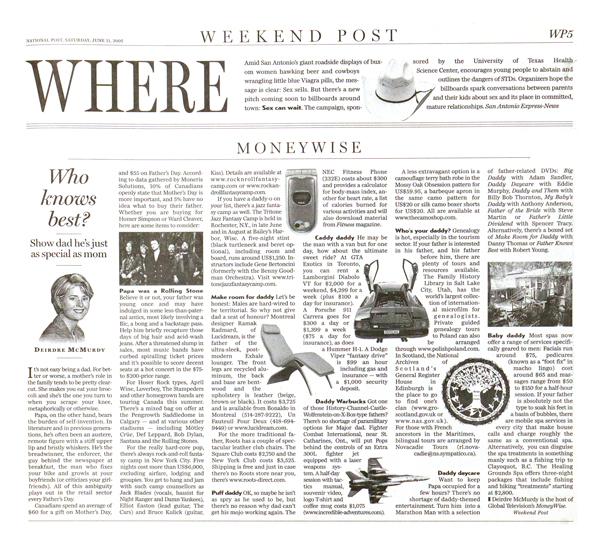
The post reads:
“Male Room for Daddy Lets be honest: Males are hard-wired to be territorial. So why not give dad a seat of honour? Montreal designer Ramak Radmard, of Lucidream, is the father of the ultra-sleek, postmodern Exhale lounger. The front legs are recycled aluminum, the back and base are bent wood and the upholstery is leather (beige, brown or black). It costs $3,725 and is available from Bonaldo in Montreal (514-287-9222), Un Fauteuil Pour Deiux (418-694-9449) or www.lucidream.com.” View Exhale Lounge Chair On behalf of Lucidream, Founder, Creative Director & Chief Designer Ramak Radmard Source: The National Post - SIDIM Exhale Lounge Chair Launch
Exhale Lounge Chair Launch at the Salon International du Design Intérieur de Montréal
Montreal,Quebec, Canada, June 17, 2003 – Ramak Radmard, the Chief designer of Lucidream, announces the launching of the Exhale lounge chair. Lucidream is a new and innovative furniture company, designing timeless products with an elegant and minimalistic approach. It is a company dedicated to the application of modern and functional designs to furniture. We believe furniture is an extension of the human body, a celebration of human form. It is the marriage of Art and technology, a functional and dynamic sculpture.Inspired by the human body, the Exhale lounge chair is designed with user comfort and individuality in mind. Its profile is in keeping with the human form, providing a perfectly ergonomic environment. The aesthetic characteristics of the chair make a unique and clean statement of elegance and sophistication, and the choice materials used, wood, leather and aluminum, further convey a sense of value. The back and the base of the chair are made from bent wood, which has the advantage of being tough yet flexible. The cushions are produced in high grade polyether, structured in coordinated layers of varying heights and hardness, worked into a high-grade non-woven foam composite material. The neck and headrest is height adjustable, and the upholstery has been handcrafted in Elmo leather. The front legs are cast aluminum, with a satin finish and a clear protective coating. View Exhale Lounge Chair On behalf of Lucidream, Founder, Creative Director & Chief Designer Ramak Radmard Source: Lucidream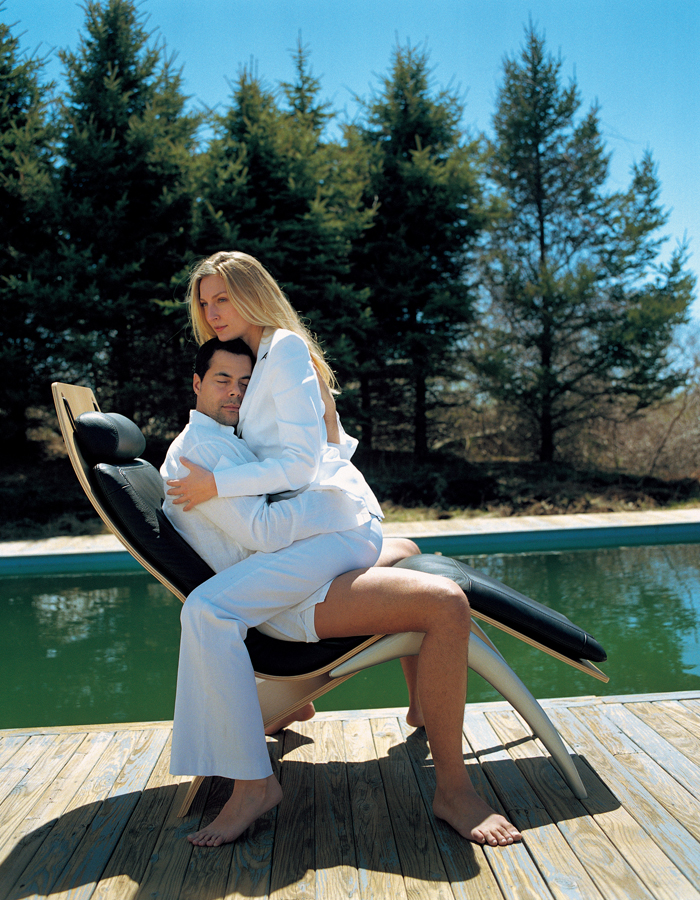
Exhale Lounge Chair designed by Ramak Radmard of Lucidream in 1999 | Photo by Raphael Mazzucco
- IIDEX Exhale Lounge Chair Launch

Exhale Lounge Chair Launch at IIDEX Canada
Toronto, Canada, April 17th 2003 – Ramak Radmard, the Chief designer of Lucidream, announces the premier Canadian launching of the Exhale lounge chair. Lucidream is a new and innovative furniture company, designing timeless products with an elegant and minimalistic approach. It is a company dedicated to the application of modern and functional designs to furniture. We believe furniture is an extension of the human body, a celebration of human form. It is the marriage of Art and technology, a functional and dynamic sculpture.Inspired by the human body, the Exhale lounge chair is designed with user comfort and individuality in mind. Its profile is in keeping with the human form, providing a perfectly ergonomic environment. The aesthetic characteristics of the chair make a unique and clean statement of elegance and sophistication, and the choice materials used, wood, leather and aluminum, further convey a sense of value. The back and the base of the chair are made from bent wood, which has the advantage of being tough yet flexible. The cushions are produced in high grade polyether, structured in coordinated layers of varying heights and hardness, worked into a high-grade non-woven foam composite material. The neck and headrest is height adjustable, and the upholstery has been handcrafted in Elmo leather. The front legs are cast aluminum, with a satin finish and a clear protective coating. View Exhale Lounge Chair On behalf of Lucidream, Founder, Creative Director & Chief Designer Ramak Radmard Source: Lucidream
Exhale Lounge Chair designed by Ramak Radmard of Lucidream in 1999 | Photo by Raphael Mazzucco
- ICFF Exhale Lounge Chair Launch

Exhale Lounge Chair Launch at the International Contemporary Furniture Fair
New York, USA, March, 27, 2003 – Ramak Radmard, the Chief designer of Lucidream, announces the premier international launching of the Exhale lounge chair. Lucidream is a new and innovative furniture company, designing timeless products with an elegant and minimalistic approach. It is a company dedicated to the application of modern and functional designs to furniture. We believe furniture is an extension of the human body, a celebration of human form. It is the marriage of Art and technology, a functional and dynamic sculpture.Inspired by the human body, the Exhale lounge chair is designed with user comfort and individuality in mind. Its profile is in keeping with the human form, providing a perfectly ergonomic environment. The aesthetic characteristics of the chair make a unique and clean statement of elegance and sophistication, and the choice materials used, wood, leather and aluminum, further convey a sense of value. The back and the base of the chair are made from bent wood, which has the advantage of being tough yet flexible. The cushions are produced in high grade polyether, structured in coordinated layers of varying heights and hardness, worked into a high-grade non-woven foam composite material. The neck and headrest is height adjustable, and the upholstery has been handcrafted in Elmo leather. The front legs are cast aluminum, with a satin finish and a clear protective coating. View Exhale Lounge Chair On behalf of Lucidream, Founder, Creative Director & Chief Designer Ramak Radmard Source: Lucidream
Exhale Lounge Chair designed by Ramak Radmard of Lucidream in 1999 | Photo by Raphael Mazzucco